This piece continues my travelogue begun in my posting on November 4, which describes my spouse Andrea DiLorenzo and I arriving in Vienna early on Saturday, October 3. After being lovingly greeted and cared for by our Viennese hosts for a few hours in their home, they drove us to the historic “Innere Stadt” of central Vienna where we had rented an Airbnb apartment for five nights.
Our apartment was a comfortable, spacious place on the second floor of a building on the heavily trafficked Marcaurel Strasse. It took something to haul our luggage through a long hallway to a tiny elevator up to the apartment, but we were happy to get ensconced in our digs in Old Vienna. After some unpacking, we ventured out for an afternoon walk through the old, narrow streets, bustling with people from all over the world. We found a nearby supermarket and made our first purchases with Euros – the universal currency of the European Union. Returning with our basic provisions, we passed numerous outdoor restaurants and cafes, and were drawn to the “Pizza del Popolo” sidewalk restaurant just outside our apartment and where we’d enjoy a late-night pizza supper later on.
We were still weary from our transatlantic flight and the six-hour time differential so we rested for a few hours after our first jaunt out. We roused ourselves in the early evening for our second venture out, this time in search of some of the historic churches within walking distance.
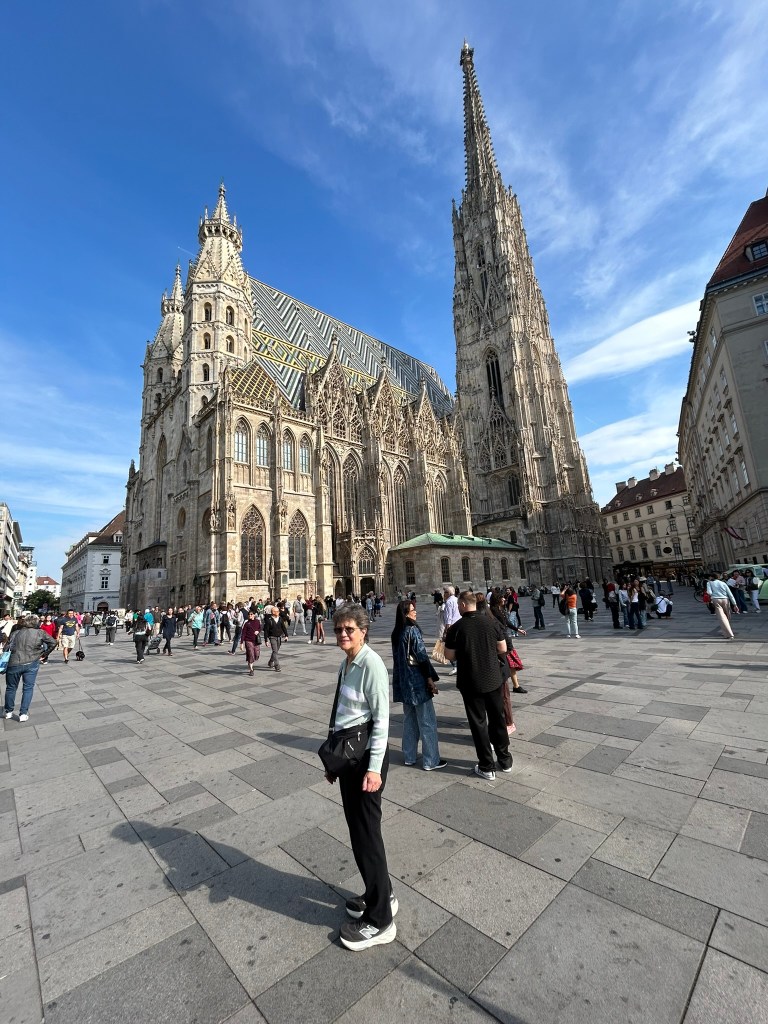
As Rick Steves had noted, the entire “Inner Stadt” of old Vienna can be walked across in little more than 30 minutes. So we didn’t have to walk far to reach two old churches – the Volkkirche, and the more famous St. Stephen’s Cathedral, which we would return to a number of times over the next days. The large cobblestone square outside St. Stephen’s had large crowds of people at any hour of day or night – a kind of Times Square gathering place for the thousands of international tourists exploring the old city through the clear, mild autumn weather that persisted through the entire week.
We ended our evening trek back at the “Pizza del Popolo” on Marcaurel Strasse where we enjoyed a delicious pizza washed down with a hearty Austrian lager. There were throngs of young people in the streets that Saturday night and a lot of heavy drinking by the kids sitting next to us at the outdoor restaurant. We were happy to be able to walk upstairs to our apartment and close the windows against the raucous street noise.
Sunday, October 4, Friederike’s 74th Birthday
Friederike and Franz had intimated that they had a surprise for us on Sunday morning. It was her birthday, but she still had two organ-playing commitments at Vienna churches early that morning. She was one of the best church organists in Vienna and still greatly enjoyed plying her craft.
When Franz dropped us off Saturday, he said we should meet him at 11:15 the next morning in front of our apartment. That we did. He had taken the Metro there, and he led us in a leisurely walk through the already crowded streets into the very center of Old Vienna near the Albertina Art Museum. It was another clear, sunny day with comfortably mild temperature.
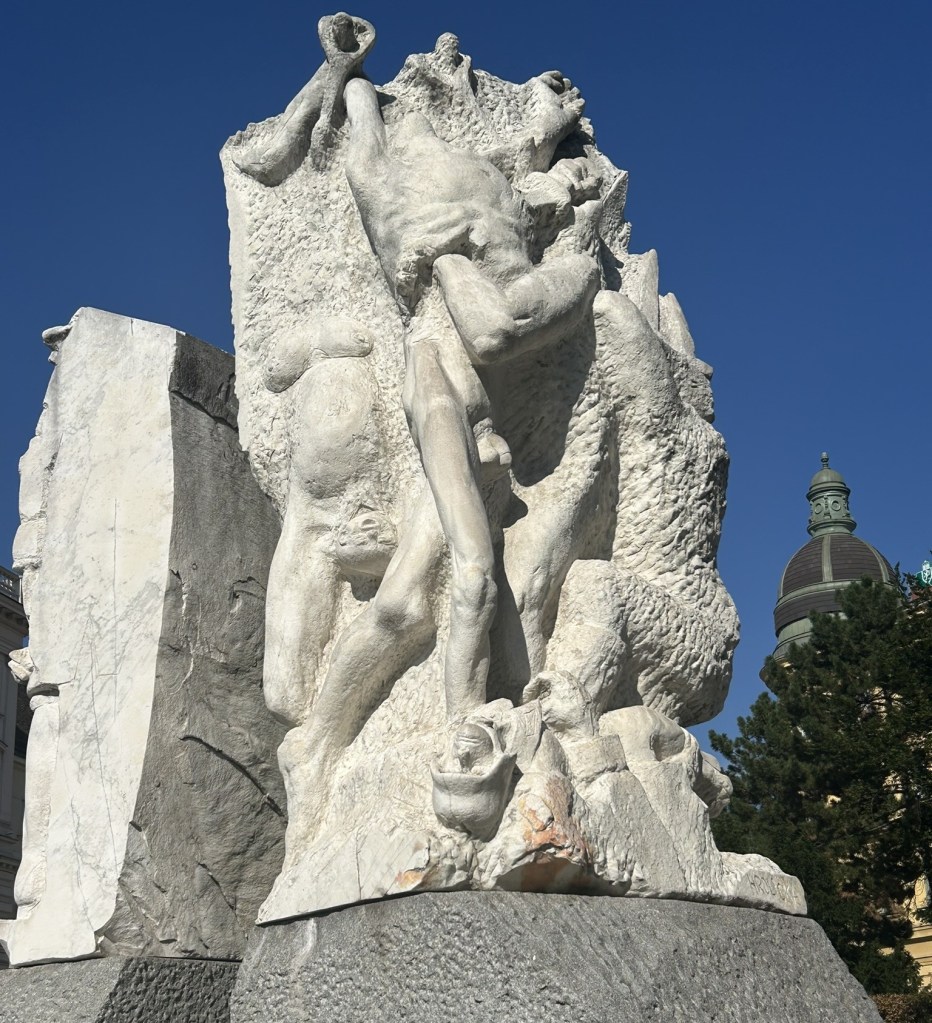
There was a large, outdoor Holocaust memorial nearby with imposing sculptures that we took in. Like Germany, Austria was clearly trying to make amends for its early part in joining forces with the antisemitic Third Reich prior to World War 2.
Friederike soon arrived to join us, and we proceeded across the street to a place where horse-drawn carriages were lined up. Andrea and I then realized that their surprise for us was to be a ride through Old Vienna in one of the large carriages. We were giddy with excitement, as were Franz and Friederike.
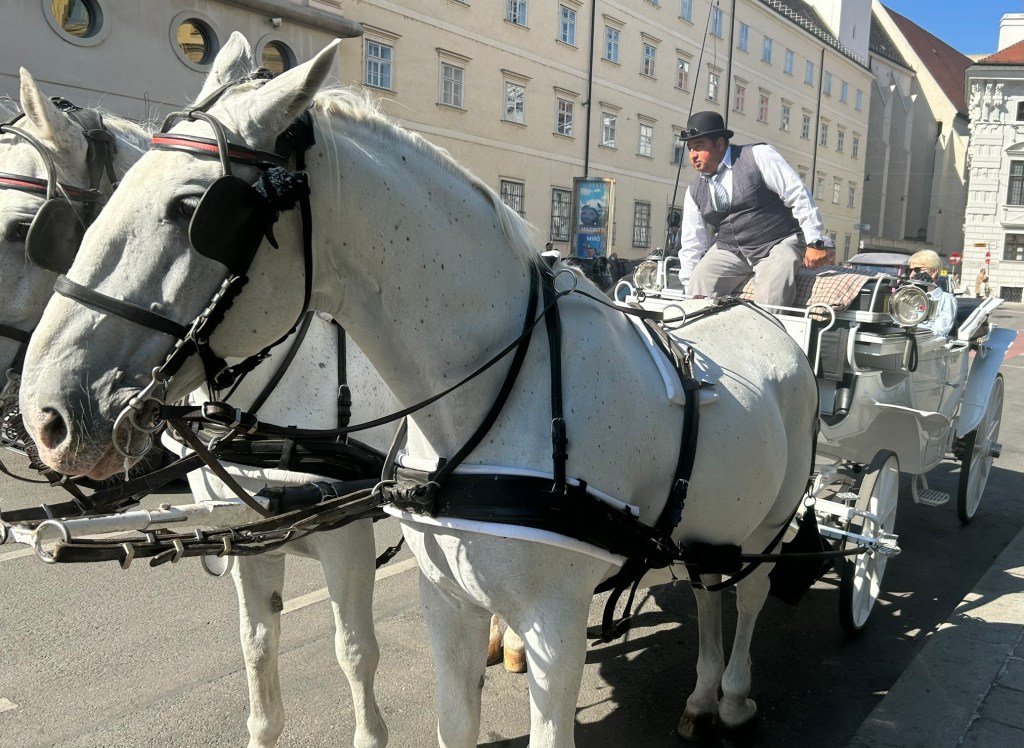
Like the others, ours was a large carriage with seats for four facing in on a central table. Pulling the carriage were two large, pure white horses. The driver and a hostess introduced themselves as we boarded. And before leaving the curb, we were presented with glasses and a bottle of champagne, along with a sumptuous spread of Viennese brunch delicacies.
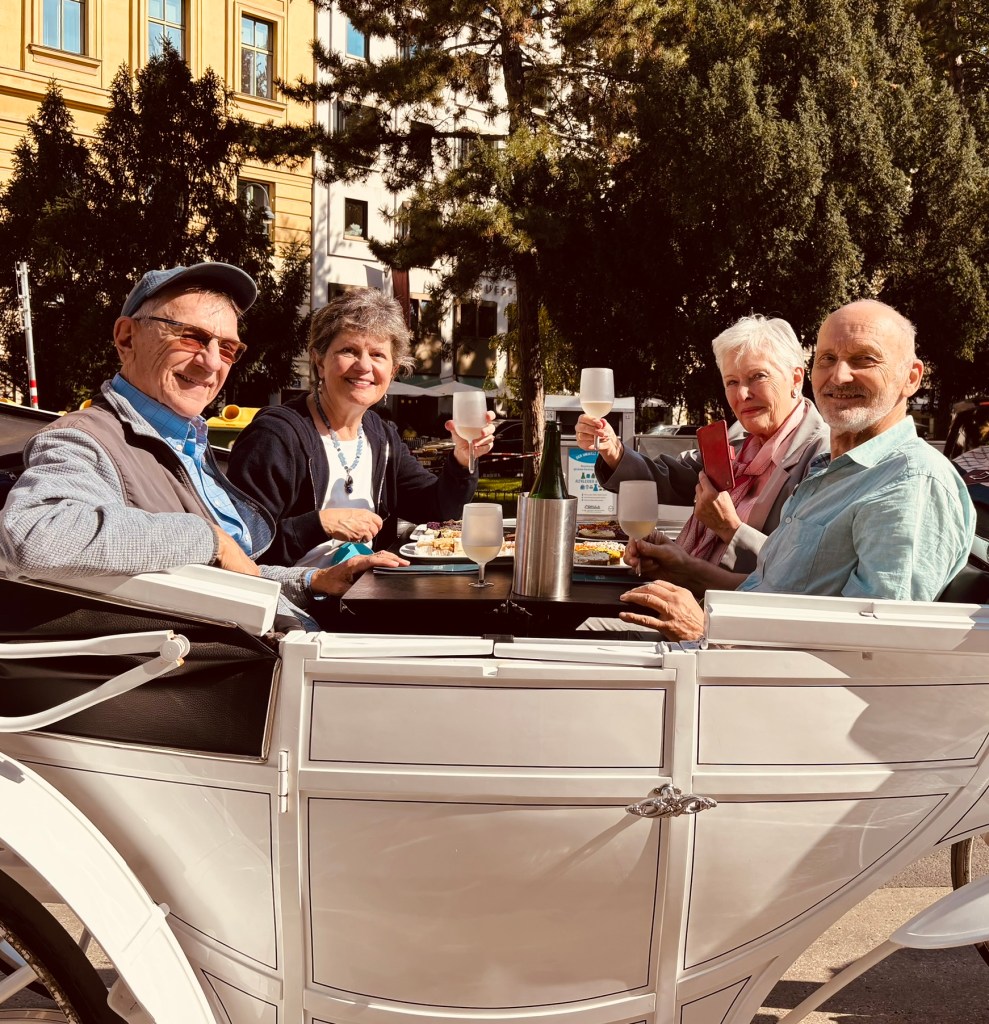
It was all a bit “over the top” for me, but I soon curtailed my judgment and just sat back to receive the bounteous generosity of our hosts. I sat across from Franz who kept refilling my champagne glass and insisting that I at least sample each of the colorful food offerings. Friederike looked absolutely delighted at sharing this experience with Andrea, her long lost “soul sister”. The two of them had shared a lifetime’s love for classical music, and Friederike had even taught Andrea the rudiments of organ playing many years ago.
It was wonderful seeing so many of the principal palaces, churches and museums during our unforgettable half-hour ride. After that, we walked to a nearby Metro stop to ride a train to a station on the Danube river, not far from our hosts’ home. It was our first of many Metro rides in Vienna, and we were very favorably impressed with both the efficiency and the cleanliness of the stations and trains. Our subway car was packed with friendly, happy people of all ages.
We exited the Metro station where Franz had parked their car. Our next stop was a lovely restaurant about five miles along the Danube from the station. It was a lovely drive through the lush Vienna suburbs. At the “La Creperie” restaurant, right on the shores of the Danube, we met Friederike’s two sons and daughter and their five children. Her family all seemed to be excited about meeting us, and we were immediately impressed by everyone’s English proficiency, and their sincere interest in learning about our life in the United States.
I sat across from a 15-year-old grandson who seemed intelligent and sophisticated beyond his years. We had a mature conversation about politics in Austria and the U.S., and about his own university plans. After dinner, Franz led me for a stroll along the river on that marvelous, sunny Sunday afternoon.
Our hosts drove us back to our apartment afterwards, pointing out many of the principal sites along the way. Friederike invited us to meet her and Franz the next afternoon so that she could show us and play the oldest organ in Vienna. We readily agreed.
Monday, October 5
The highlight on Monday was meeting up with Friederike and Franz to visit the Franziskanerkirche (“Franciscan Church”) in Old Vienna. The church is the home of the Franciscan order in Vienna and dates from 1603. It features the oldest playable organ in Vienna, and Friederike had permission to offer us a private organ concert there.
We walked to the St. Stephenplatz around noon, enjoying the lively scene there of visitors from around the world. We had time to sit for a delicious “wurst” lunch at one of the many food stands there. Soon we spotted our friends arriving via the Metro station. It was only a few blocks walk to the Franziskanerkirche from there.
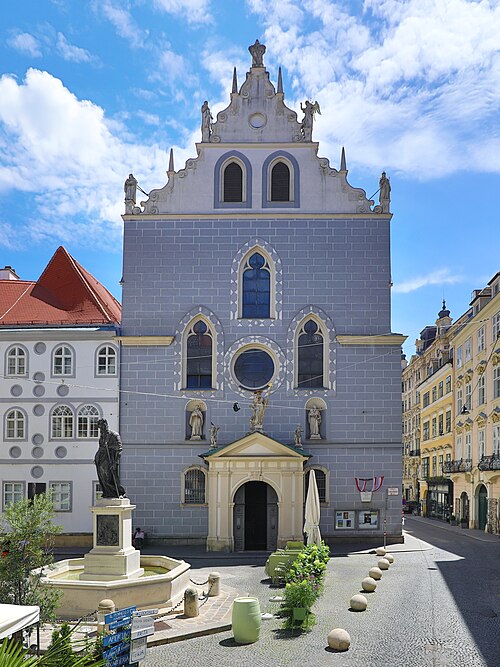
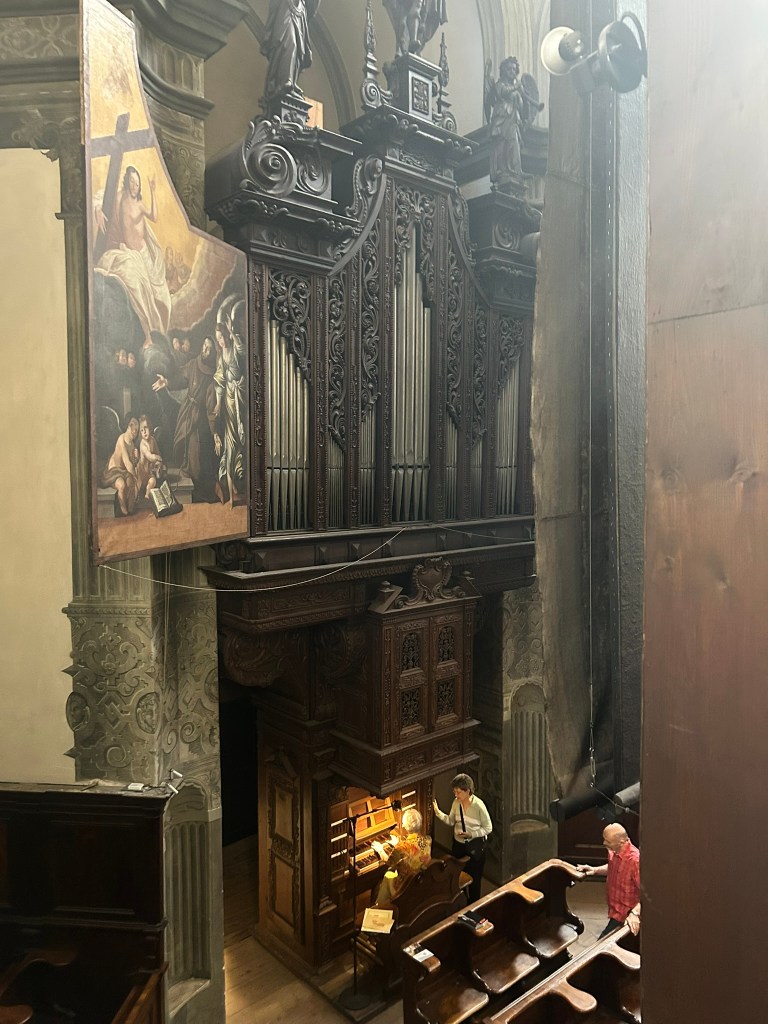
Friederike had made special arrangements for us to visit the church and for her to play the famous Wockhert Organ, built in 1642. It took some time for her to track down the keys, and we were able to spend some time touring the old Romanesque-style church.
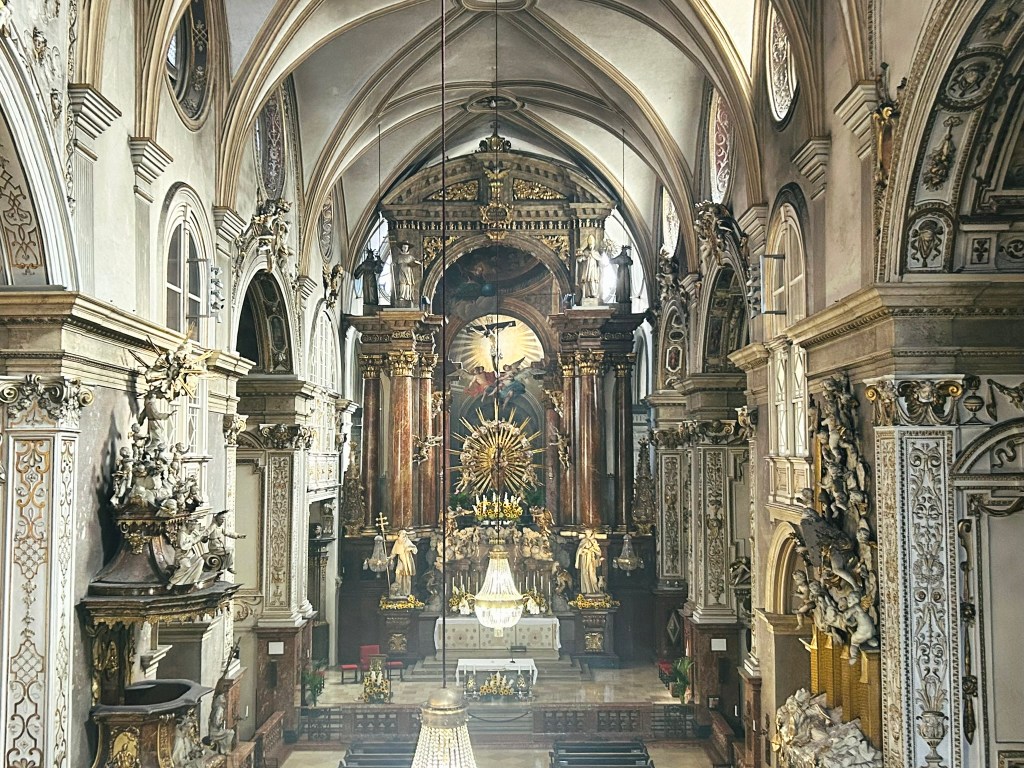
Listening to Friederike’s accomplished organ playing for the first time was a real treat. There were many challenges for her in using the ancient organ technology, but Franz was an able assistant. He even served to turn the pages on the complex musical notation. Franz had been an active member of a church choir when he and Friederike met over ten years ago. It was clear that he honored and respected his spouse’s lifelong mastery of the organ, including historic old instruments like the Wockhert. Andrea had a deeper knowledge and appreciation of the classical organ repertoire being played. I mostly took in the majesty of the sound and the historical environment in which we sat.
After playing a number of pieces on the ancient organ, Friederike led us to the back of the church where a more modern organ resided. She played that organ for us as well, yielding some applause from the church visitors below.
As we were leaving the church, we encountered a tall, young, tan-skinned Franciscan who greeted us and got the keys back from Friederike. We asked if he had enjoyed the music, and he enthusiastically affirmed that he had, and mentioned that he, too, was a musician. When asked, he said he was actually a missionary “rapper” who used rap music and dance to engage with young people. In fact, he said he had over 2 million followers! (We later checked Facebook and saw that he was being truthful as we watched an energized video of him singing as a troupe of young African children danced and sang along.)
Tuesday, October 6
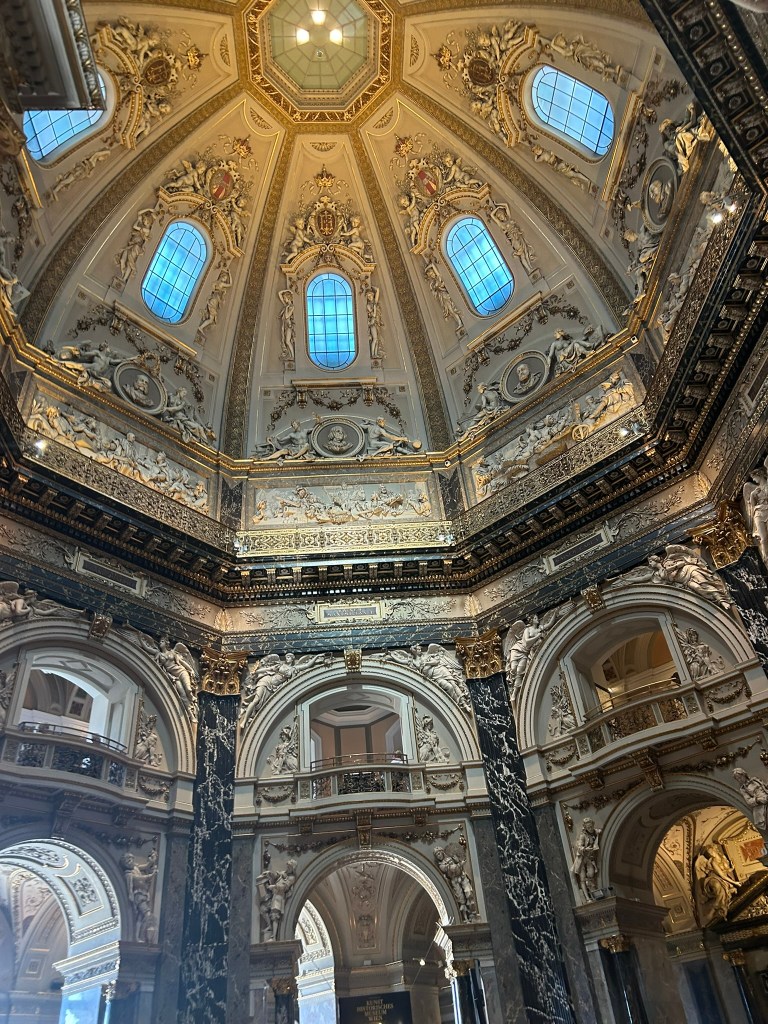
Andrea and I were on our own on Tuesday. It was a very full day for us. In the morning, we made the half hour trek down to Vienna’s most famous art museum, the Kunsthistorisches (“Art History”) museum. It is a world class art museum on the order of New York’s Metropolitan or London’s National Gallery.
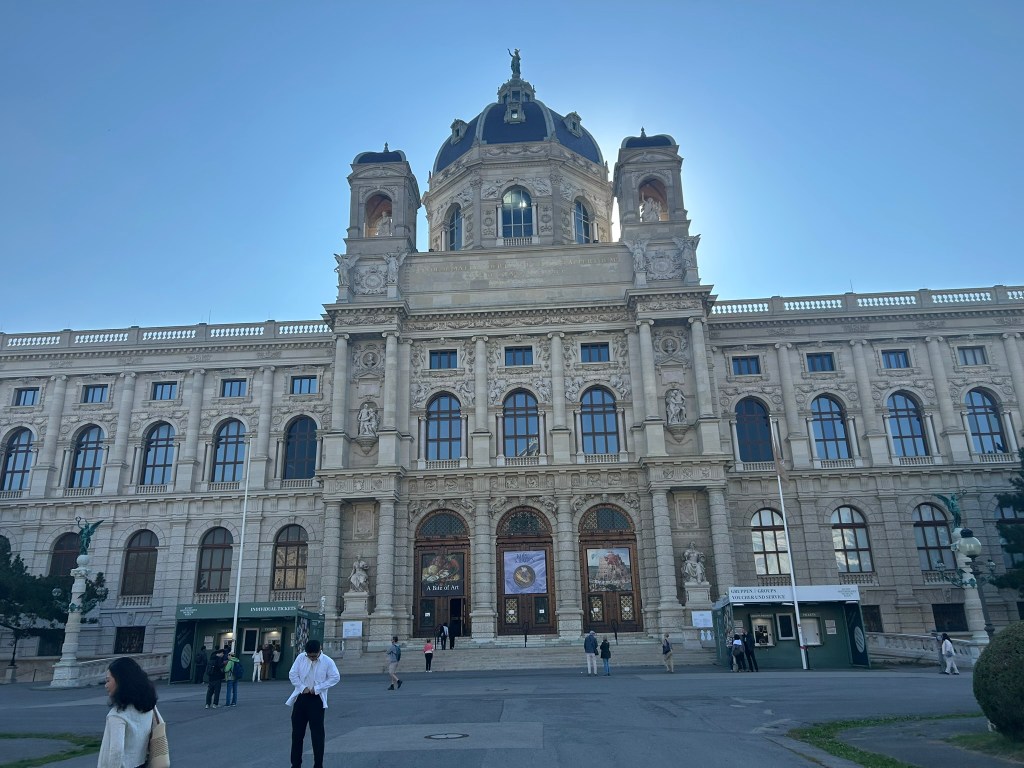
Walking through the old imperial Vienna of the Hapsburg dynasty (1526-1918) is an impressive experience. And the Kunsthistorisches is an example of imperial Hapsburg palace architecture par excellence. The scale and baroque ornamentation of the building itself, inside and out, is well worth the visit. And its collection of classical European art is among the best in the world.
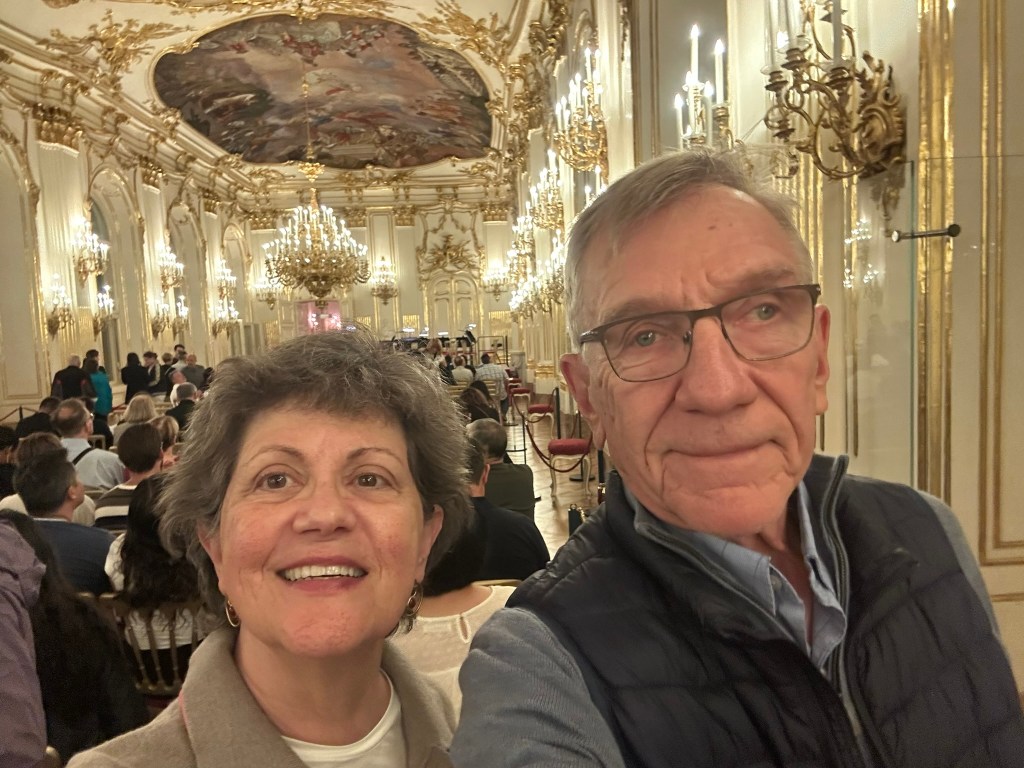
For the evening, I had ordered tickets to a classical music concert at the Schonbrunn Palace, another historic Hapsburg residence on the other side of the city. In order to get there, we went online to determine what Metro line to use. We hadn’t ridden the Vienna Metro by ourselves before and had to learn the procedure for buying tickets and getting schedules. It turned into a pleasantly adventurous experience, and we arrived an hour early so we could tour the extensive grounds.
The concert itself was given by a professional chamber orchestra of young musicians and included music by two of Vienna’s best loved composers – Wolfgang Amadeo Mozart and Johann Strauss. The audience was made up largely of tourists like ourselves. We thoroughly enjoyed the concert, including the lush rendition of Strauss’ “Blue Danube” waltz at the end.
John Bayerl, 11/13/2026

