Four Days in the “Eternal City”

We arrived in Rome late on Thursday night, October 8, after our flight from Vienna was delayed in landing due to strong thunderstorms over much of central Italy. Our Italian friends Linda and Bruno were at the airport awaiting us, but it took us a while to retrieve our luggage and find them. It was a happy reunion for all of us after our last time together in Puerto Rico in 2018.

It was a long drive from the airport to our AirBnb apartment in Trastevere. At one point we had to drive through a road covered by inches of water after the heavy rains. Bruno drove Linda’s Toyota Yaris hybrid quite adeptly though and we reached our destination on Via di Santa Bonosa easily with Linda’s careful navigation. Linda and Bruno helped carry our heavy bags up to our 4th floor place via a tiny elevator. The apartment wasn’t as roomy nor well appointed as the one we had in Vienna, but it proved to be quite comfortable and well situated for exploring the sites on foot.

Day One

Friday, 10/9, was a day of getting oriented to our immediate surroundings in Rome. Our apartment on had big windows overlooking a large, purple-blooming bougainvillea and the colorful rooftops of Trastevere. The air flow was excellent and the temperatures moderate without need for heating. The kitchenette was also more than adequate for our needs, and the plug-in Wi-Fi technology was also excellent.
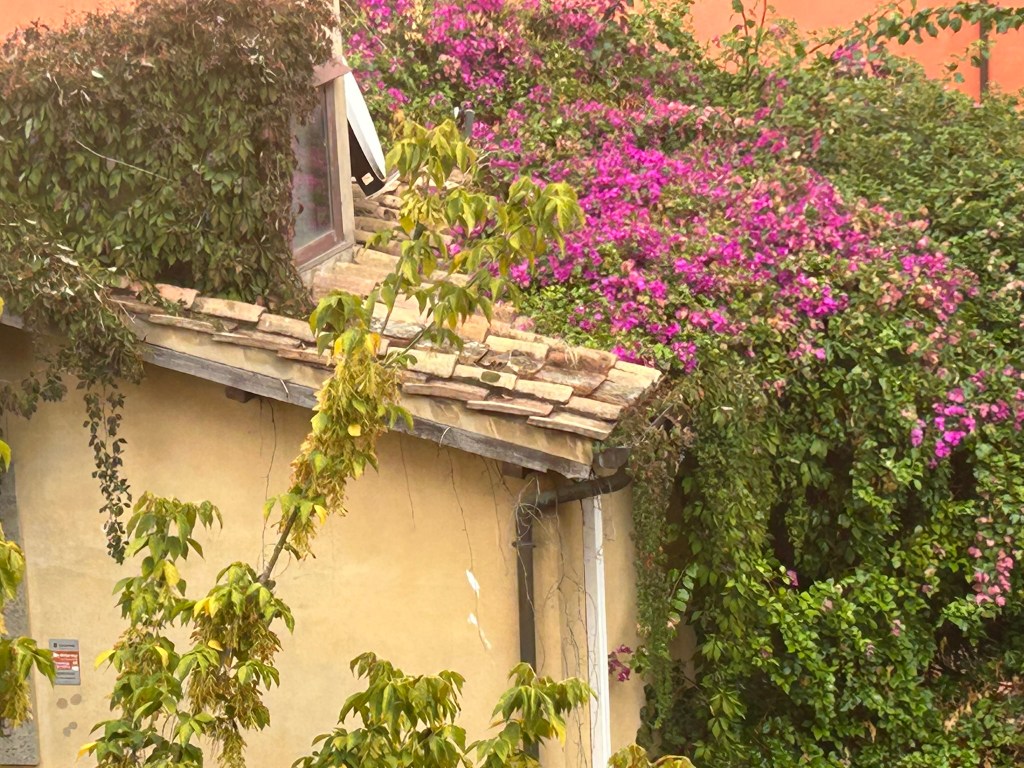
Bouganvillea outside our Trastevere apartment window

We slept in on Friday morning before showering and heading out for a delicious “capuccino /corneto colazione” (the traditional coffee and croissant breakfast) at a small street cafe along the narrow Via Bonosa in the bustling, old neighborhood of Trastevere. The narrow, cobblestone streets were already bustling with activity. After our little breakfast, we found our way across a small bridge to the little island in the Tiber that Linda had recommended, the Isola Tiberius. (Our neighborhood, “Trastevere”, means ”across the Tiber”).

There we encountered a little piazza in front of the old Basilica di San Bartolomeo. It was the first of many beautiful churches we visited in Rome.
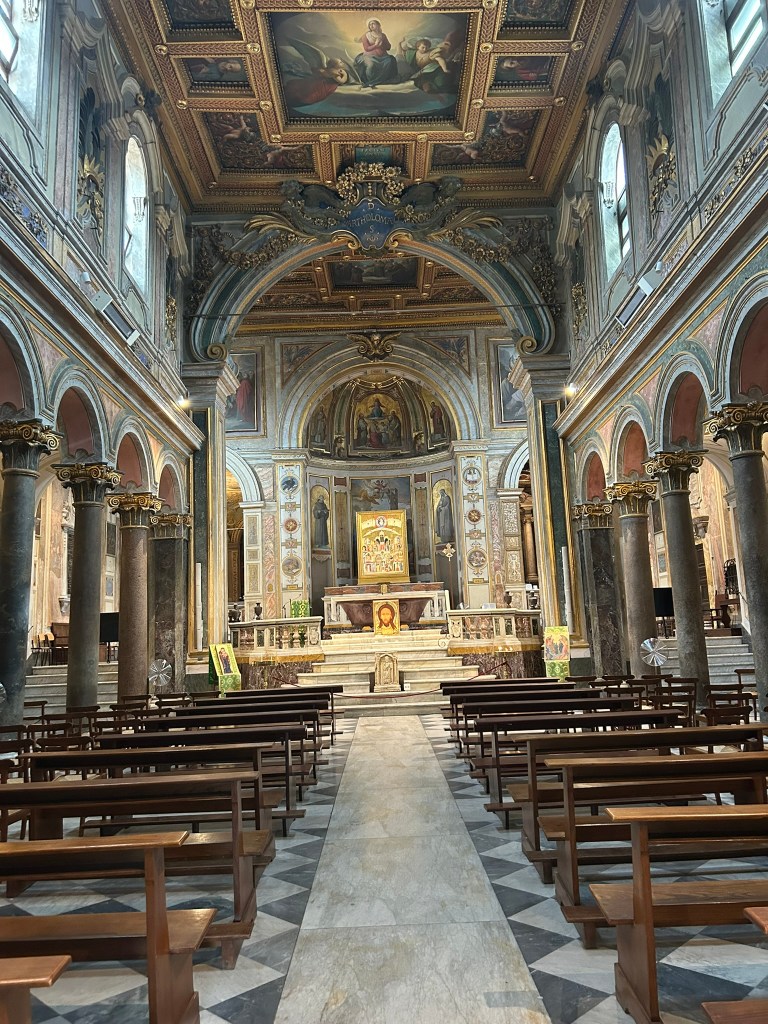
Basilica di San Bartolomea, Isola Tiberius

We then left the island by another small bridge and entered the Jewish Quarter. An imposing synagogue faced out over the Tiber, and was surrounded by numerous Jewish restaurants, grocers and other shops. A Jewish presence in Rome goes back many centuries. Though persecuted during World War 2, the Jews of Italy avoided some of the large-scale genocide experienced so widely in the rest of Europ

We then walked a few blocks north and came upon a wide expanse about two blocks long of an archaeological dig called the Largo Torre de Argentina. This site impressed on us the fact that much of the present city of Rome rests atop elements of much older structures. The site was discovered by chance and was immediately preserved for its historical importance. Such sites are not uncommon through “the Eternal City”.
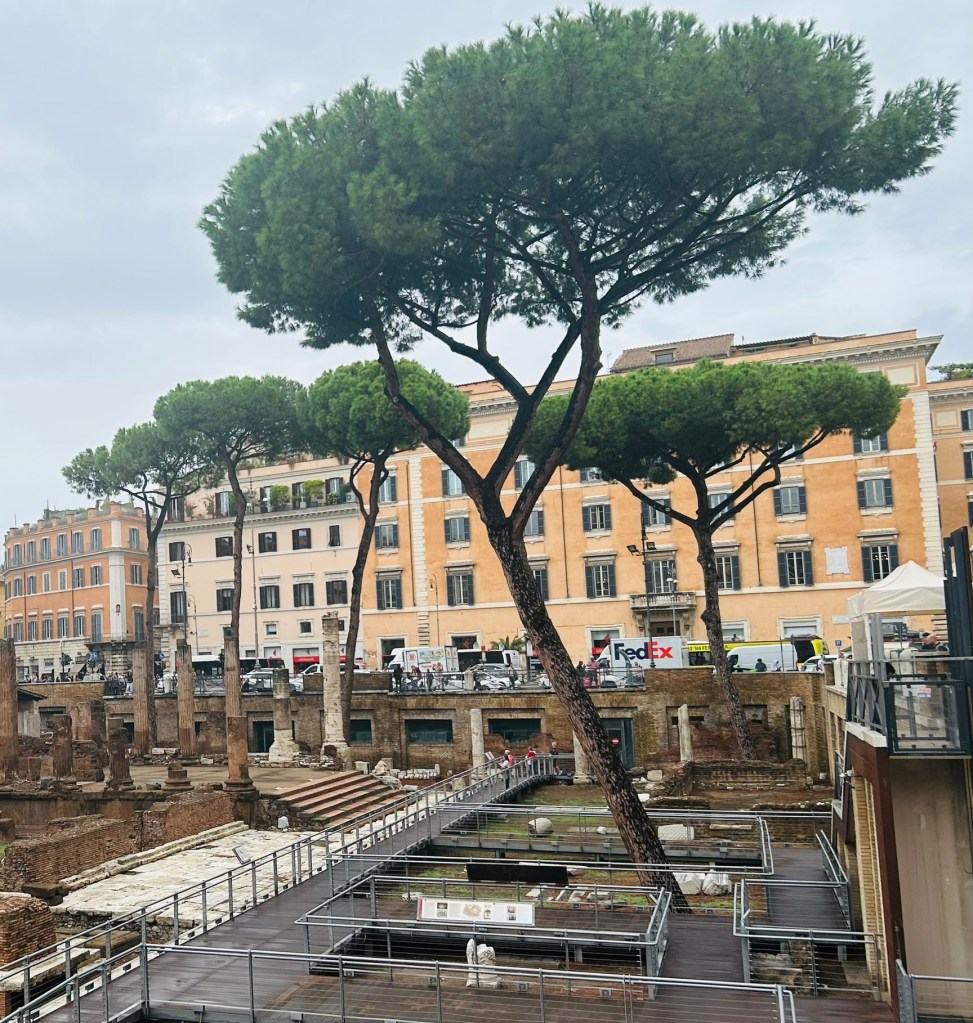
Archaeological dig at Largo Torre de Argentina

Our last stop on our first morning walk was the famed Piazza Navona. It is one of the best-known Roman piazzas, famed for its dramatic baroque architecture. The piazza occupies the exact area of a first century stadium built for horse racing and other athletic competitions. Today the piazza is dominated by the renowned baroque churches of St. Agnes and of Our Lady of the Sacred Heart.

Perhaps the most famous structure in Piazza Navona is Bernini’s “Fountain of the Four Rivers”, representing the Danube, the Ganges, the Nile, and the Rio Della Plata, also representing four continents.
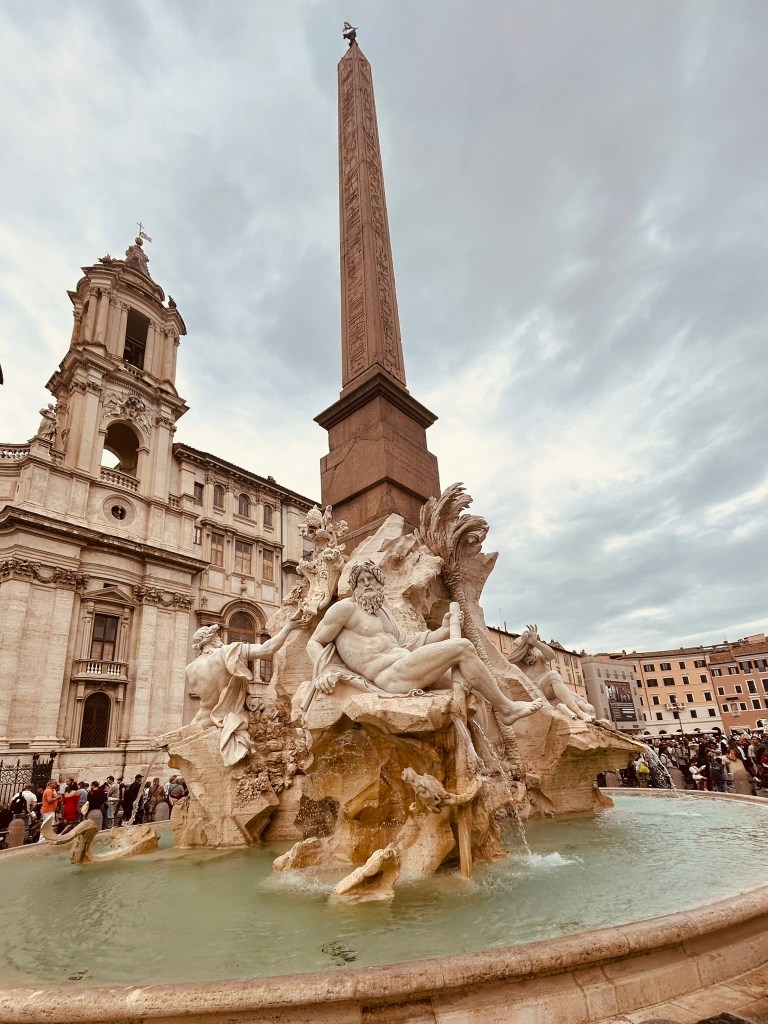
Bernini’s “Fountain of the Four Rivers”, Piazza Navona

We walked back to our apartment in Trastevere with a delightful taste of some of Rome’s many wonders. We rested that afternoon in preparation for a special presentation that evening at the “Ara Pacis” museum. Linda had gotten tickets for that evening’s multimedia presentation on the history and cultural background of Emperor Augustus’ famous “Altar of Peace”.
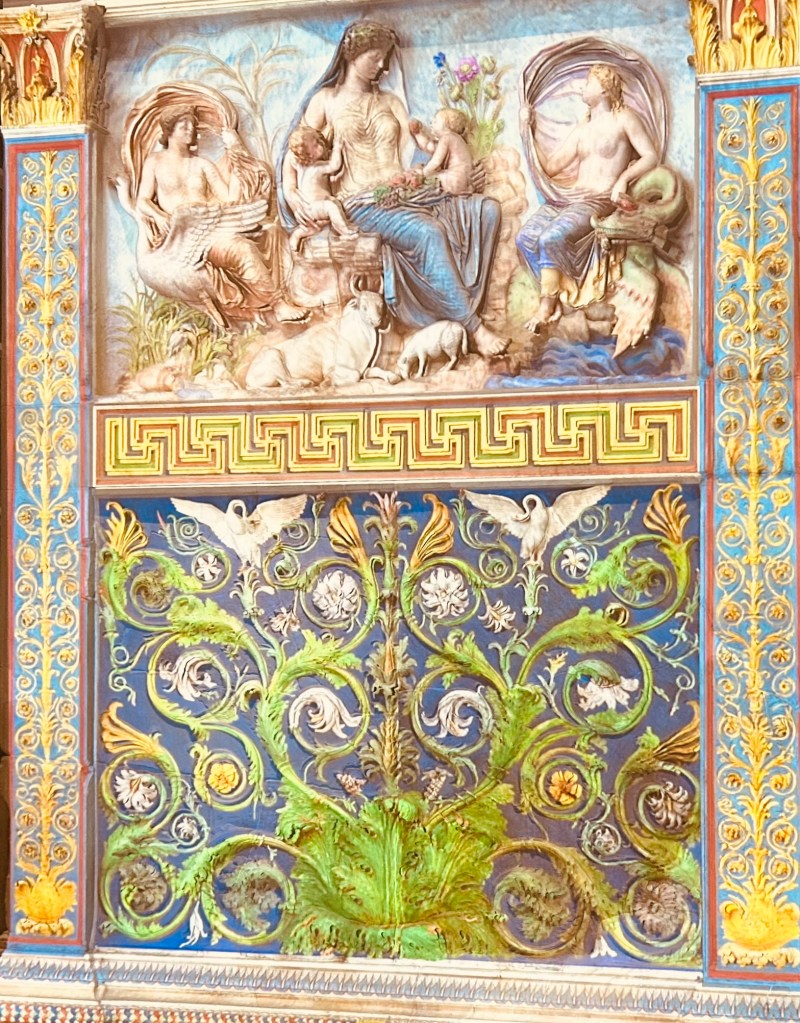
Colorized version of a side of the “Arca Pacis” of Emperor Augustus


The above simulated coloration of this ancient Altar is a testament to the artistry of Rome, past and present.

We ended the evening with Linda and Bruno at a bustling restaurant back in Trastevere. Afterwards, we walked through the crowded streets taking in the lively throngs of young people dancing to live music. It brought back memories for Andrea and Linda of their time living together in Trastevere back in the 1970’s.
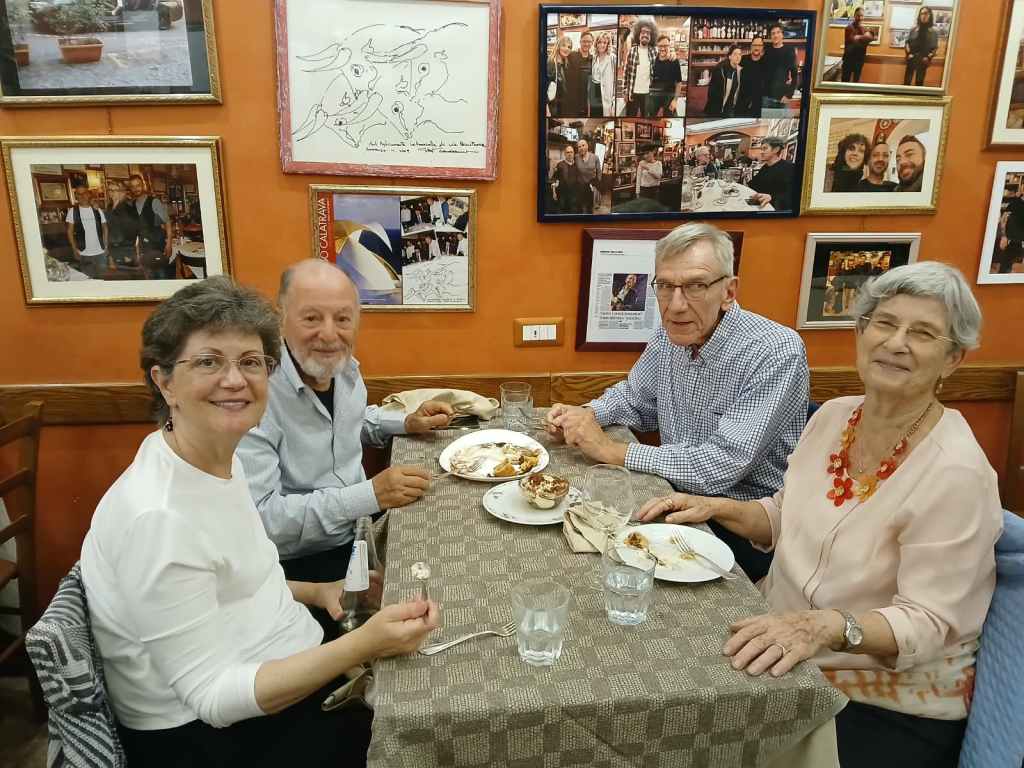
A late “Roman supper” with Linda and Bruno

Day Two

We slept in on Saturday October 10 after our late night out. We shopped for basic food provisions that morning a few blocks down on the Viale di Trastevere. We also bought a bottle of wine for the supper we would be having that night at Linda and Bruno’s home in the Taverni area of northeast Rome.

Most of the afternoon was spent walking along the Tiber on the Lungo Trevere della Farnesina, to and from the Vatican, about a 2-mile distance from our apartment. It was a cloudy day, but the temperature was mild and we enjoyed the many sites of buildings, bridges and people on our trek along the river to the Vatican and back.
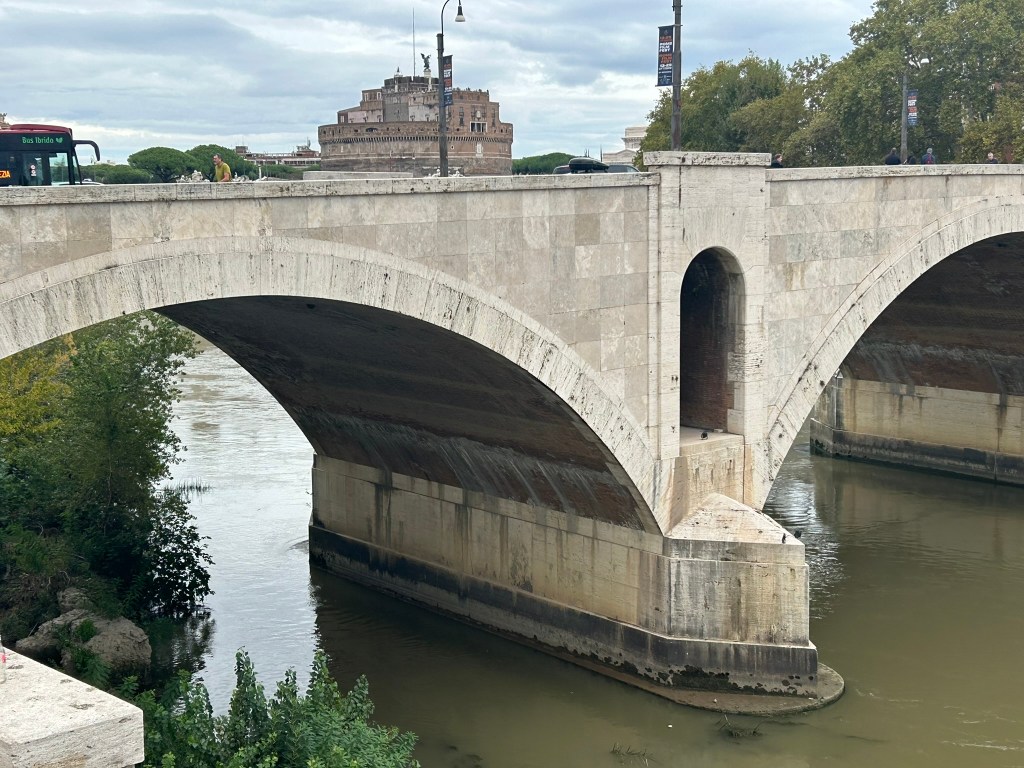
A bridge across the Tiber

Neither Andrea nor I are practicing Catholics but we still wanted to visit the famed, geographic center of the worldwide Roman Catholic Church. It was well worth our effort, even though the large crowds in Vatican City meant that we weren’t able to go inside St. Peter’s nor the Sistine Chapel.
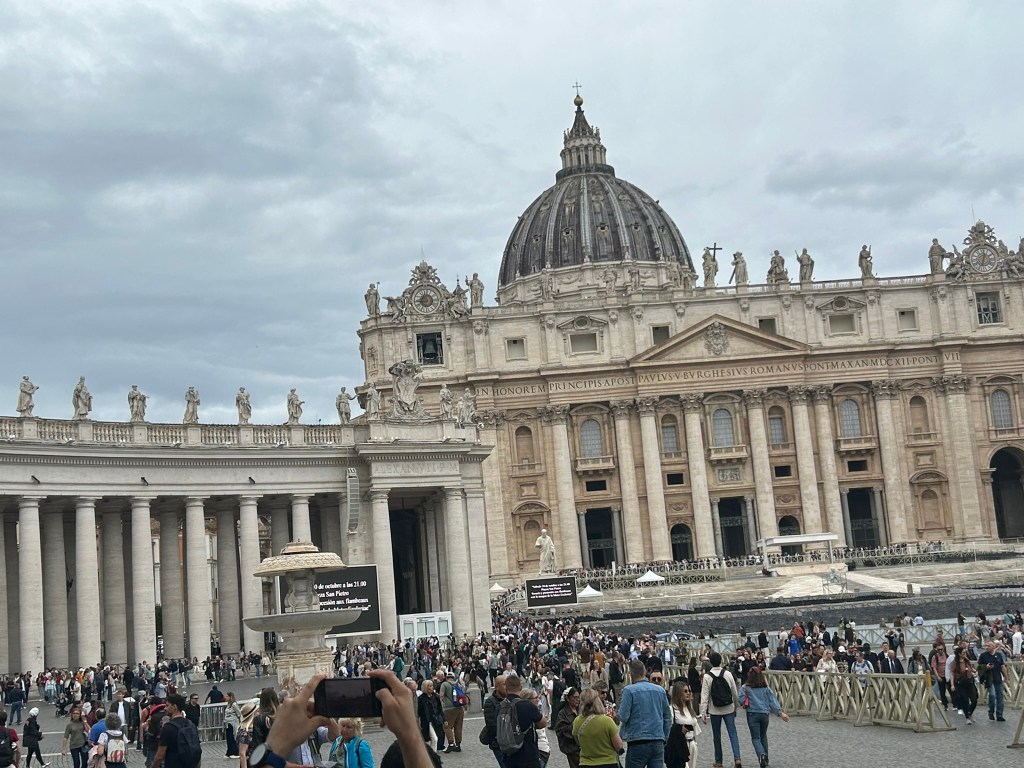
The dome of St. Peter’s over the Vatican

The immensity of St. Peter’s Square was quite amazing, as were the multitudes of people from all over the world milling about there. There was a large sculpture of a group of immigrant refugees that got my attention. Pope Leo has become a strong advocate for immigrant rights worldwide, and I wondered if he had something to do with the placement of the dramatic sculpture there. The famous Bernini fountains were also a sight to behold.
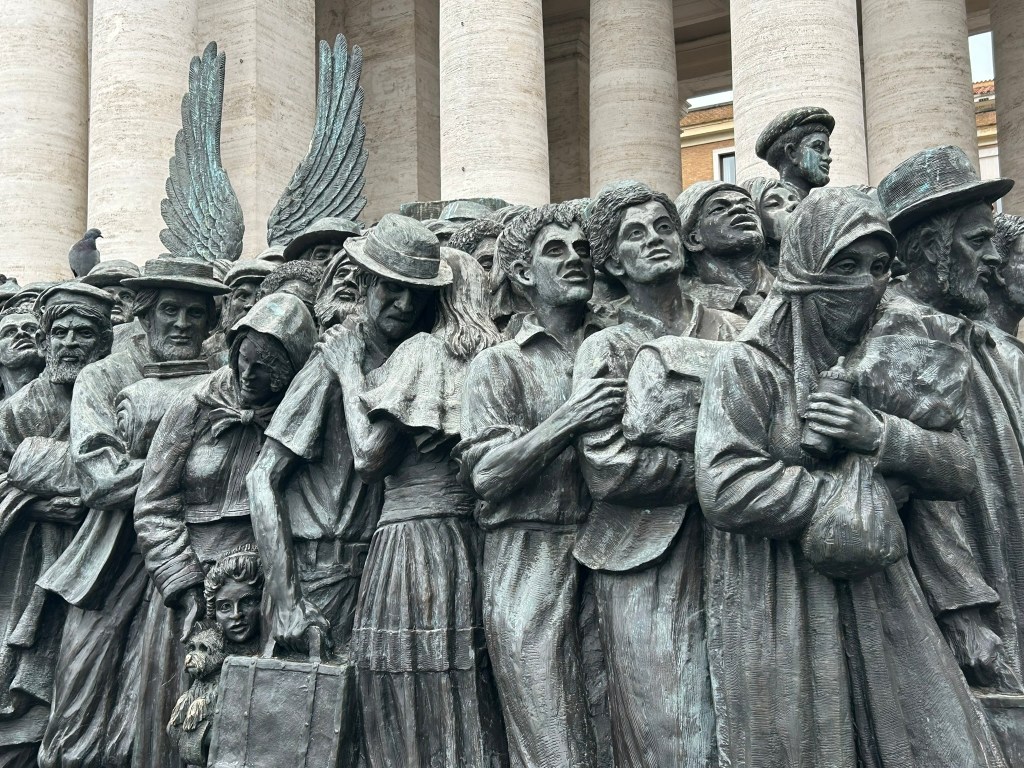
Sculpture of refugees in St. Peter’s Square

That evening, we took a taxi from Trastevere through the crowded Saturday evening streets of Rome up to Linda and Bruno’s apartment home for dinner. Bruno is an excellent cook and it was fun watching him cook and serve fresh anchovies; much tastier than the dried version I knew as a pizza topping. Andrea had stayed with our hosts in previous visits to Rome, but this was my first time in their spacious and well-cared for home. They even had a sizeable fruit and vegetable garden on their side porch. Linda offered me a beautiful, just picked persimmon which I happily took with us for Sunday’s breakfast.
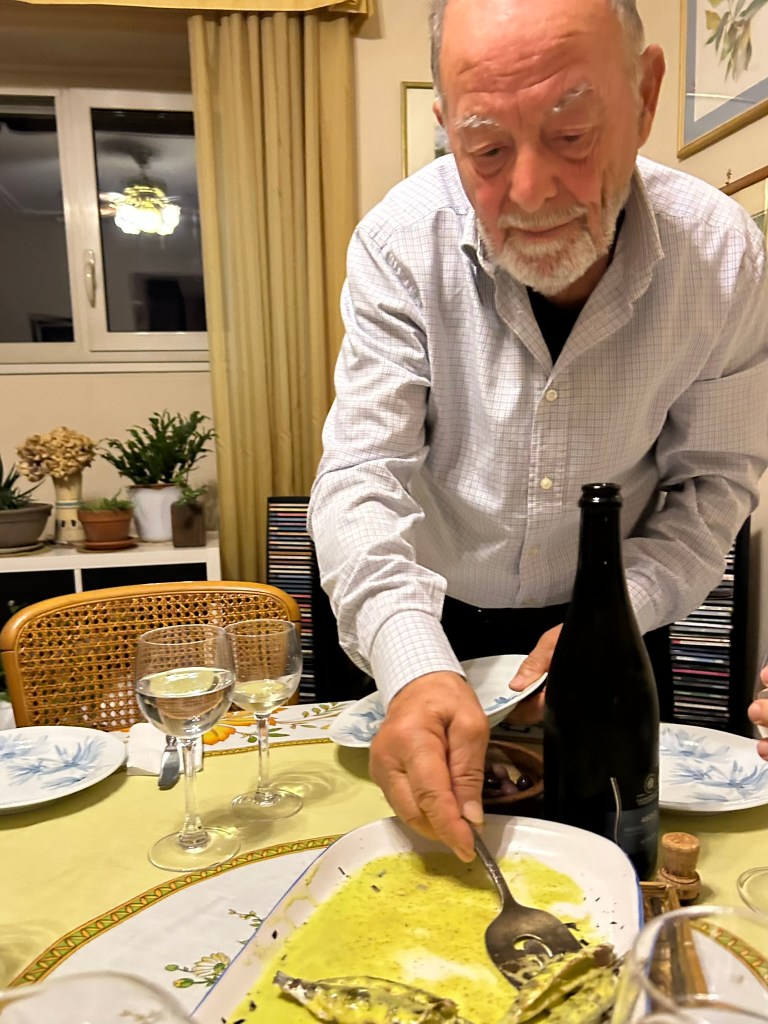
Bruno serving grilled anchovies

Day Three

The highlight on Sunday, October 11, was a fabulous concert in honor of St. Francis of Assisi. Linda had ordered the tickets months earlier, and we were much looking forward to it. It was held at one of the largest palace complexes in the world, the Palazzo del Quirinale, perched on the highest of the seven hills of Rome with a full view of St. Peter’s Cathedral.
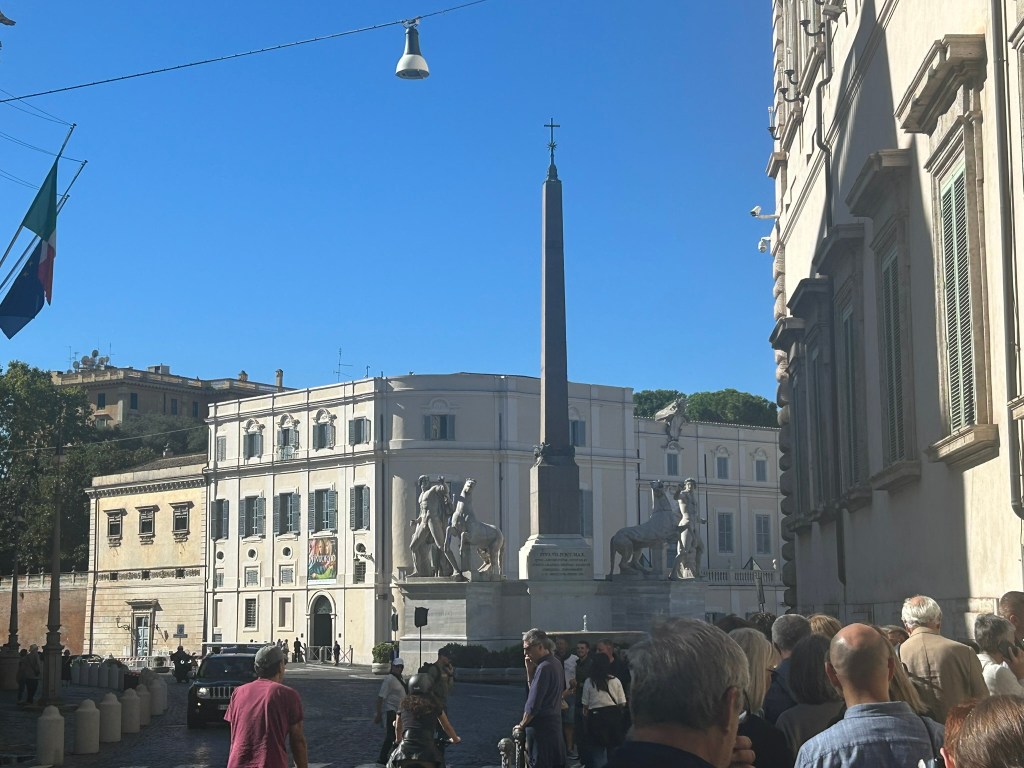
Outside the Quirinale Palace

It was a beautiful, sunny morning and we arrived at the Quirinale via taxi from our apartment. Linda and Bruno took a bus down and we had some time to visit the large outdoor plaza first, with a number of large sculptures and great views of the city.

There was tight security on entering the Palazzo since the building now serves as the official residence of the president of Italy. The concert itself was held in an ornate chapel deep within the palace. The palace had served as a papal residence for many years, and the chapel was modeled on the famous Sistine Chapel in the Vatican.
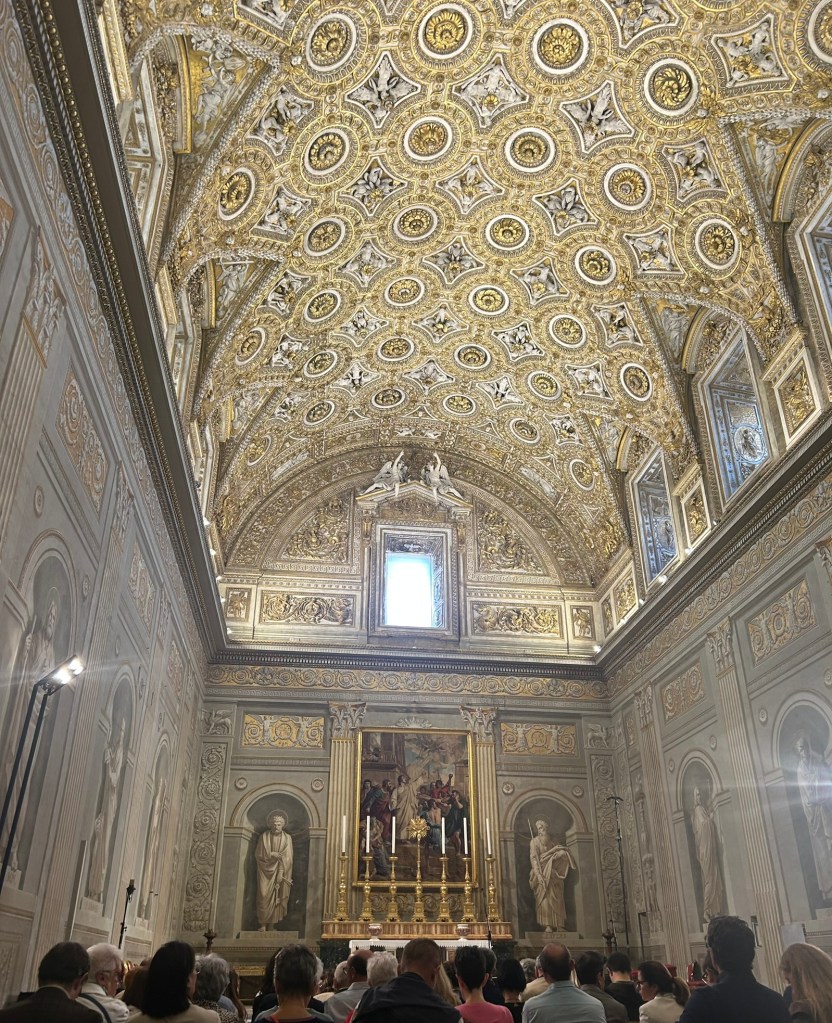
Chapel inside the Quirinale Palace

The concert program included just one work: “Ufficio Ritmico di San Franceso”, based on a 13th century “Office” in honor of St. Francis of Assisi. All of Italy was marking the 800th anniversary of the death of Francis on October 3, 1226. This ecclesiastical “Office” was adapted and sung by a group of five women, the “Coro Armoniosoincanto”, and accompanied by a solo bandoneon, an instrument in the concertina family that is much used in tango music. The singing was in the style of Gregorian chant and the sonorous harmony of the voices filled the chapel with a sound as close to angels as I could imagine.
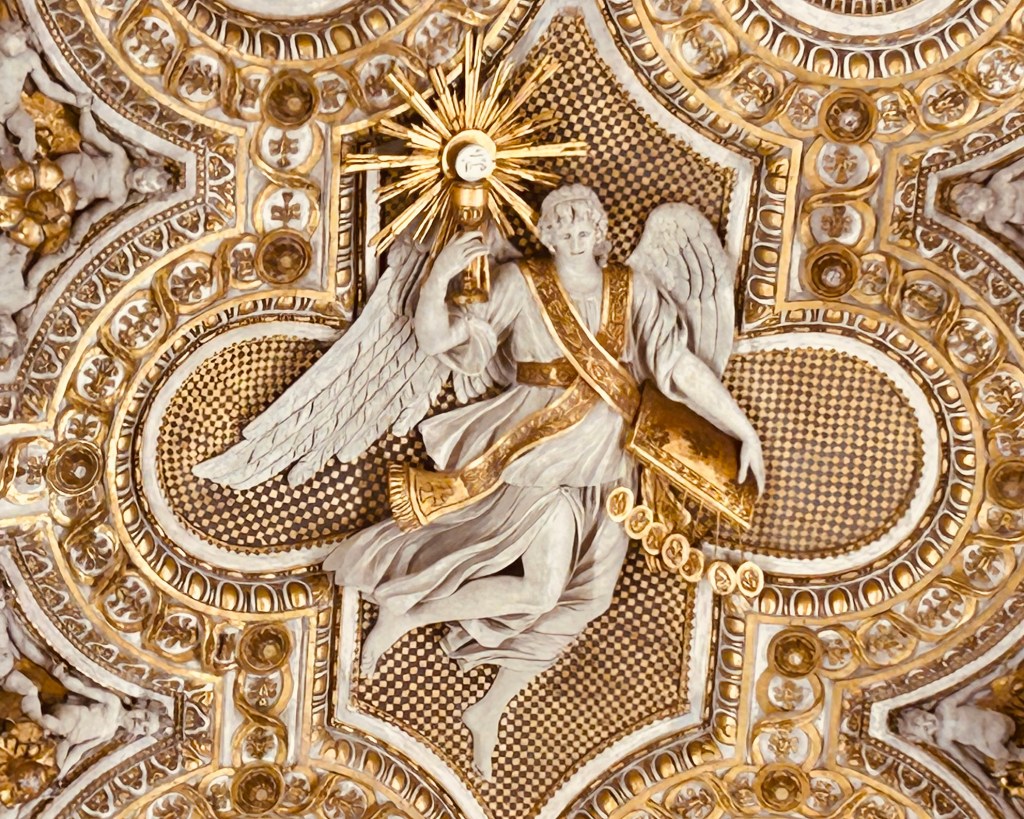
Part of the ceiling of the Quirtinale chapel

Day Four

Andrea and I were on our own for our last day in Rome, another bright, sunny one. In the morning, we took a streetcar from Trastevere to the Piazza Venezia, just across from the classical building complex on the Capitoline Hill. We climbed the famous stairs to the top, where Michelangelo’s sculpture of Marcus Aurelius on horseback overlooked the hill. From there it was a short walk to a site overlooking the large extent of ruins that comprised the famous Roman Forum. And from there, another half mile walk to the Colosseum.
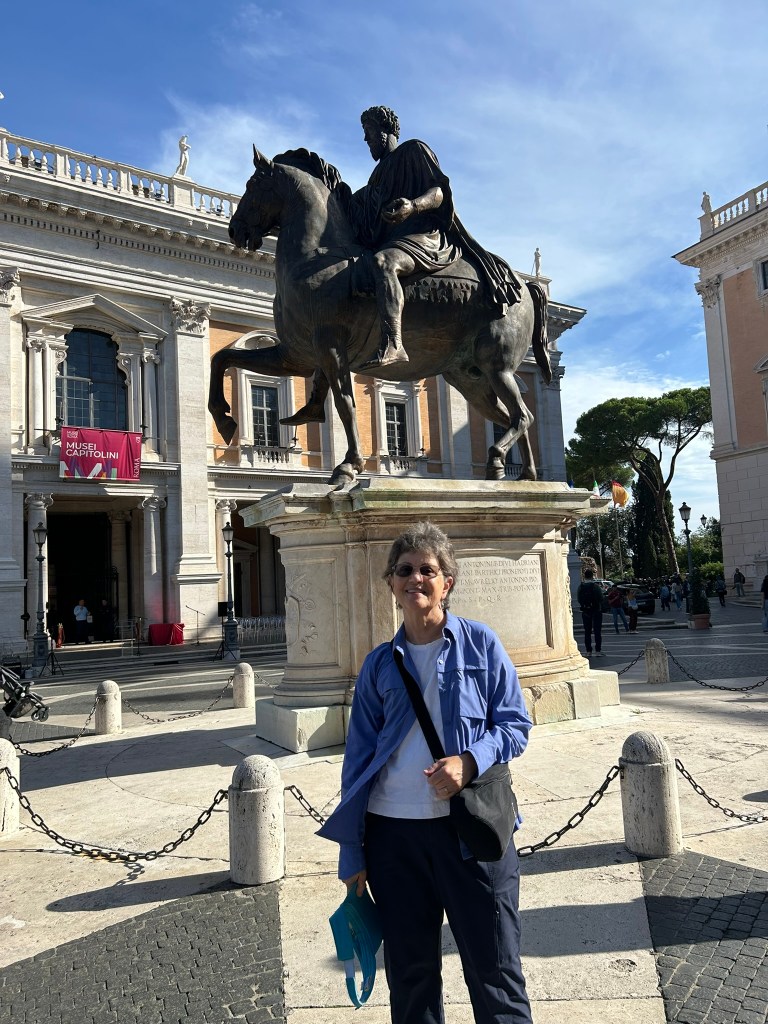
Andrea under Michelangelo’s sculpture of Marcus Aurelius

On our way to the Colosseum, we went down a stairway to check out the famed Colosseum Metro station. We were impressed by its clean, modern architecture, and stopped to watch a video about the extensive construction around the Colosseum that had begun in the late 1930’s.
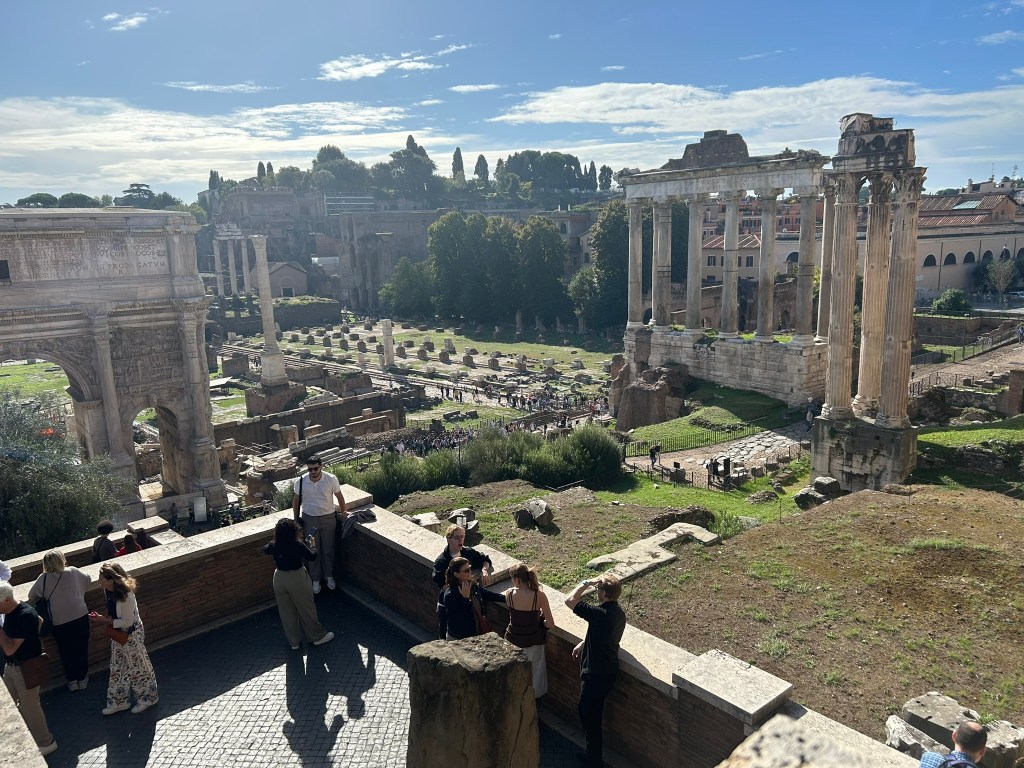
Above the ruins of the Roman Forum

There were long lines to buy tickets to enter the Roman Forum and the Colosseum, and we opted to keep walking. It was enough for us to take in the immensity of these structures from the outside. We ended up walking all the way back to Trastevere, following a route that paralleled the immense Circus Maximus. In its day, the Circus had a course for chariot-racing that was over 600 meters long, accommodating over 150,000 spectators on its infield.

We stopped at a pleasant outdoor coffee shop on the Via Aventino before continuing our hike home. Just before crossing the Tiber, we came upon two small temples and stopped to take photos.

After resting in our apartment for a few hours, we ventured out again in the late afternoon, taking the tram again to Venezia on our way to the famed Trevi Fountain. This time we ducked into the Palazzo Venezia and were taken with the beauty of its courtyard.
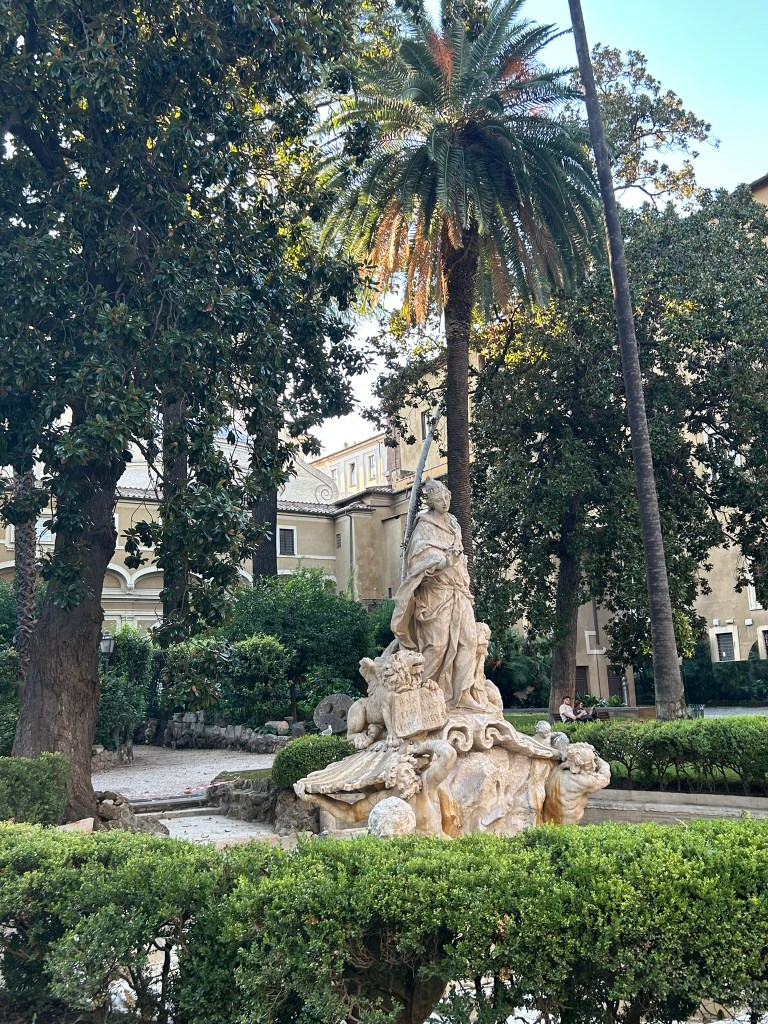
Courtyard of the Palazzo Venetia
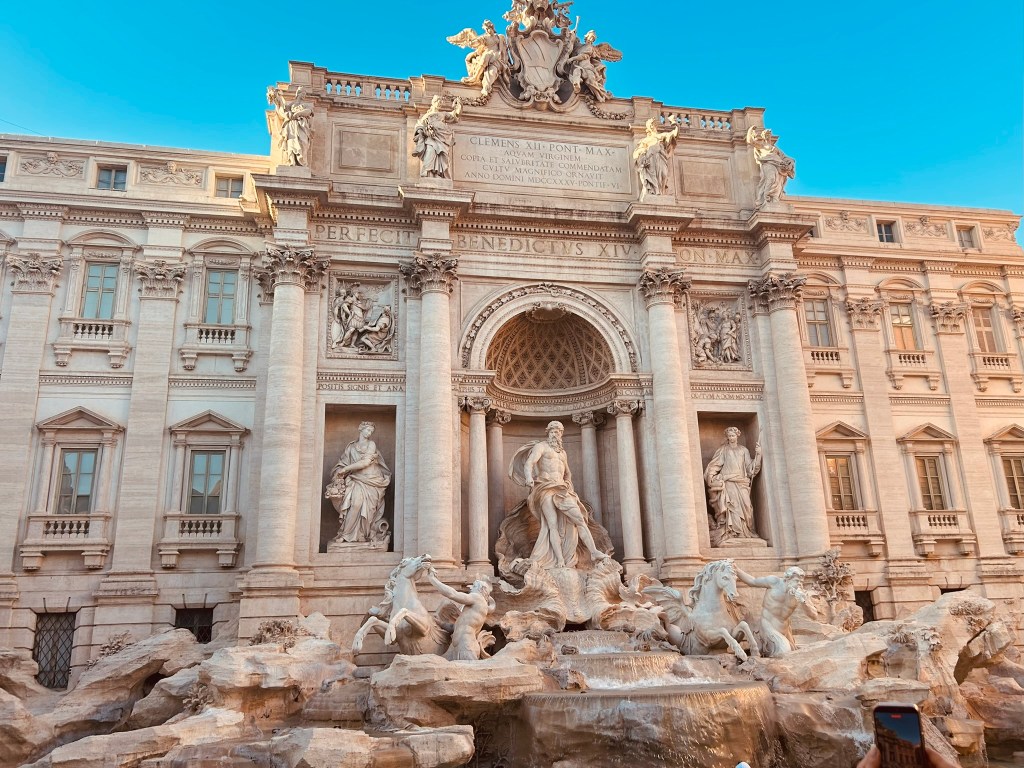
Trevi Fountain

The narrow streets to the Trevi Fountain were packed with tourists. At the fountain itself, we waited patiently just to have a chance to see the fountain. Getting close enough to throw coins required buying tickets, which we decided not to do. Instead, we found a relatively quiet outdoor restaurant a few blocks away where we enjoyed our last restaurant meal in Rome. We both felt happy and contented about our treks around Rome, and also felt ready to leave the city for some quieter, more peaceful realms.
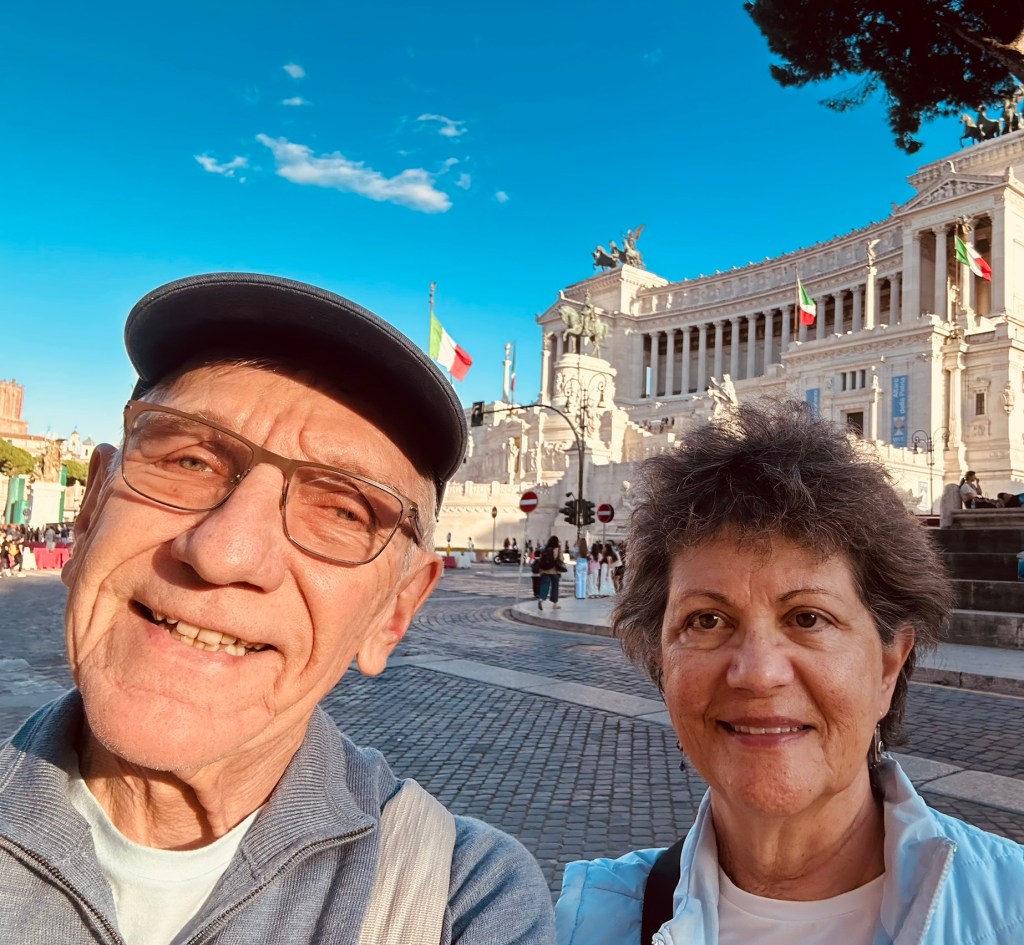
Andrea and John at the Piazza Venezia

John Bayerl, 11/23/2026
Vienna, Part 3

I’ve posted two accounts (November 4 and November 13) covering our first four days in Vienna. This one is about our last two days there before flying to Rome.

Wednesday, October 7

It was another fabulous day in Vienna with our new/old friends, Friederike and Franz. We spent the whole afternoon together, meeting them at Alte Danau Metro station around noon.

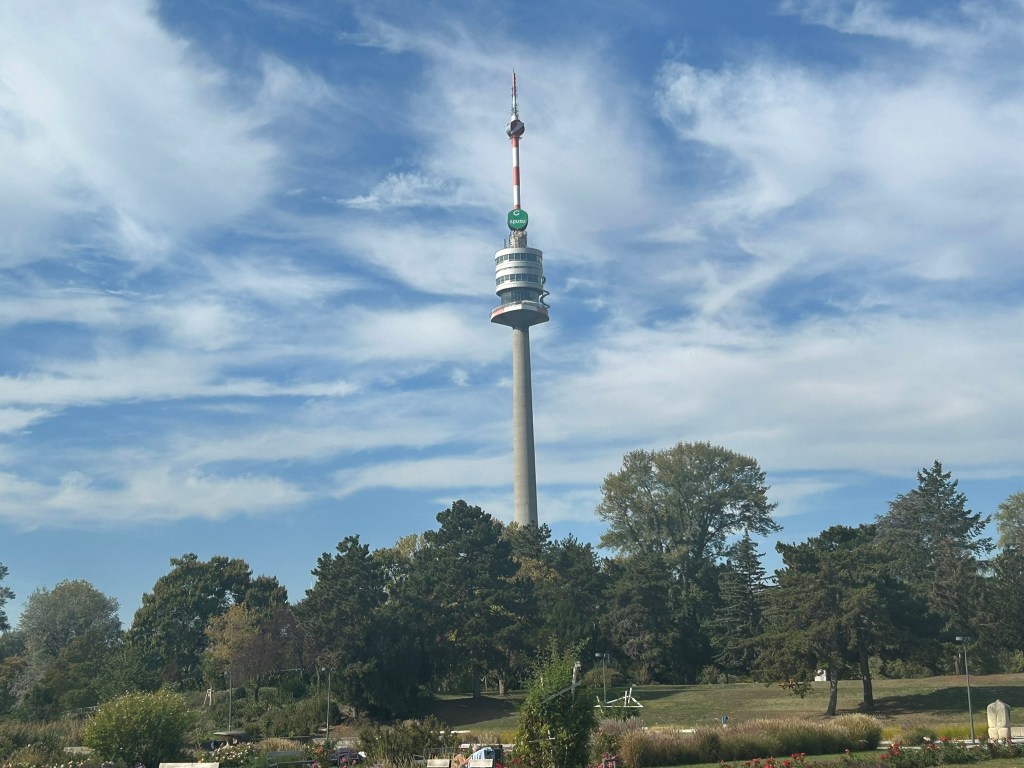
The “Danautrum” (“Danube Tower”)

It was still another gorgeous fall day. F & F rode the Metro down two stops from their home to meet us, and we walked together to a nearby public park that surrounds the “Danautrum”, a 200-meter-tall observation tower with stunning views of the entire city. The park itself featured bounteous flower gardens, numerous playgrounds, and hiker-biker trails that were well used. We took a miniature train (the “Lilliput”) from one side of the park in a circular path to the tower.

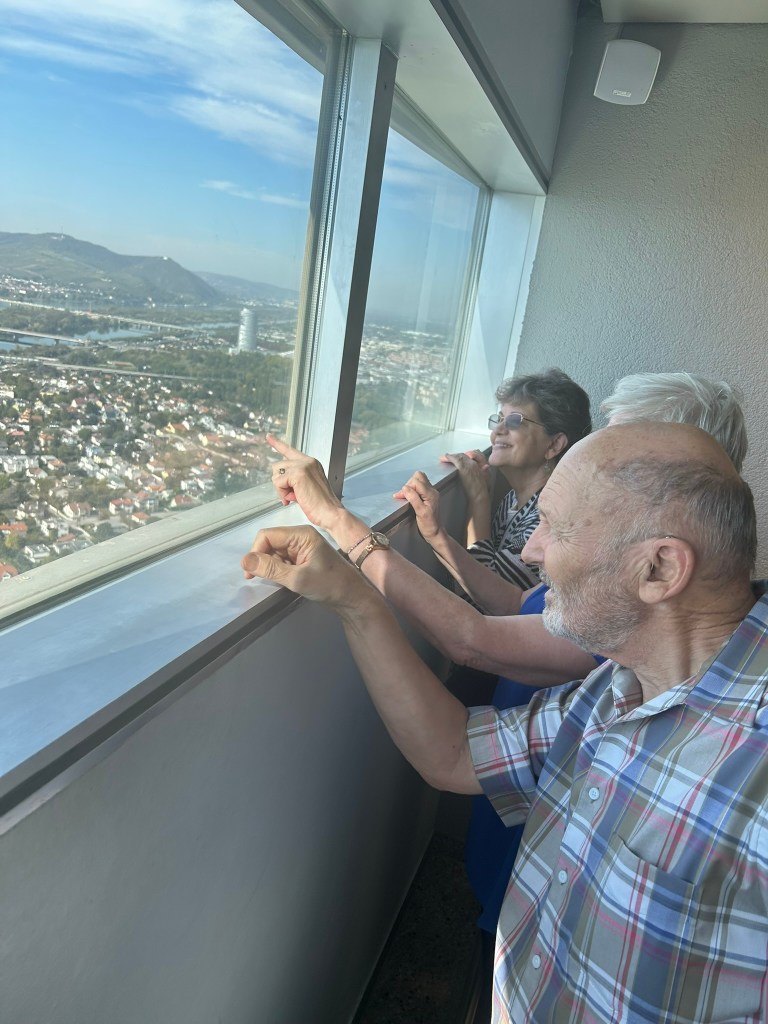
We rode the elevator up to a circular restaurant near the top. The views on all sides were stunning. And the restaurant itself slowly revolved. So over the course of a sumptuous two-hour meal, we got to see Vienna from all angles.

Taking in the views of Vienna from the Danautrum


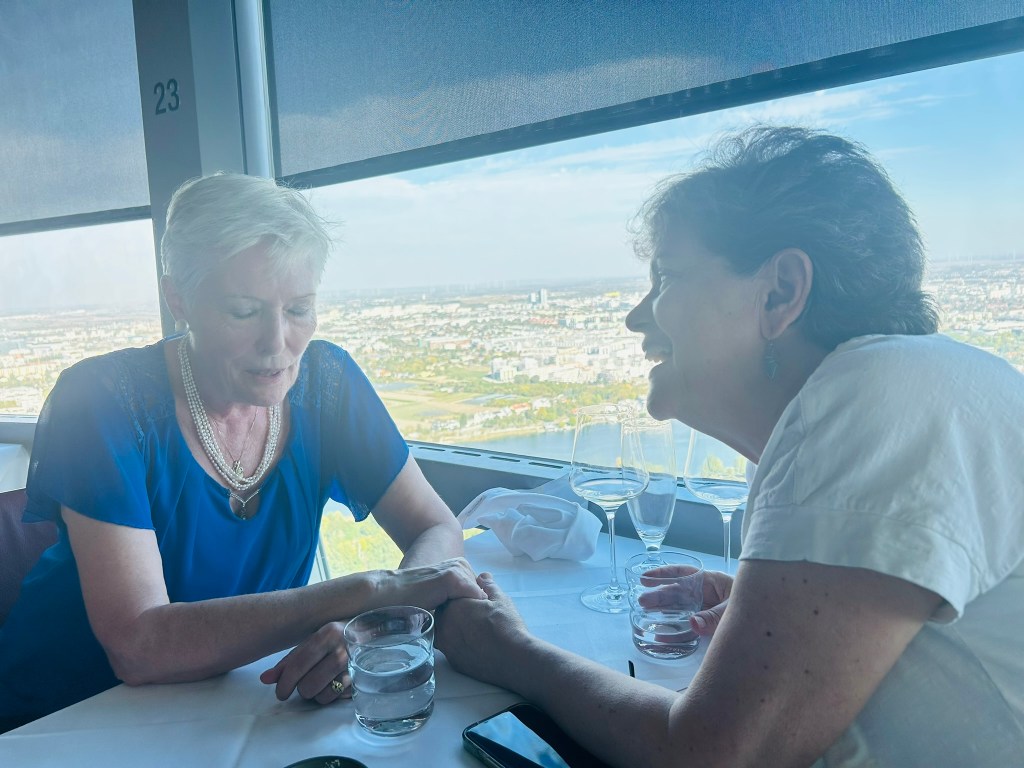
Our hosts had invited us and were most generous in ordering an excellent Sauvignon Blanc to accompany our first-class food. Mine was a reprise of the creamed salmon dinner I had on Austrian Airlines last Friday night. The rest had the classic Viennese Wienerschnitzel. Our spirits were lifted by the elevation and the wine, and we all shared deeply about our families and our lives.

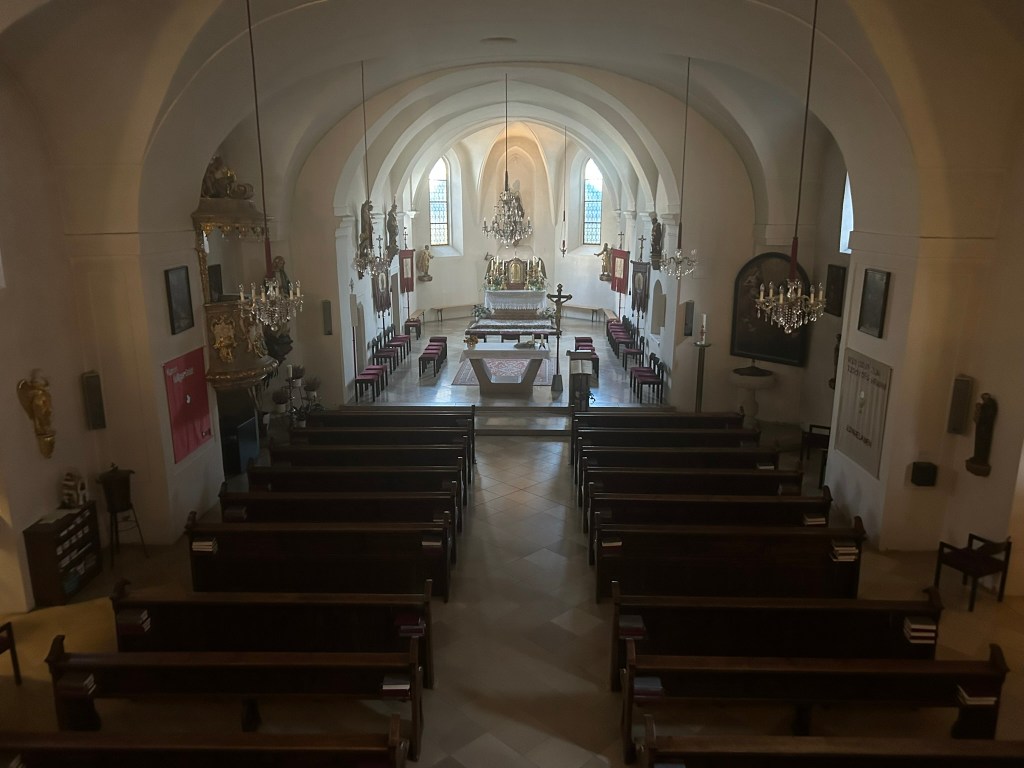
After riding the Lilliput back to the park entrance, we walked together to the Alte Danau Metro station and rode two stops up to the neighborhood where our friends live. We stopped for cappuccino and a delicious apple strudel at their favorite cafe, and then proceeded to the nearby Catholic Church of St. George where Rike was the main organist. She gave us another brilliant organ mini-recital, including a powerful rendition of Bach’s Toccata and Fugue. Andrea got to play the small church’s first-rate organ, too. We sang a few of her hymns and one of mine — quite different from Rike’s sublime renderings, but beautiful and soulful in their own right, complemented nicely by the full sound of the organ.

The small Catholic church of St. George in north Vienna


It was close to 6pm before we headed back to our apartment. We were both tired but happy, feeling that we had encountered Franz and Friederike at a deeply personal and soulful level. But we also had to focus on packing for the next leg of our trip to Italy the following evening.

Thursday, October 8

After having packed our bags the night before, Andrea and I planned to make one last sortie into old Vienna before catching our flight for Rome that evening.

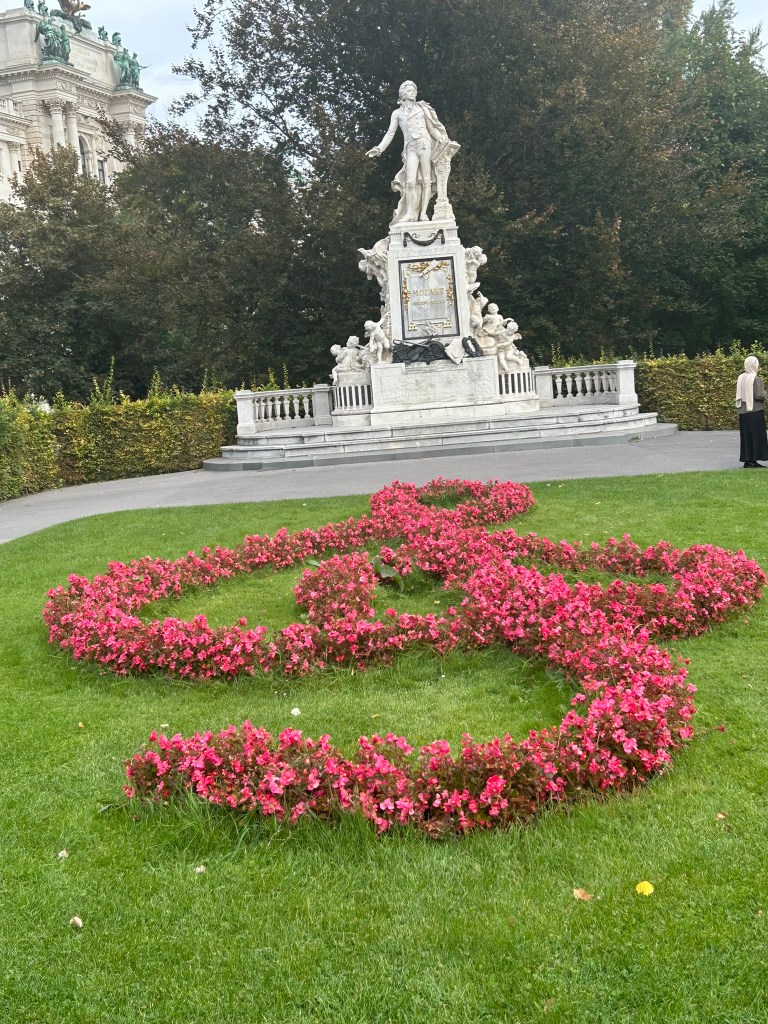
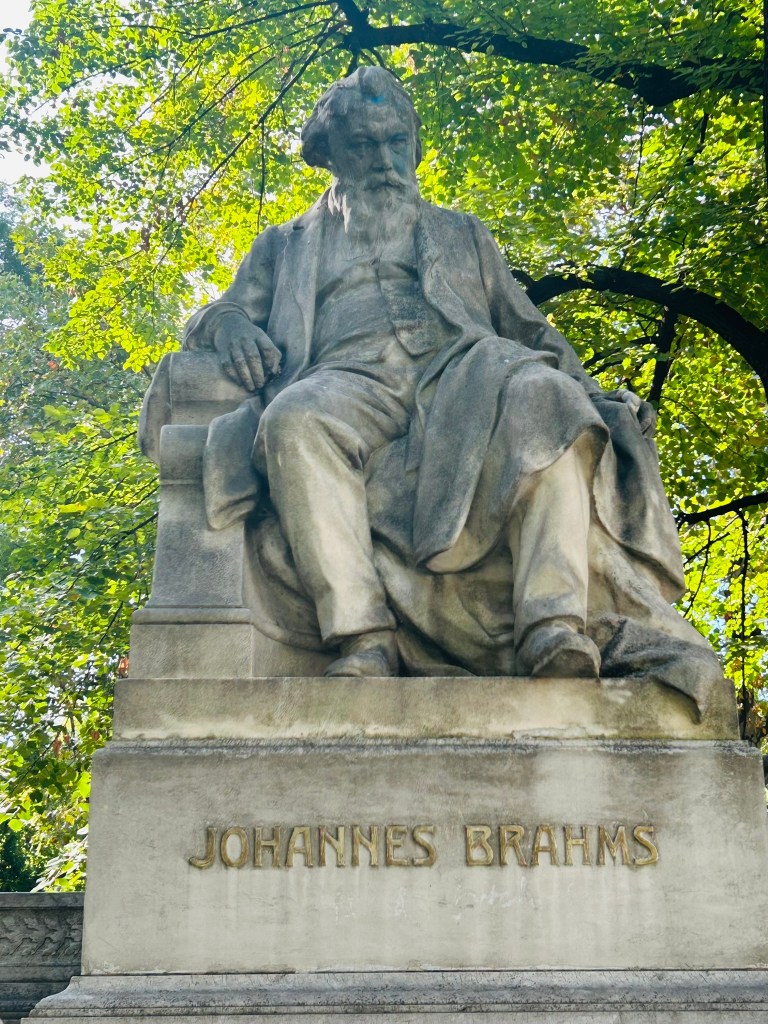
The brilliant autumn continued into a sixth day, and we were happy to just follow our noses into the heart of the city. We allowed ourselves to stop and take in some of the many lush plazas and parks that abound there. One of them was a lovely park dedicated to Mozart, and we sat there for a while, taking in the landscape architecture and the many people passing through. Still another park not far from there had a large statue of Johannes Brahms, another renowned composer who made Vienna his home for many decades.

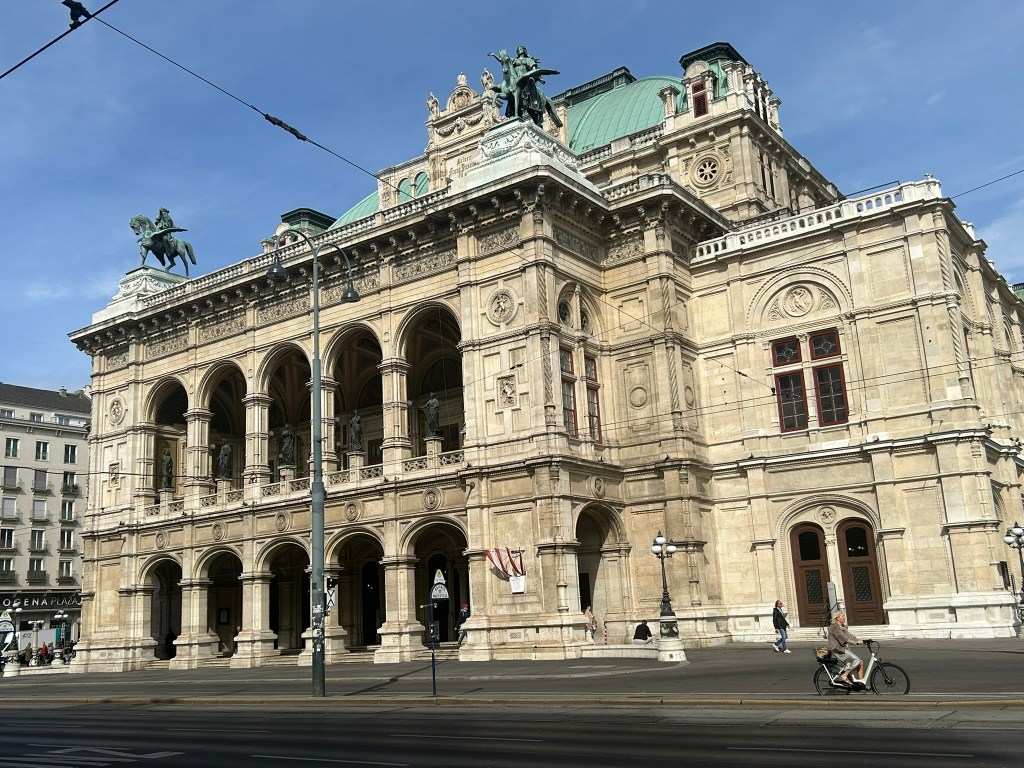
In the course of our wanderings, we came upon the famous Vienna Opera House. We were disappointed that tours were not being offered inside that day. Andrea and I are both opera lovers, and this theater was legendary. We also visited the equally famous Musikverein, home of the acclaimed Vienna Philharmonic Orchestra. We noted that the New York Philharmonic was scheduled for concerts there later in the month.

The Vienna Opera House

We got a cab to the airport late that afternoon. We left with the sense that Vienna was a city that we would be very happy to return to. We’d bonded nicely with Friederike and Franz, and the beauty and charm of Old Vienna was truly memorable.

John Bayerl, 11-15-2026

Six Days in Old Vienna, Part 2

This piece continues my travelogue begun in my posting on November 4, which describes my spouse Andrea DiLorenzo and I arriving in Vienna early on Saturday, October 3. After being lovingly greeted and cared for by our Viennese hosts for a few hours in their home, they drove us to the historic “Innere Stadt” of central Vienna where we had rented an Airbnb apartment for five nights.

Our apartment was a comfortable, spacious place on the second floor of a building on the heavily trafficked Marcaurel Strasse. It took something to haul our luggage through a long hallway to a tiny elevator up to the apartment, but we were happy to get ensconced in our digs in Old Vienna. After some unpacking, we ventured out for an afternoon walk through the old, narrow streets, bustling with people from all over the world. We found a nearby supermarket and made our first purchases with Euros – the universal currency of the European Union. Returning with our basic provisions, we passed numerous outdoor restaurants and cafes, and were drawn to the “Pizza del Popolo” sidewalk restaurant just outside our apartment and where we’d enjoy a late-night pizza supper later on.

We were still weary from our transatlantic flight and the six-hour time differential so we rested for a few hours after our first jaunt out. We roused ourselves in the early evening for our second venture out, this time in search of some of the historic churches within walking distance.

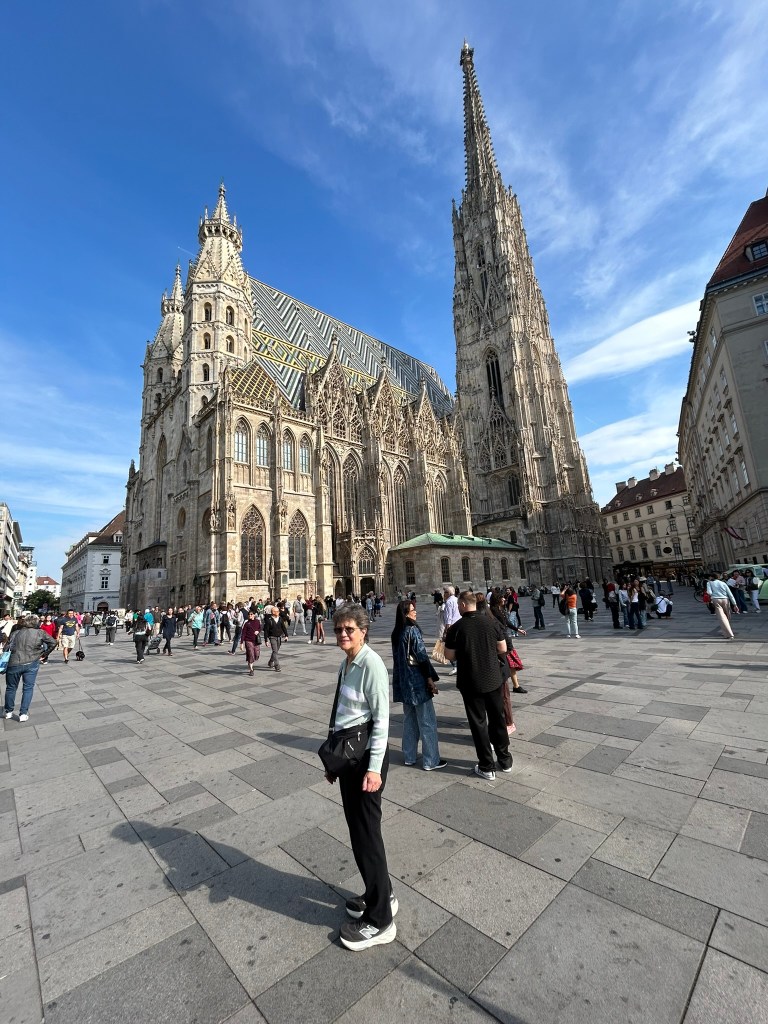
As Rick Steves had noted, the entire “Inner Stadt” of old Vienna can be walked across in little more than 30 minutes. So we didn’t have to walk far to reach two old churches – the Volkkirche, and the more famous St. Stephen’s Cathedral, which we would return to a number of times over the next days. The large cobblestone square outside St. Stephen’s had large crowds of people at any hour of day or night – a kind of Times Square gathering place for the thousands of international tourists exploring the old city through the clear, mild autumn weather that persisted through the entire week.

Andrea at St. Stephen’s Cathedral

We ended our evening trek back at the “Pizza del Popolo” on Marcaurel Strasse where we enjoyed a delicious pizza washed down with a hearty Austrian lager. There were throngs of young people in the streets that Saturday night and a lot of heavy drinking by the kids sitting next to us at the outdoor restaurant. We were happy to be able to walk upstairs to our apartment and close the windows against the raucous street noise.

Sunday, October 4, Friederike’s 74th Birthday

Friederike and Franz had intimated that they had a surprise for us on Sunday morning. It was her birthday, but she still had two organ-playing commitments at Vienna churches early that morning. She was one of the best church organists in Vienna and still greatly enjoyed plying her craft.

When Franz dropped us off Saturday, he said we should meet him at 11:15 the next morning in front of our apartment. That we did. He had taken the Metro there, and he led us in a leisurely walk through the already crowded streets into the very center of Old Vienna near the Albertina Art Museum. It was another clear, sunny day with comfortably mild temperature.

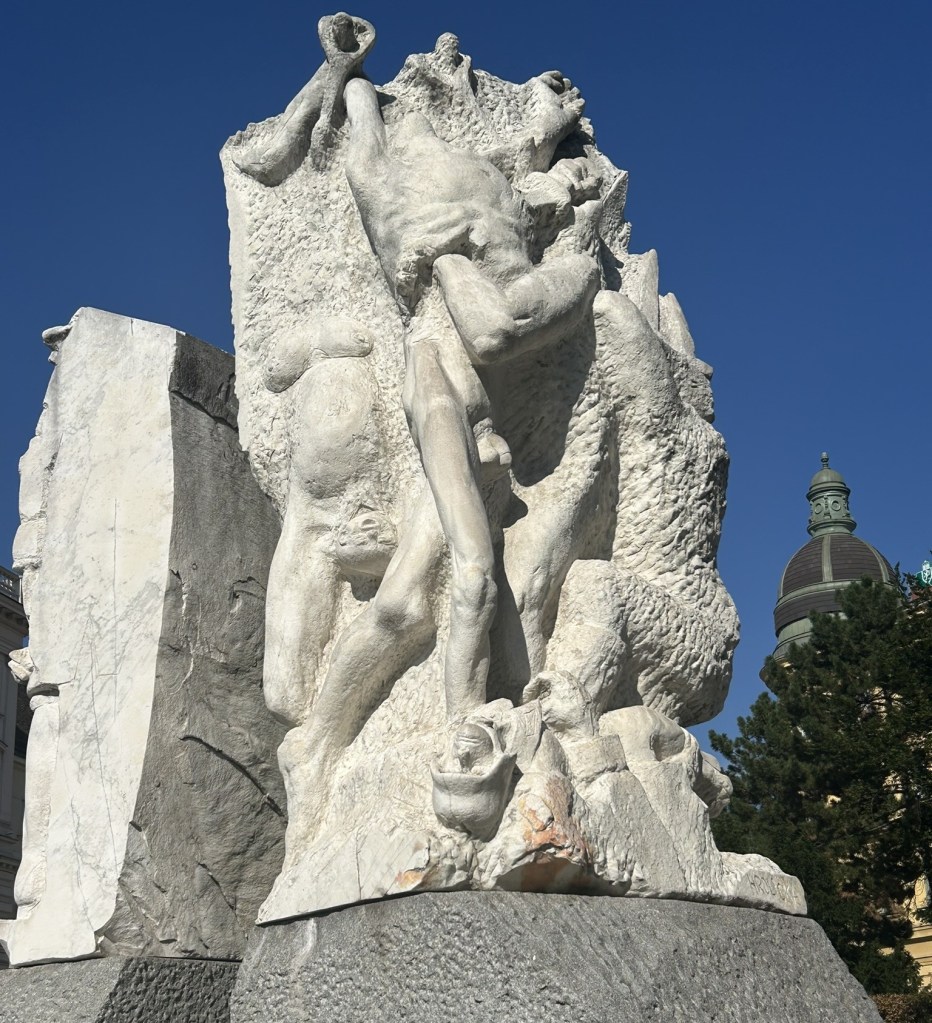
There was a large, outdoor Holocaust memorial nearby with imposing sculptures that we took in. Like Germany, Austria was clearly trying to make amends for its early part in joining forces with the antisemitic Third Reich prior to World War 2.

Holocaust memorial in Old Vienna

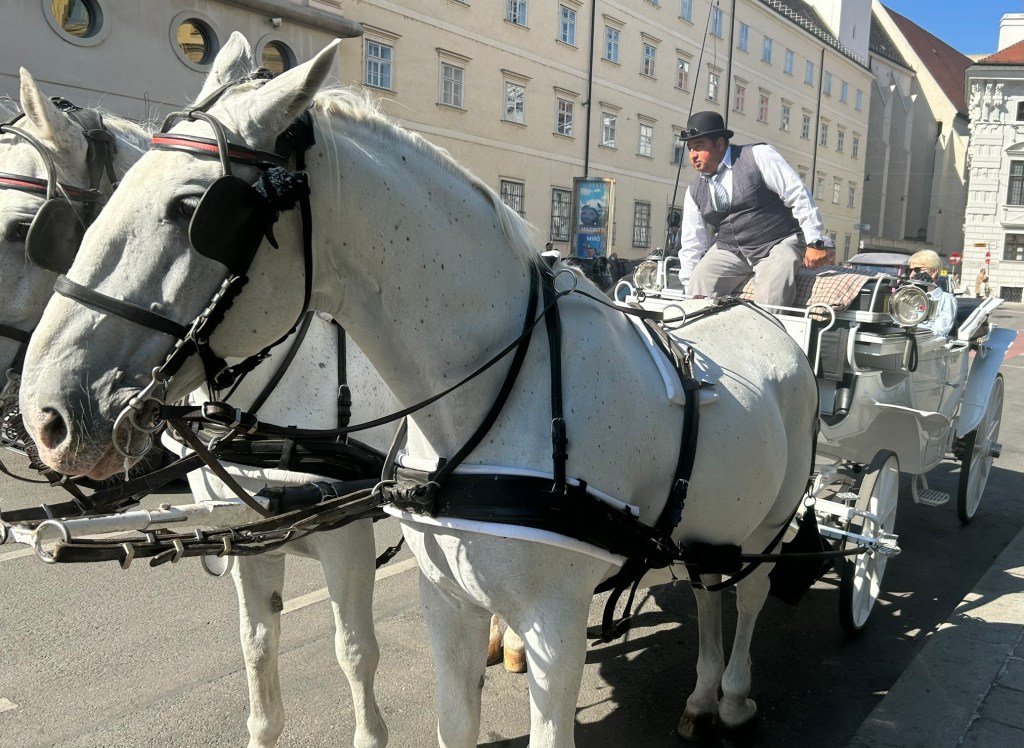
Friederike soon arrived to join us, and we proceeded across the street to a place where horse-drawn carriages were lined up. Andrea and I then realized that their surprise for us was to be a ride through Old Vienna in one of the large carriages. We were giddy with excitement, as were Franz and Friederike.

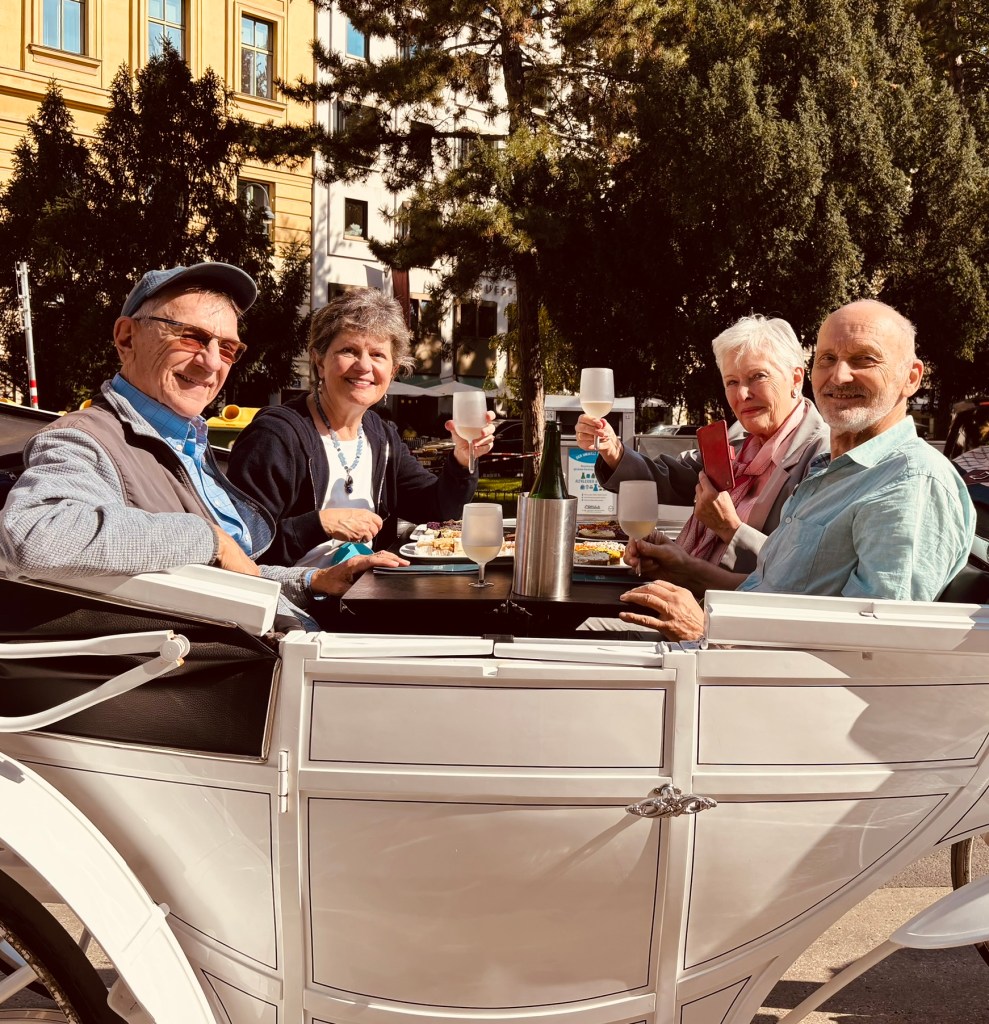
Like the others, ours was a large carriage with seats for four facing in on a central table. Pulling the carriage were two large, pure white horses. The driver and a hostess introduced themselves as we boarded. And before leaving the curb, we were presented with glasses and a bottle of champagne, along with a sumptuous spread of Viennese brunch delicacies.

Toasting Friederike’s Birthday on a Horse-Drawn Carriage

It was all a bit “over the top” for me, but I soon curtailed my judgment and just sat back to receive the bounteous generosity of our hosts. I sat across from Franz who kept refilling my champagne glass and insisting that I at least sample each of the colorful food offerings. Friederike looked absolutely delighted at sharing this experience with Andrea, her long lost “soul sister”. The two of them had shared a lifetime’s love for classical music, and Friederike had even taught Andrea the rudiments of organ playing many years ago.

It was wonderful seeing so many of the principal palaces, churches and museums during our unforgettable half-hour ride. After that, we walked to a nearby Metro stop to ride a train to a station on the Danube river, not far from our hosts’ home. It was our first of many Metro rides in Vienna, and we were very favorably impressed with both the efficiency and the cleanliness of the stations and trains. Our subway car was packed with friendly, happy people of all ages.

We exited the Metro station where Franz had parked their car. Our next stop was a lovely restaurant about five miles along the Danube from the station. It was a lovely drive through the lush Vienna suburbs. At the “La Creperie” restaurant, right on the shores of the Danube, we met Friederike’s two sons and daughter and their five children. Her family all seemed to be excited about meeting us, and we were immediately impressed by everyone’s English proficiency, and their sincere interest in learning about our life in the United States.

I sat across from a 15-year-old grandson who seemed intelligent and sophisticated beyond his years. We had a mature conversation about politics in Austria and the U.S., and about his own university plans. After dinner, Franz led me for a stroll along the river on that marvelous, sunny Sunday afternoon.

Our hosts drove us back to our apartment afterwards, pointing out many of the principal sites along the way. Friederike invited us to meet her and Franz the next afternoon so that she could show us and play the oldest organ in Vienna. We readily agreed.

Monday, October 5

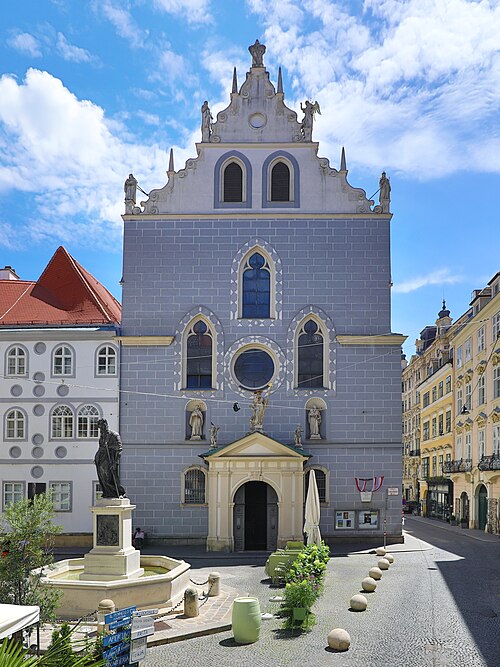
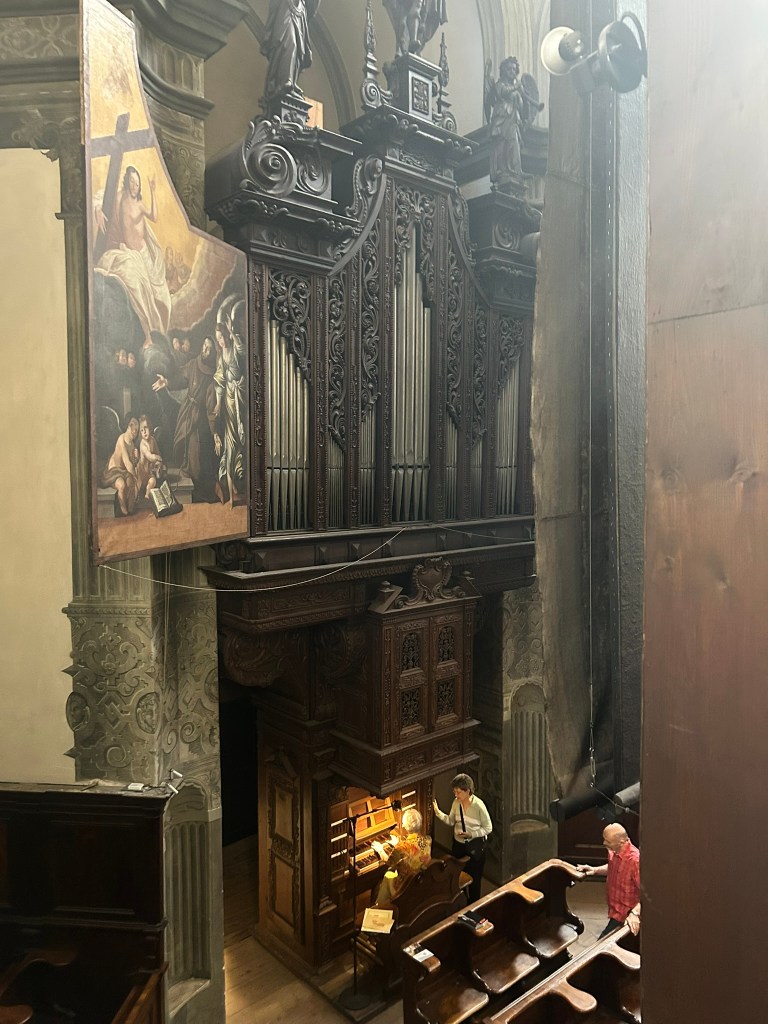
The highlight on Monday was meeting up with Friederike and Franz to visit the Franziskanerkirche (“Franciscan Church”) in Old Vienna. The church is the home of the Franciscan order in Vienna and dates from 1603. It features the oldest playable organ in Vienna, and Friederike had permission to offer us a private organ concert there.

We walked to the St. Stephenplatz  around noon, enjoying the lively scene there of visitors from around the world. We had time to sit for a delicious “wurst” lunch at one of the many food stands there. Soon we spotted our friends arriving via the Metro station. It was only a few blocks walk to the Franziskanerkirche from there.

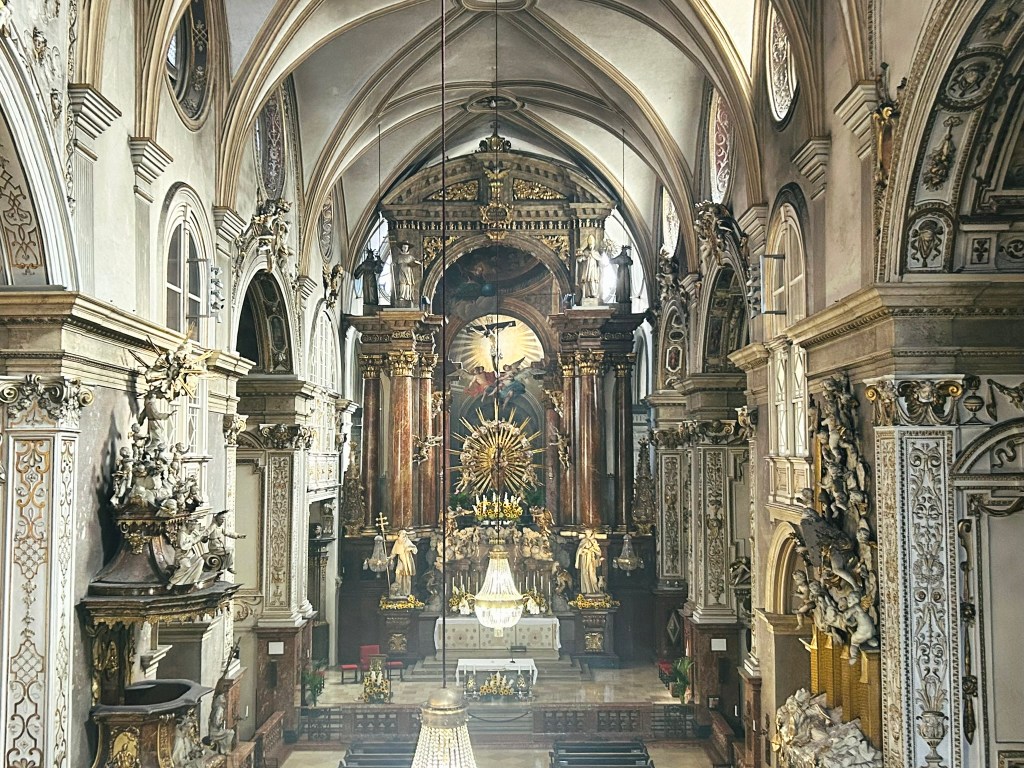
Franziskanekirche, Old Vienna

Friederike had made special arrangements for us to visit the church and for her to play the famous Wockhert Organ, built in 1642. It took some time for her to track down the keys, and we were able to spend some time touring the old Romanesque-style church.

Interior of Franziskanerkirche

Listening to Friederike’s accomplished organ playing for the first time was a real treat. There were many challenges for her in using the ancient organ technology, but Franz was an able assistant. He even served to turn the pages on the complex musical notation. Franz had been an active member of a church choir when he and Friederike met over ten years ago. It was clear that he honored and respected his spouse’s lifelong mastery of the organ, including historic old instruments like the Wockhert. Andrea had a deeper knowledge and appreciation of the classical organ repertoire being played. I mostly took in the majesty of the sound and the historical environment in which we sat.

Friederike playing the Wockherl Organ (1642)

After playing a number of pieces on the ancient organ, Friederike led us to the back of the church where a more modern organ resided. She played that organ for us as well, yielding some applause from the church visitors below.

As we were leaving the church, we encountered a tall, young, tan-skinned Franciscan who greeted us and got the keys back from Friederike. We asked if he had enjoyed the music, and he enthusiastically affirmed that he had, and mentioned that he, too, was a musician. When asked, he said he was actually a missionary “rapper” who used rap music and dance to engage with young people. In fact, he said he had over 2 million followers! (We later checked Facebook and saw that he was being truthful as we watched an energized video of him singing as a troupe of young African children danced and sang along.)

Tuesday, October 6

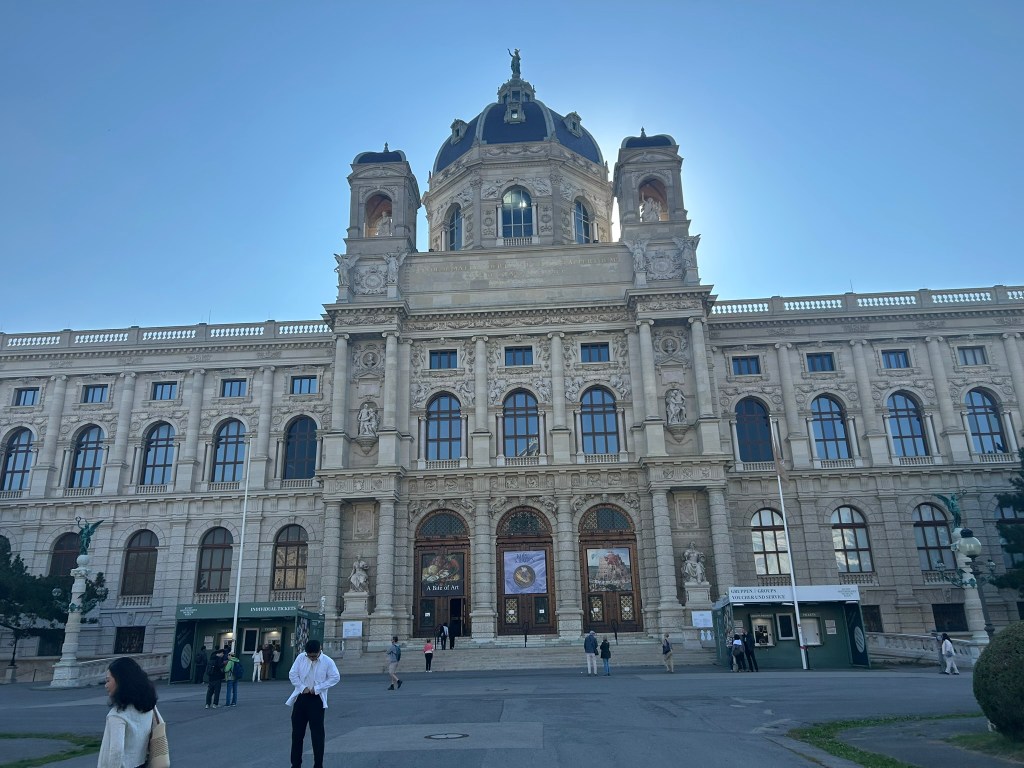
Andrea and I were on our own on Tuesday. It was a very full day for us. In the morning, we made the half hour trek down to Vienna’s most famous art museum, the Kunsthistorisches (“Art History”) museum. It is a world class art museum on the order of New York’s Metropolitan or London’s National Gallery.

Front of the Kunsthistosches Museum

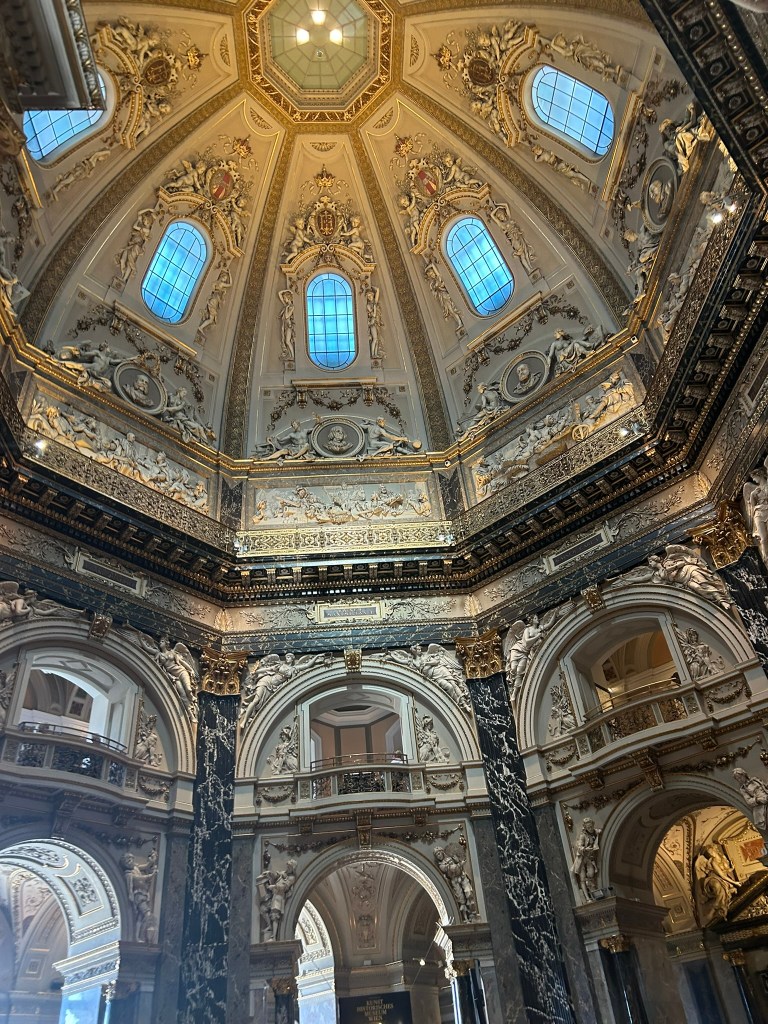
Walking through the old imperial Vienna of the Hapsburg dynasty (1526-1918) is an impressive experience. And the Kunsthistorisches is an example of imperial Hapsburg palace architecture par excellence. The scale and baroque ornamentation of the building itself, inside and out, is well worth the visit. And its collection of classical European art is among the best in the world.

Interior dome of the Kunsterhistorisches Museum

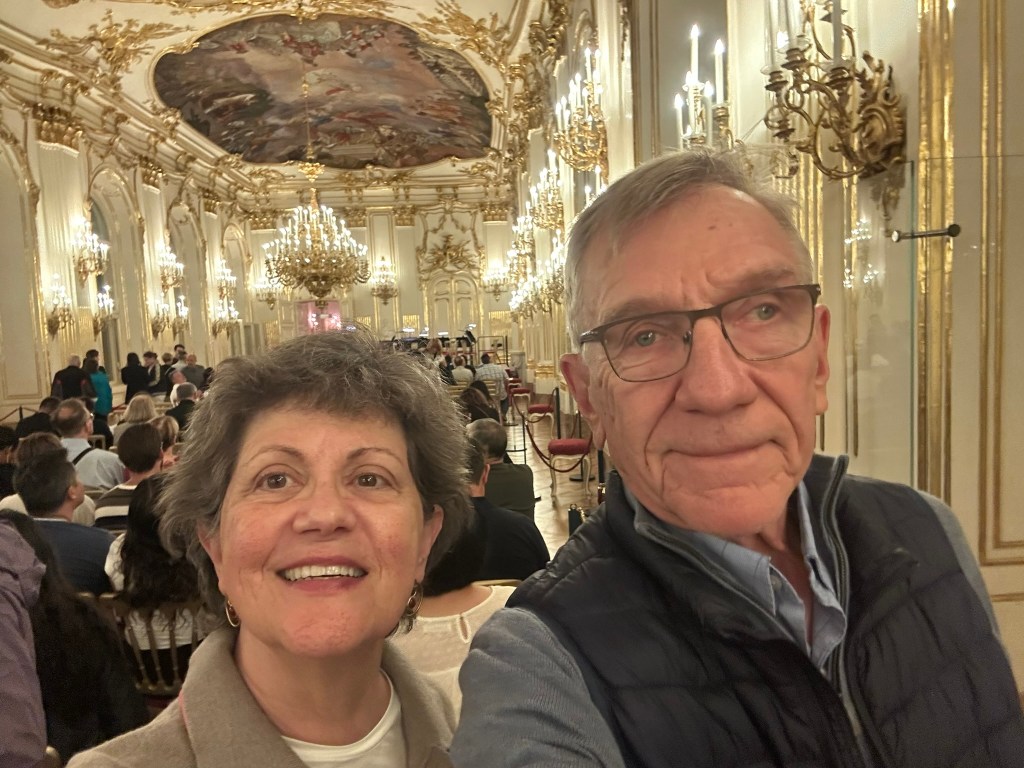
For the evening, I had ordered tickets to a classical music concert at the Schonbrunn Palace, another historic Hapsburg residence on the other side of the city. In order to get there, we went online to determine what Metro line to use. We hadn’t ridden the Vienna Metro by ourselves before and had to learn the procedure for buying tickets and getting schedules. It turned into a pleasantly adventurous experience, and we arrived an hour early so we could tour the extensive grounds.

The concert itself was given by a professional chamber orchestra of young musicians and included music by two of Vienna’s best loved composers – Wolfgang Amadeo Mozart and Johann Strauss. The audience was made up largely of tourists like ourselves. We thoroughly enjoyed the concert, including the lush rendition of Strauss’ “Blue Danube” waltz at the end.

Andrea and John at a Schonbrunn Palace concert

John Bayerl, 11/13/2026

Adventures in Austria and Italy

My spouse Andrea DiLorenzo and I recently returned from an unforgettable three-week trip to visit friends in Vienna, Austria and then three different locales in Italy – Rome, the Abruzzi mountains, and the large city of Bari on the Adriatic coast.

The trip was inspired by Andrea hearing from a Viennese woman who had been a “sister” within the Austrian family she had spent a summer with in 1968 as part of the American Field Service program. After some enthusiastic emails back and forth, we decided to accept Friedericke’s invitation and visit her and her family.

We also used the opportunity of being in Europe to visit two other friends living in
Rome. Linda and Bruno would host us there and also join us for a trip into the Abruzzi mountains to visit Andrea’s ancestral village, and then we would go on ourselves for a week’s stay in Bari.

Just before leaving, I read an article by the European travel writer Rick Steves. We were both fans of his informative travel programs on PBS. In the article, Steves strongly recommended keeping a daily journal while travelling. He observed that daily writing down of travel highlights was a good way to imbed them in memory. I had been keeping a journal for some years and I decided to redouble my efforts while we were in Europe.

Now that we’ve been home for a week, I decided to use my travel journal to assemble the following travelogue. I’m illustrating my story with some of the hundred of photos we took.

For purposes of readability, I’m breaking down my blog pieces into discreet postings: on Vienna, Rome, the Abruzzi mountains, and Bari, Italy. This  first posting covers our arrival  in Vienna, our initial destination.

October 3, 22026 — Arrival in Vienna

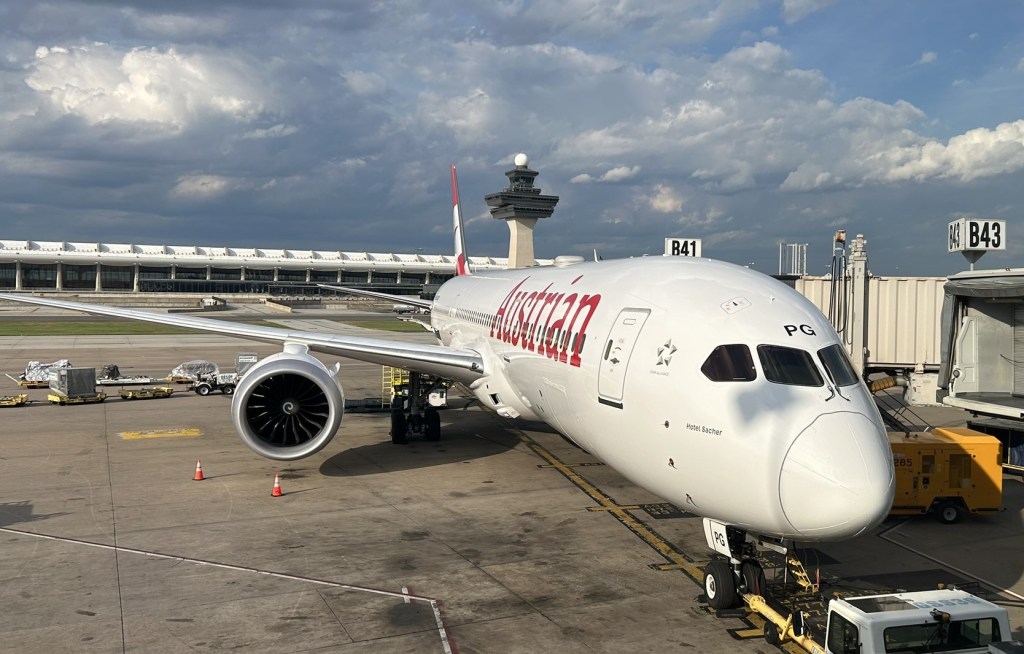
We flew overnight from Dulles airport in Washington. Our Austrian Airlines flight was delayed for over an hour due to stormy weather along the East coast. After almost an entire week of preparation, we were happy to finally get off the ground and on our way. The Austrian Airlines crew were all kind and helpful and I appreciated their playing Johann Strauss waltz recordings to get us in the spirit of Vienna.

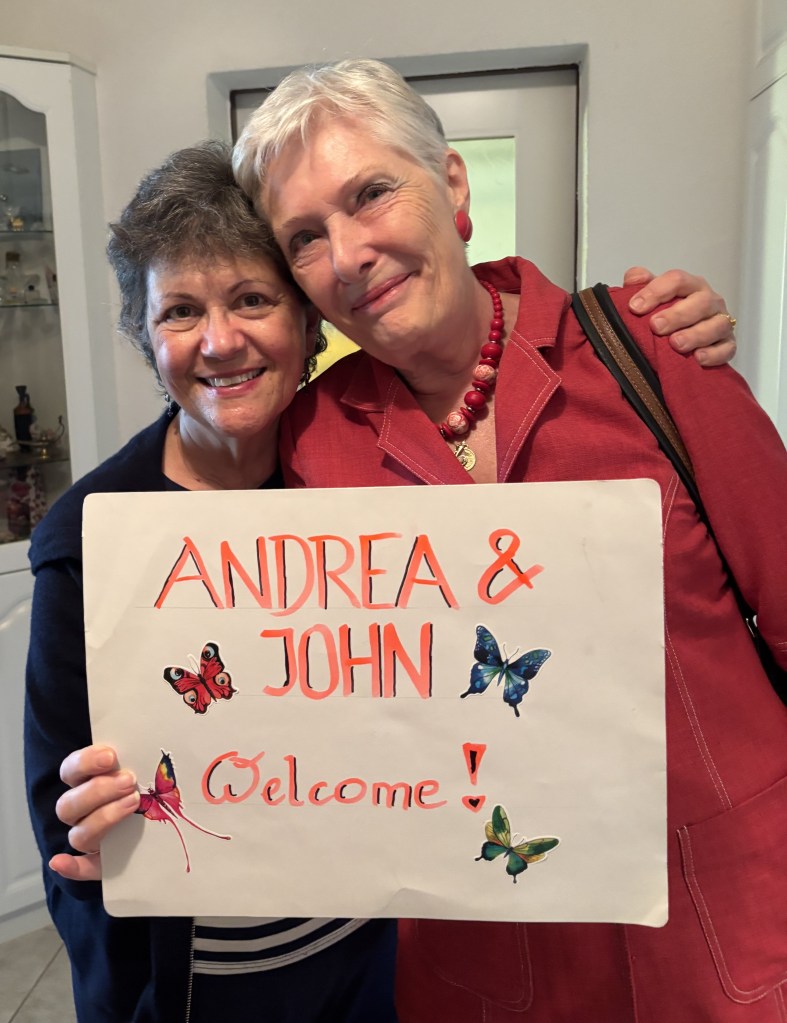
We arrived at Vienna airport around 8am Saturday. We hadn’t slept much and were pretty tired on landing, but excited at the same time. After easily passing through Austrian customs, we were heartened to see our hosts waiting for us in the reception area. We knew it was them from the beautiful welcome sign they were carrying.

Friedericke was tearful in greeting Andrea, and her husband Franz smilingly insisted on taking the bulk of our luggage to his parked car.

They drove us a short distance to their beautiful home in an apartment building in the outskirts of town. There they laid out a sumptuous breakfast as Andrea and Friedericke excitedly renewed acquaintances. It felt quite wonderful to be so lovingly received by this attentive couple. They also provided us with a comfortable bed to catch up on our lost sleep. We weren’t able to check into our Airbnb apartment until 3pm, and it was great to have a quiet place to rest until then. When we awakened, Franz was ready to drive us into the old, central part of Vienna where we were staying. He also instructed us on exactly where to meet him on the following morning when we would all be celebrating Friedericke’s 74th birthday.

John Bayerl, 11/4/2026