A steady breeze from the south Unfurls the New Zealand flag beside me — Deep blue background with red-and-white Union Jack in the top left, Four white stars of the Southern Cross to its right and below. This the new flag of our expatriate hosts, Happy to revisit their native land Yet happier still to call New Zealand home.
Looking at the world with fresh eyes Taking in its immensity And the limits of what I’ve experienced of it Thus far on this my 76th birthday
Grateful for how far I’ve come To get to this point of recognition Of both how much and how little I’ve lived and loved
The exquisite lyricism and beauty Of Boccherini’s cello concerto Playing through my hearing aids now, The supreme artistry of Yo Yo Ma’s indomitable Spirit lifting and inspiring mine
What a rich ride this life can be In the midst of even The most challenging blockages Of fear, ignorance, pain, disappointment…
The exuberance of the life force Persists and finds a way to express itself In the world around us, In you, in me
The next event I attended was an interview with authors of two recent books that affirmed possibility and hope within the daunting climate crisis.
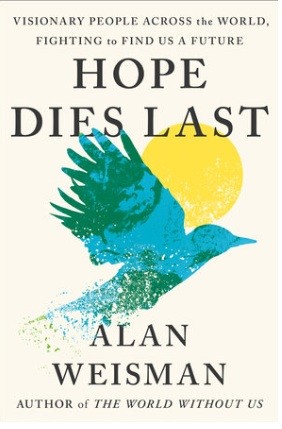
Alan Weisman is a veteran academic and long-term journalist and author on environmental topics. His latest book is Hope Dies Last. Malcolm Harris is a young writer/activist who brings a radical political perspective to his new book What’s Left. The two were introduced by Rockville Mayor, Monique Ashton, who recounted how her 12-year-old daughter had received news of her mom’s election victory by asking her: “So what are you going to do about climate?”
The interviewer for the program was the legendary journalist and activist Elizabeth McGowan who had found her passion for fighting climate change after overcoming two occurrences of serious cancers, and had ridden a bicycle across the country in sponsorship of cancer research.
Weisman was interviewed first. The subtitle of Hope Dies Last is Visionary People Across the World Fighting to Find Us a Future. The book is the fruit of Weisman’s recent worldwide travels in search of people who were on the frontlines of the climate crisis. He recounted a story about an Iraqi man who had spearheaded a successful, decades-long movement to restore an enormous wetlands area in southern Iraq that Saddam Hussein had ordered drained in order to root out his enemies, Iraqi Shias. The man had a scientific background, ecological understanding, and lifelong knowledge of the region’s water flows. He also had a wealth of personal connections to the displaced people who were eager to resume their traditional way of life. Weisman’s story is further dramatized by the fact that the wetlands in question are formed by the Tigris and Euphrates Rivers whose “fertile crescent” was among the sites of earliest civilizations in the Middle East. In reflection on the book’s title, Weisman said that “hope is an active verb” and that all of us could find a hopeful path through the climate crisis if we committed ourselves to collective action.
Malcolm Harris was a well-known leader of the “Occupy Wall Street” movement. His subsequent career as a journalist and author was formed from his experience as an on-the-ground organizer. He became an avowed Marxist and applied a Marxist analysis to the economic challenges of the Millennial and GenX generations. His book title, “What’s Left”, is a well-known political mantra for environmentalists seeking to preserve and protect the natural world as it remains for us now.
Harris identifies three necessary aspects to a successful renewal of climate health: 1) use of carbon credits to economically incentivize companies and governments to reduce fossil fuel emissions; 2) high level governmental mandates such as those enumerated in the Paris Climate Accords; and 3) a renewed commitment to the common good of humanity as a whole that he believes is best espoused in the ideals of communism. He pointed out that all the environmental success stories studied by Alan Weisman involved groups of people coming together to protect environments that their livelihood depended on. Harris urged us to question our American bugaboos about individualism and free enterprise and begin to consider how much better our environment, and our society might be if it prioritized people and the environment over profits.
Elizabeth McGowan as moderator provided an inspiring testimony to the value of finding purpose and hope even amid dreadful prognoses. She herself had received virtual death sentences from melanoma twice in her young life, and both times had miraculously lived through them. Her subsequent environmental journalism and activism was inspired by her confidence that life itself would find a way to survive and thrive. Hope Dies Last!
Two Talented Authors of World War 2 Historical Novels
As baby boomers whose Dad had fought in World War 2, our family book club was always on the lookout for engaging historical fiction set during the war. So I rejoined my sisters for a fascinating presentation by two highly successful historical novelists: Madeline Martin and Laura Morelli.
Martin’s most recent novel, The Booklover’s Library, is set in Nottingham, England during the second world war. It is a love story about a widowed mother and her young daughter, who is evacuated to the country to avoid the German air blitz. The mother carries on as best she can as a librarian, finding ways to encourage her library’s often quirky readers with books that will inspire and motivate. Martin described her novel as a story of how a mother’s love for her daughter and her dead husband led her into deeper service to her community, as well as her family.
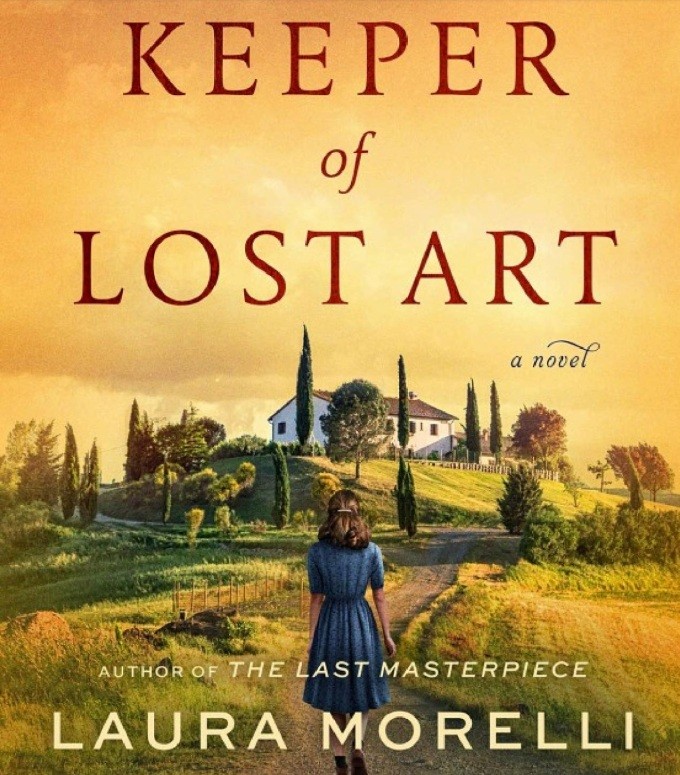
Laura Morelli is a professional art historian as well as a fiction writer. Most of her historical novels are set in Italy and involve aspects of classical Italian art. Her latest novel, The Keeper of Lost Art, is based on the true story of how the Uffizi gallery in Florence shipped all its most valued works of art to various rural locations to prevent them from being pillaged by the Germans during the second world war. Her novel centers around a young woman from Turin who has been sent to a villa in Tuscany where many of the Uffizi treasures are being kept. Ms. Morelli spoke with great eloquence and passion about her book.
What I found remarkable about the interview with these two talented, creative writers was the sense that the two were in no way in competition and that they took in and affirmed what each other was saying. I was also impressed by both writers’ stories of the long, hard research they had performed prior to sitting down to write. Both of their new books were definitely candidates for next year’s reading list!
A Local Author’s Remarkable Comeback
The last author we heard was Jeanine Cummins whose 2018 bestseller, American Dirt, we had read in our book group. It is a gripping novel about a Mexican woman and her young son as they make a perilous journey from Acapulco to the U.S. after their family has been violently targeted by a cartel there. The novel became a topic of controversy after a large group of Hispanic American writers had publicly criticized the book and its author for having expropriated Mexican culture for commercial interests. Cummins has Puerto Rican family roots, speaks Spanish, and spent a lot of time at the U.S. – Mexico border interviewing migrants. Still, the criticism stung and resulted in her withdrawal from writing for over a year. She said she had not been sure that she would ever be able to write again.
We had seen Ms. Cummins at the 2022 GBF when she had interviewed the successful Mexican American writer, Reyna Grande. Grande had signed on to the 2018 letter criticizing Cummins, but it was clear from their interaction at that GBF that the rift had been healed. Cummins was generous in her praise of Grande’s excellent historical novel set during the Mexican- American War of the 1840’s, and Grande clearly reciprocated the positive regard.
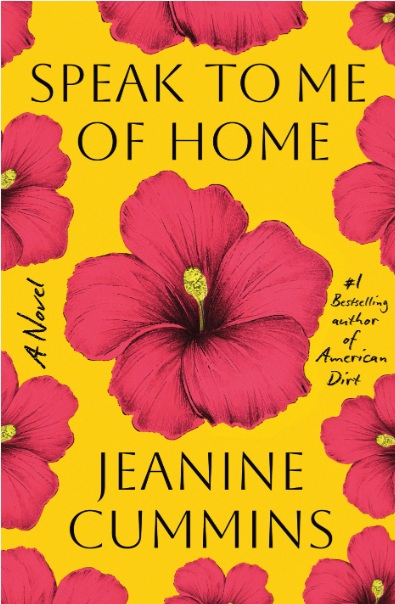
Jeanine Cummins has become something of a celebrity in Gaithersburg. She grew up here and attended Gaithersburg High School, which is right next to Bohrer Park. She was lavishly introduced by the Mayor of Gaithersburg, Jud Ashton, who has been instrumental in starting and sustaining the GBF over the past 16 years. Cummins had recently published a new novel, Speak to Me of Home, whose subject matter touches on her own Puerto Rican heritage. She was interviewed by a local Jamaican American author, Donna Hemans.
Cummins first spoke about the 2018 controversy and how it had deeply affected her. Even though she rightly claimed her integrity in writing American Dirt, the criticism opened within her questions about her own ethnic identity. This led to deeper conversations with her mother and other family members about the Puerto Rican matriarch of their family who had moved to the U.S. many decades earlier. Her latest novel was an opportunity for her to plumb the depths of her own Puerto Rican roots.
Donna Hemans entered an in-depth dialog with Cummins about current issues of ethnic diversity within our American melting pot of cultures. Cummins described her ease in navigating the large multi-ethnic cultures of Gaithersburg – a small city that is regarded as the most ethnically diverse place in the U.S., with over one hundred different languages spoken here. She said it was challenging for her when she left for college at nearby Towson State, because unlike her hometown high school, students there segregated themselves much more pervasively by race and ethnicity.
Cummins talked extensively about her Puerto Rican grandmother and her challenges in navigating American middle-class society. Those stories became an important part of her new novel. Ms. Hemans asked Cummins to read specific passages from Speak to Me of Home. The writing was perceptive and poignant, as usual for Cummins. My sisters and I came away knowing that this novel would be among our top choices for our reading list.
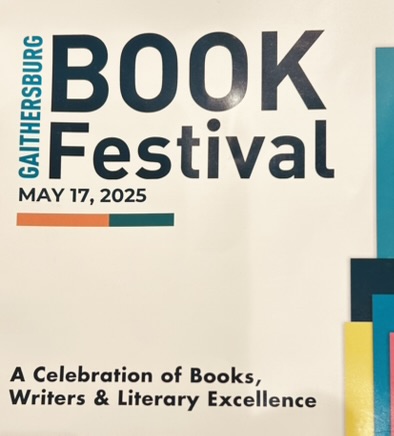
Last Saturday was the long-awaited Gaithersburg Book Festival (GBF) in this Maryland suburban city north of Washington, DC. My sisters Marian and Anna arrived from their long drive from Buffalo around 2:30p on Friday. We had all attended four of the previous festivals, the last one being in 2022.
The three of us plus two of other sibs had been participating in a family book group for ten years. Over the years, our experiences with authors at the GBF had inspired our choices of many of the books we had selected to read.
I went down to greet my sisters and help them to get settled in their Guest Suite just down the hall from my wife Andrea’s and my apartment in our comfortable retirement community in Rockville, MD. Their room was still being cleaned so they came to our place for a nice visit with Andrea and me. They had shared the driving and were tired but in good spirits. Andrea had made us a 6:30 dinner reservation at the restaurant downstairs, so we all had time to rest a bit beforehand. Both Andrea and I always feel a lot of common ground and good cheer in being with my sisters.
After a delicious meal, we treated ourselves to watching a classic 1980’s film, Alan Alda’s “The Four Seasons”, which we all thoroughly enjoyed. We went to bed early enough to get up in time for the 10am festival start at Bohrer Park in Gaithersburg. Andrea drove us the four miles there, right to the entrance (and picked us up there five hours later.) It was a beautiful early summer day, mostly clear and warm, but not oppressively hot.
A Therapeutic Writing Workshop
My sisters and I wanted to attend the 10am writing workshop, “Healing Through Writing”. We arrived just as it was getting started, finding decent seats at one of the tables set up inside a large white tent. At each seat was a nicely bound notebook, pen, and a synopsis of the principles of therapeutic writing.
The presenter was a short, elderly woman, Diane Pomerantz, a “psychologist and author” as the program noted. She spoke in a calm, self-assured way about the documented therapeutic effects of personal writing as a way to achieve perspective and self-awareness after suffering emotional trauma.
She first talked about all our lives as a sequence of stories. While the events of our lives were sometimes outside of our control, she made a compelling argument that we all had the ability to frame and contextualize those events as healing stories. Consciously intending to gain perspective from even severe trauma was a good starting point. Then writing about a trauma and our emotional response to it gave us a vehicle to stand back from it and see it in a greater context.
Ms. Pomerantz had utilized writing to help her heal from a traumatic marriage, and had made that healing experience central to her published memoir. She had a strong personal basis for urging us to consider doing the same.
To get us started, she suggested that we make use of our handsome notebooks to write a 6-word memoir. That seemed like a daunting task at first, but after reflecting for a bit, I came up with a sentence that actually seemed to describe an important theme of my 75-year-old life:
“Cross eyed vulnerability made me different and special.”
I was the second oldest of ten children and was diagnosed early on with strabismus, a condition in which the two eyes don’t look at the same place at the same time (hence, “cross eyed”). By the age of 5 I’d already had two surgeries and wore glasses with a patch covering my “good eye” so that the “lazy eye” might gain strength. None of this actually worked. By the time I started school, I was still “cross eyed” and wore glasses, though the glasses did nothing to fix the underlying condition.
Even in the early years of my family life, I felt competitive for my mother’s attention with my older brother and then my younger baby sister. My vision problem helped to garner me that attention.
One of Ms. Pomerantz’s instructions had been to find some way in which a trauma had brought us some advantage. It didn’t take me long to experience that insight from my own childhood. Both my parents took time to take me to my eye doctor’s appointments across town, and otherwise tend to my vision issues.
But I can also see now that the attention I received for my vision issue contributed to seeing myself as faulty in some way, which fed a kind of victimhood, and a sense that I deserved extra consideration. I left the workshop with a deeper understanding of an important, but largely unexplored aspect of my early life that had had lasting repercussions.
Just Us Books
The GBF is structured as hourly presentations held in small tents scattered about the 40-acre lawn of Bohrer Park. There’s no registration process (nor fees) and seating is on a first-come basis. I was heading to an 11am session with well-known local author Judith Viorst when another tent captured my attention.
Projected on a large screen inside the tent were brightly colored pictures from a children’s book. An attractive African American couple were just beginning their presentation and I was immediately drawn in.
Cheryl and Wade Hudson are a 60-ish couple who are both writers and publishers for Just Us Books, Inc., a company they founded decades ago after mainstream companies had declined to publish their African American-oriented children’s books.
As I was passing by, Cheryl Hudson was reading and singing from her latest children’s book, “When I Hear Spirituals”. It’s about a little girl describing her feelings when she hears spirituals being sung in church. Ms. Hudson took us through each of the visually projected pages of her book, stopping to sing short segments from the spirituals being described by the little girl. These included “Wade in the Waters”, “Swing Low, Sweet Chariot”, “Ring Them Bells” and many more. Her singing and the colorful illustrations really brought the book alive!
Then her husband Wade took us through the illustrations and text of a book he had penned based on the story of his mother voting for the first time in Louisiana in 1969, “The Day Madear Voted”. He beautifully conveyed the jubilation felt by his mother, her family, and other members of their church on finally being allowed to perform their constitutional right to vote.
Andrea and I had visited the civil rights “legacy sites” in Montgomery, AL, last month and the ugly reality of our country’s longstanding abridgment of basic human rights for African Americans was still fresh in my mind. I heartily concurred with Mr. Wade’s assertion that this history needed to be communicated even more at a time when the MAGA forces are attempting to whitewash essential parts of our American history.
There were three other author presentations that I attended and which I will describe in a subsequent post.
It’s been a beautiful spring here in Rockville, MD and I’ve been enjoying Nature’s flowering more than ever, either while walking or biking. Taking photos helps me stop and appreciate the beauty that I’m seeing.
I read it with great interest, and returned to it on the way home yesterday, inspired to write out my thoughts and feelings.
I had read Keen’s book on masculinity when it came out in 1991. I was 42 years old, recently married for a second time, and was very involved in a burgeoning men’s movement in the Washington, DC area. Keen spoke to issues much on my mind, specifically how to live a life with creative and empowered integrity while married to a staunch feminist, and espousing feminist ideology myself.
Keen’s main theme was the necessity for all of us to find our true passion for life, our “fire in the belly”. As a would-be liberated man, this meant finding a way to manifest my creative passion in ways that served my God-given soul as well as the soulmates in my family and community.
Joseph Campbell was another inspiration to me during that time. His encouragement to “follow your bliss” helped to steer me back to my deeper soul issues after spending a decade focused on developing a career in IT.
Keen had been a respected academic, like Campbell. He pursued advanced degrees in religious studies and theology and was a university professor before having a mid-life transformation while visiting San Francisco in the late 1960’s. The counter-culture was in full bloom and Campbell wanted to find his own place within it. He did so by devoting himself to writing about the practical application of spiritual experience and insight to his own life and those of his contemporaries.
The venerated TV interviewer, Bill Moyers, interviewed Keen after Fire in the Belly had found its audience in the early 1990’s. I remember that Andrea and I watched that interview with great interest, and shared appreciation.
The following is my own remembrance of Keen’s teaching from Fire in the Belly and from the Moyers’ interview:
“This is about writing your own story, what is most important about your journey. It’s recognizing and letting go of cultural archetypes about masculinity. It’s consciously becoming your own person, so that your daily life reflects what is most important to you. Your life becomes your personal mystical journey.
“You wake up each day with “fire in your belly” because you know what you are seeking and you have a fresh, new day to seek it, and to find it.
“Whatever the ‘content’ of your daily life, whatever your genuine responsibilities are, each day can be an intuitive, creative adventure, in which you can learn by going where you have to go next.”
Sam Keen brought a “keen” spiritual perspective to the topic of masculinity. He knew that a growing man had to continually call upon his deeper, intuitive awareness to meet the demands and the creative possibilities of daily life. He cannot shirk his healthy warrior priority to remain vigilant to the difficult challenges of a meaningful life.
M. Scott Peck had an important message to those of us in the 1980’s who “followed our bliss” at the cost of not attending to the real social and financial demands involved in becoming a mature, grounded, generative adult. “Life is difficult” was his mantra, and it was a truth I really needed to internalize in the middle of my adulthood.
From 1988 well into the new millennium, I actively participated in the “mythopoetic men’s movement” as led by the poet Robert Bly, archetypal psychologist and storyteller Michael Meade, and the English Professor Robert Moore. These three paragons of creative expression structured their teachings about masculinity by articulating four essential male archetypes: King, Warrior, Magician, Lover.
Their “mythopoetic men’s movement” was ridiculed by some critics as a quaint distraction. But to most of us who were involved in it, it was a source of inspiration and of deeper connection with ourselves and other men. It came at a time when my father had been diagnosed with a fatal oral cancer, and it helped me to forgive the past and fully reconcile with him before he died.
The four male archetypes provided a foundational template for me. I learned that a mature man will be able to incarnate and balance all four archetypes during his lifetime. But this work requires ongoing awareness of our deepest needs and desires, balanced by the needs and desires of our family and our community. Transcendence of the individual ego is essential to this process.
I learned that a man of courage and awareness regularly chooses the path of greatest growth opportunity, even when that path initially appears beyond his own personal powers. Surrendering to a higher purpose and a higher Being allows a person to accept his own limitations, even while not being defined by them. Trusting in a Higher Power also provides the inner support and reassurance needed when doubts and fears inevitably arise.
These are guiding truths that I learned from Sam Keen and other kindred spirits of his generation who saw that younger men needed foundational support, guidance and encouragement.
I still participate in a monthly men’s group and continue to be fed and nurtured by the wisdom, creativity, and camaraderie of other men, young and old. At 75 years of age, I find myself the oldest member of our group, and try to hold the place of a supportive and encouraging Elder similar to what I received from soulful, creative teachers like Sam Keen.
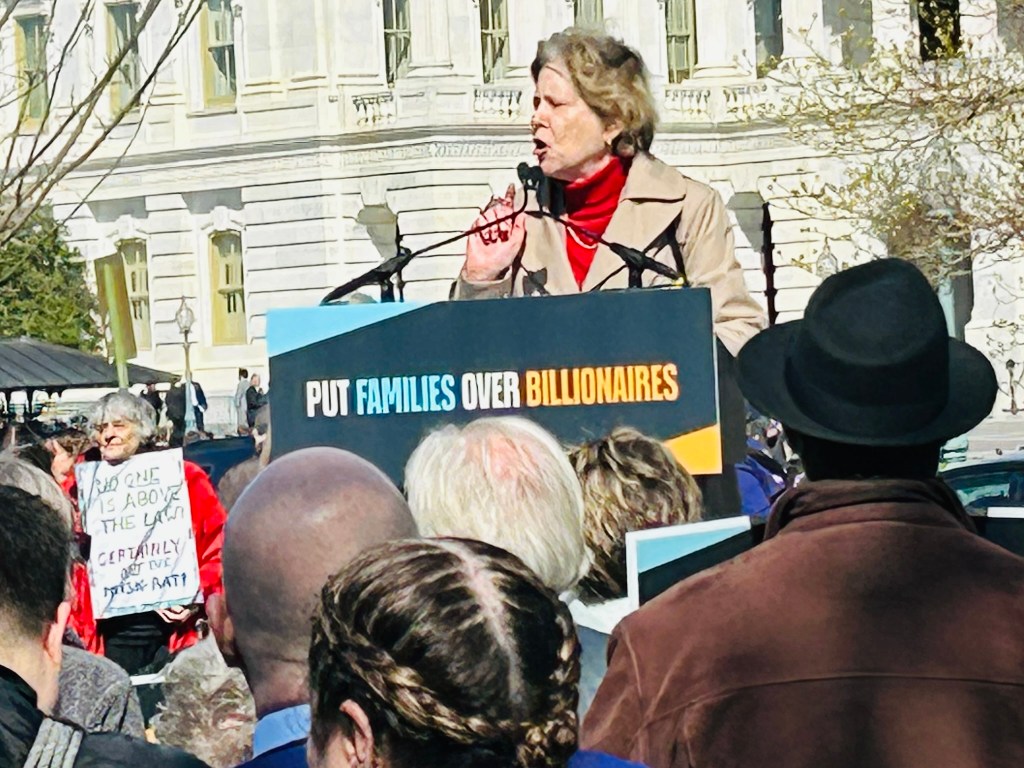
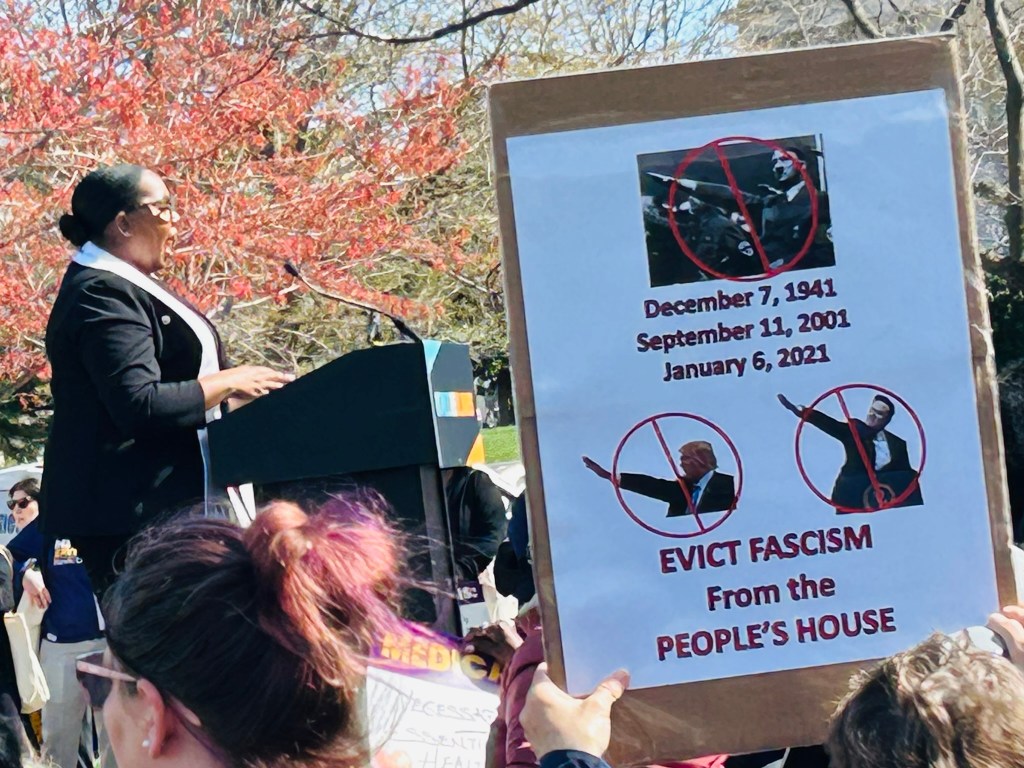
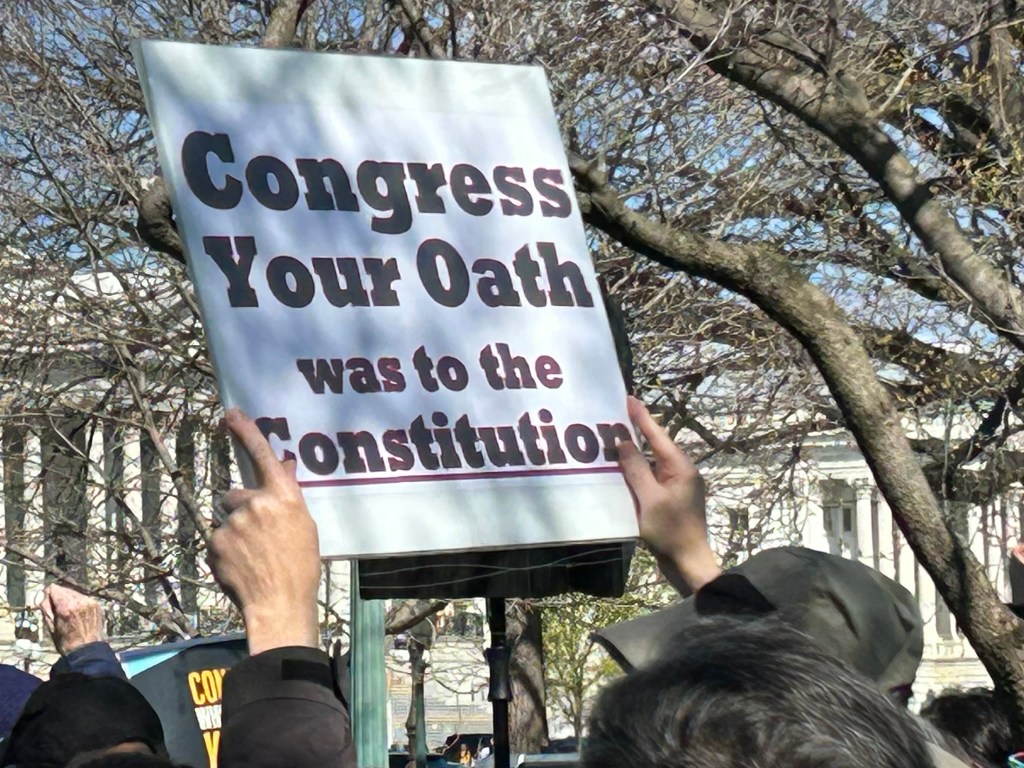
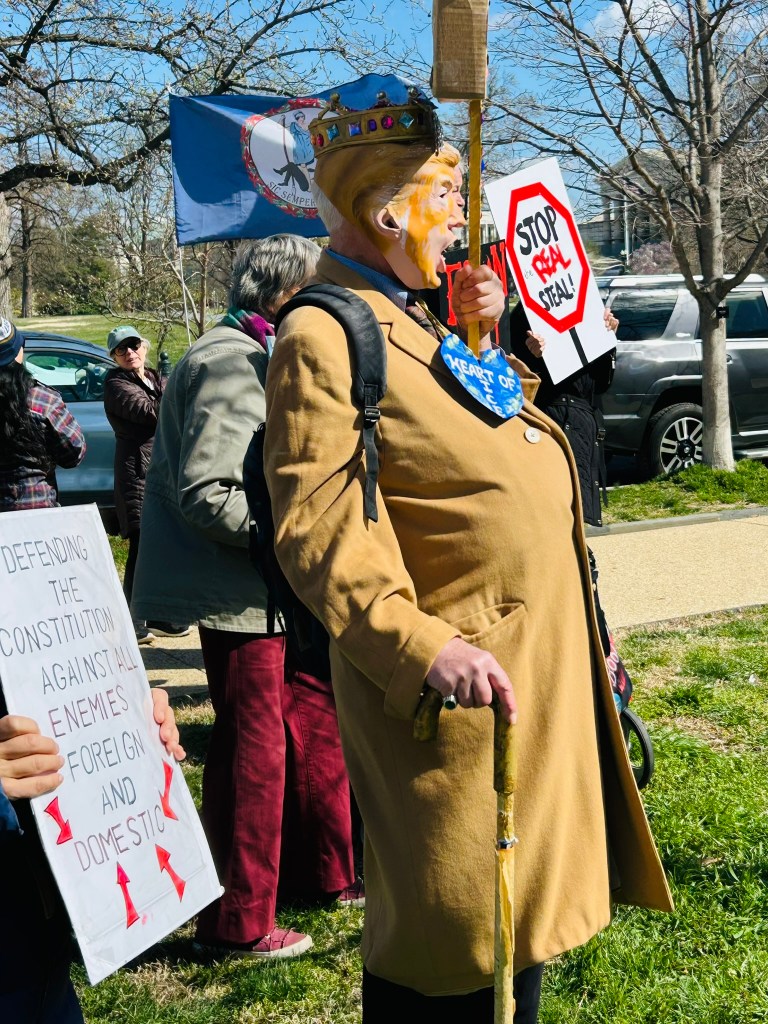
I just returned from an invigorating political rally on the U.S. Capitol grounds, attended by hundreds. It was organized by “Families Over Billionaires”, a consortium of labor unions, non-profit advocacy groups, and some elected Democratic officials. Its main targets were the current Republican economic initiatives which would give billions of dollars in tax breaks to the wealthiest Americans while making steep cuts in Medicaid, Medicare, and even Social Security. The program featured some high-ranking congresspeople as well as grass roots organizers and ordinary citizens. As usual, I took photos to help communicate some of the spirit of the gathering.
Michael Linden, head of Families Over Billionaires, served as M.C.
Rep. Hakeem Jeffries (D-NY), Democratic Minority Leader, spoke from the inspiration garnered from his recent trip to Selma, Montgomery, and other Civil Rights locales.
Rep. Steven Horford (D-NV) spoke for the 40% of his constituents who receive Medicaid.Sen. Alex Padilla (D-CA) also spoke of the need to resist G.O.P. assaults on Medicaid, Medicare, and Social Security.
I saw this poster displayed in Union Station on my way home via Metro.
[I’m posting this “Remembrance” that I wrote last summer after the death of my neighbor and friend, Al Lubran. I revisited this piece today and was especially taken with Al’s deathbed premonition of the dire effects on our government if DT were elected. Unfortunately, his premonition is proving to be all too accurate.]
Al Lubran was a new friend who lived just around the corner from my spouse Andrea and me in our retirement community – The Village At Rockville (TVAR). He moved in a few weeks after we did in March 2022. We knew that Al had moved from Colorado Springs, where he was a longtime resident. Al was a rather private person, and it took some time before we got to know him better.
We shared with Al a love for live classical music, and we frequently ran into him at the Strathmore and other concert venues. Al also attended a lot of plays around town and often had good tips for upcoming concerts and other local cultural events. He regularly rode the Metro downtown to the Kennedy Center and other venues, even with his portable oxygen device for the last few months.
Al was an avid crossword puzzle fan – a passion he shared with Andrea and another neighbor on our floor. The New York Times Magazine weekly puzzle was one they always shared – making copies of it for one another and comparing their results afterwards. Al also regularly played bridge and poker at TVAR. He was active on TVAR’s Travel Committee and initiated some bus excursions to local concerts.
Al was a master of humor, regaling many of us here with his funny stories and puns. He had a keen appreciation for political satire, and filled our email inboxes with videos and cartoons, all with a decidedly anti-Trump bent. Al was also a regular attendee of TVAR’s monthly meeting of our Democratic Club.
We got to know Al more deeply after he came over one afternoon recently to tell us that his health was quite shaky and that he wouldn’t be around for long. We had been noticing him with a portable oxygen unit from time to time, but that soon became a constant companion. Al said that he had a fatal condition called pulmonary fibrosis and that his pulmonologist advised that he get his affairs in order and contact hospice. We were taken assured him that we were available to help in any way.
We knew just a few elements of Al’s biography – that he was from Steubenville, OH, that he had served in the military and then worked for the Federal government for most of his career. We also learned that he had been an avid skier and world traveler, passions which he had shared with his wife Donna, who died in 2018. Al met Donna in Colorado, and they lived in Colorado Springs for decades. Al had moved to the DC area because he had two younger brothers (twins) who lived here. His doctor had recommended that he move somewhere with a lower elevation to facilitate his compromised breathing. Al celebrated the fact that he’d had two good years living at TVAR before his lungs started giving out.
I visited Al in his apartment a few times after he shared his dire news with us. He was remarkably sanguine about dying, accepting his fate with grace and dignity. He wanted to remain in his home to the end and contracted with the Jewish Social Services Agency for in-home hospice care. His two brothers, Bernie and Bob, supported him to the end, along with his devoted friend, Carol Stein. He died at home on the morning of June 18.
I learned from Al’s brothers a bit more about the arc of his life. He had gone to college at the Case Institute of Technology in Cleveland, OH and then enlisted in the Air Force, where he rose to the rank of Captain. Al was proud of his military service in Turkey and stateside. He then went to work for IBM but left in order to move to the place he loved, Colorado Springs. He then went to work for the Federal government as a contracting officer based in Denver. He spent the rest of his career as a devoted public servant, serving in a number of Federal agencies. He spoke proudly of the fact that he had saved American taxpayers millions of dollars with his keen procurement strategies.
My last visit with Al was the most memorable. He shared how afraid he was feeling. Given his acute breathing disability, I assumed he meant he was afraid of dying. But no, he waved that off, and said he was really afraid that all his hard work as a Federal civil servant would come to naught if Donald Trump was elected to a second term. I was taken by his pride in his accomplishments and his deep appreciation for the established system of government he had worked for in both Republican and Democratic administrations.
May Al’s spirit rest in peace. May his fear for the future of our country be alleviated.
On January 2, 2025, I posted a piece called “My Introduction to Sacred Geometry.”
My next foray into “sacred geometry” began with the fish-shaped form created by the intersection of two circles. After drawing the first circle, a second circle with the same radius as the first is drawn, using a point on the first circle’s circumference as the center. The result is shown below.
Vesica Pisces
The shaded area in the center is central to Euclid’s classic geometry. The fish-like shape was also incorporated as a symbol of Christ in the early Christian church. This lens-like form is called the “vesica pisces”, or “bladder of a fish”.
The basic form of the “vesica pisces” can be extended into a complex, repeating form called the “flower of life”. My own drawing of the “flower of life” is given below. I won’t go into the exact methodology for constructing it here, but I will say it took many days of trial-and-error drawings.
Vesica Pisces and Euclidian Geometry
The vesica pisces form was used by Euclid to illustrate some important mathematical relationships.
First, a rectangle is drawn using the vertical diameters of both circles as the two sides. Then, the top and bottom of the rectangle are drawn by connecting the intersection points of the vertical diameters on the two circles. The resulting rectangle has some interesting properties.
The Pythagorean theorem is central to Euclidian geometry. The theorem makes use of a universal property of any right-triangle (i.e., any triangle that has a “right” angle of 90 degrees). In such a triangle, the longest side is called the hypotenuse. The theorem has to do with the relative lengths of the three sides of a right triangle. It says that the length of the hypotenuse, squared, is equal to the squares of the lengths of the other two sides.
The Pythagorean theorem can be used with the rectangle around the “vesica pisces” as shown in the figure above. First a line is drawn connecting opposite corners of the rectangle. This creates a right-triangle in which we already know the lengths of the two shorter sides.
We can define the radius of each circle as a length of 1 unit. Thus, we can easily see that the vertical lines of the rectangle are exactly 2 units tall (the length of two radii). Similarly, we can see that the top and bottom lines of the rectangle are the same length as the radius: 1 unit.
Using the Pythagorean theorem, we can calculate the length of the slanted line, the hypotenuse, as the square root of the squares of 1 and 2. The square of 1 (1X1) is 1 and the square of 2 (2X2) is 4. So, the length of the slanted line is the square-root of 5. You can use a calculator to estimate the square root of 5 as: 2.2360679775…
This is regarded as an irrational number – one whose succession of decimal digits follows no known pattern. The Greeks were intrigued by irrational numbers like this. The square root of 5 became an important number in the calculation of another important irrational number, Theta.
The value of Theta is calculated as half the value of the square root of 5, plus another half unit. Half the value of the square root of 5 is: 1.1180339887… Add .5 units to this and you get: 1.618033987… which is the value of Theta.
The Golden Rectangle
Theta is the value that defines what was known to the Greeks as the Golden Rectangle. A golden rectangle is defined as one in which the lengths of the sides are in proportion to the value of Theta.
The next figure shows a golden rectangle that is divided into a square and another rectangle. The sides of the square can be identified as “a”, and the length of the whole rectangle can be given as: “a+b”.
In a golden rectangle, the following equation always holds:
a / b = (a + b) / a
This equation always yields the exact value of the irrational number Theta.
A Golden Rectangle Drawn from the Vesica Pisces
The rectangle enclosing the vesica piscis is NOT a golden rectangle. Its width is 1 radius unit, and its height is 2 such units. The proportion is simply 2 to 1, or 2.
But the hypotenuse of the right triangle drawn in Figure 2 can be used to construct a golden rectangle. Recall that the value of Theta can be expressed as the square root of 5, divided by 2, and adding .5. Looking at Figure 2, it’s easy to see that the length of the hypotenuse, the square root of 5, is exactly bisected by the midline of the circles. Therefore, the length of half of the hypotenuse is the square root of 5, divided by 2. The additional .5 units can be drawn as half the length of the radius (1 unit). Knowing that this length represents the value of Theta, we can simply add one more radius unit and we have the known value of A and B.
Once this is known, it’s easy to draw the square with each side of length Theta, and an additional rectangle whose length is 1. The combination as a whole yields a golden rectangle. And the secondary rectangle contained within is also a golden rectangle, as shown below.
The Golden Rectangle became the design model for the Greek Parthenon and many other of the classical structures of the Greco-Roman era. Many Renaissance artists, most notably Leonardo da Vinci, made extensive use of the Golden Rectangle in their paintings and architecture.
The Fibonacci Sequence and Theta
The value of Theta can also be calculated by using the arithmetic sequence known as the Fibonacci sequence: 0, 1, 1, 2, 3, 5, 8, 13, 21, 34, 55, 89, 144…. The sequence starts with 0 and 1, with each succeeding value being the sum of the previous two. Divide each number in the sequence by its predecessor and the value will approximate Theta, getting closer and closer to it as the sequence continues. For example, 89/55 = 1.61818 and 144/89 = 1.61797.
Pursuing my interest in Sacred Geometry has opened in me a deeper curiosity and respect for some of the universal design principles used in western art and architecture.
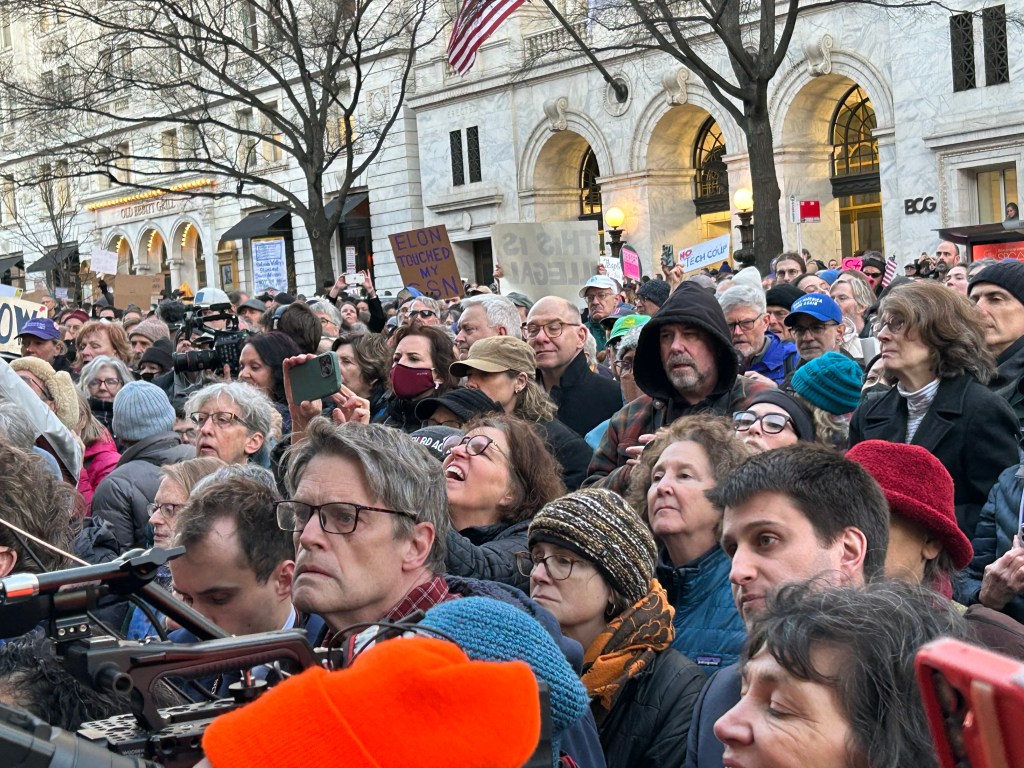
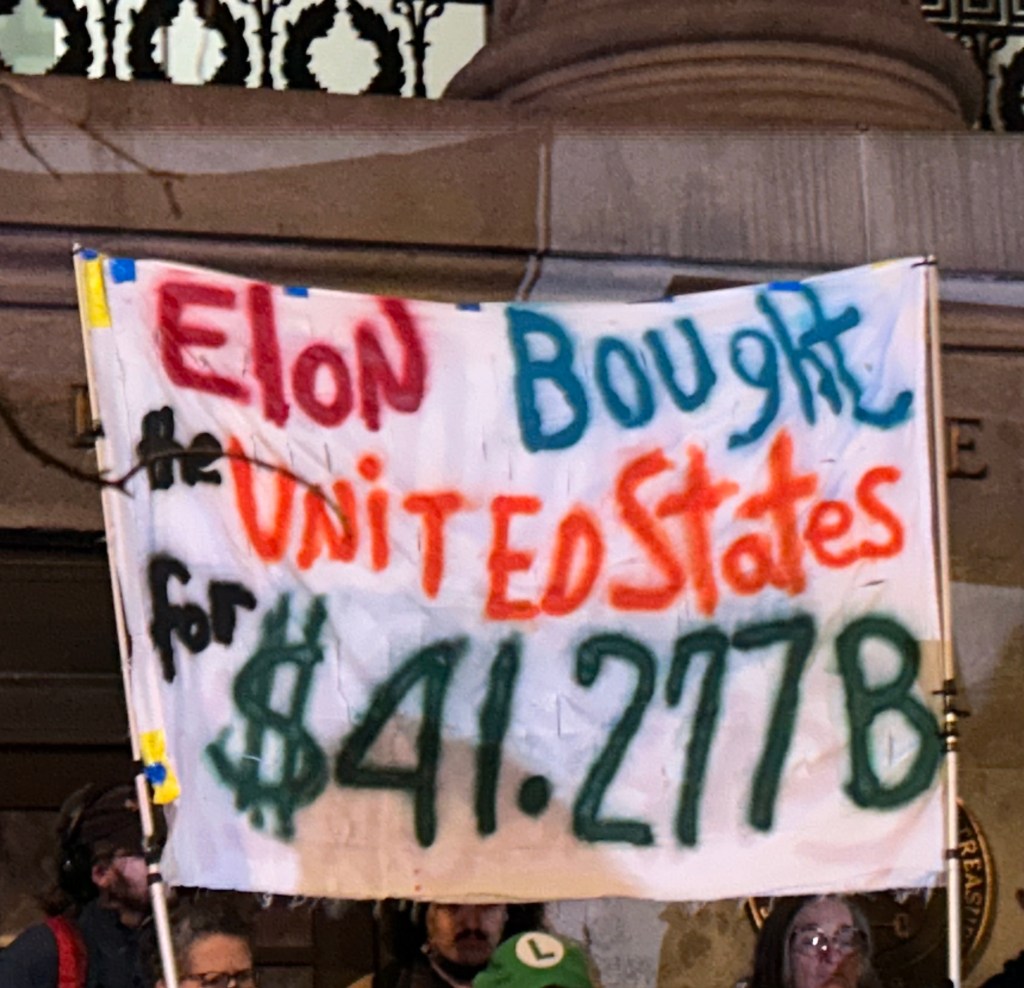
I just returned from a rousing resistance rally at the U. S. Treasury building in downtown Washington. The rally was organized by the MoveOn and the Indivisible organizations after Elon Musk’s egregious invasion and takeover of the U.S. Treasury and its sensitive computer systems over the weekend.
A crowd of thousands thronged the sidewalk and street in front of the building on 15th Street, NW. A contingent of Democratic U.S. Congresspersons, Senators and Representatives, many of them on Government Oversight Committees, had been turned away from entering the building
The rally featured over a dozen members of Congress as well as leading spokespersons for MoveOn and Indivisible. My fellow Indivisible member and friend Raj Gupta joined me for the Metro ride downtown. We arrived early enough to get prime standing positions just behind the official video cameras of the event.
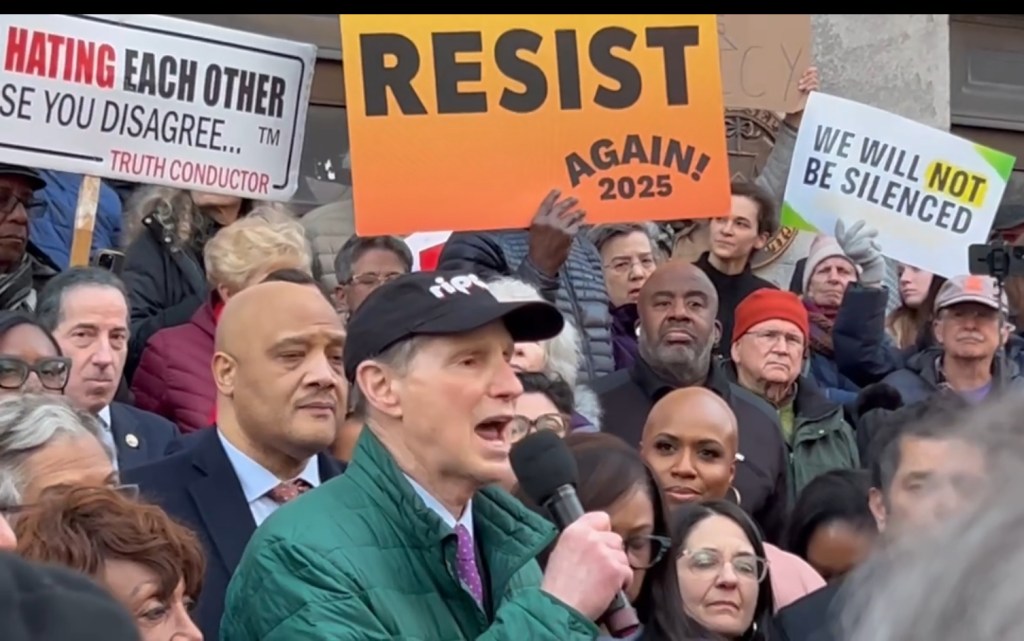
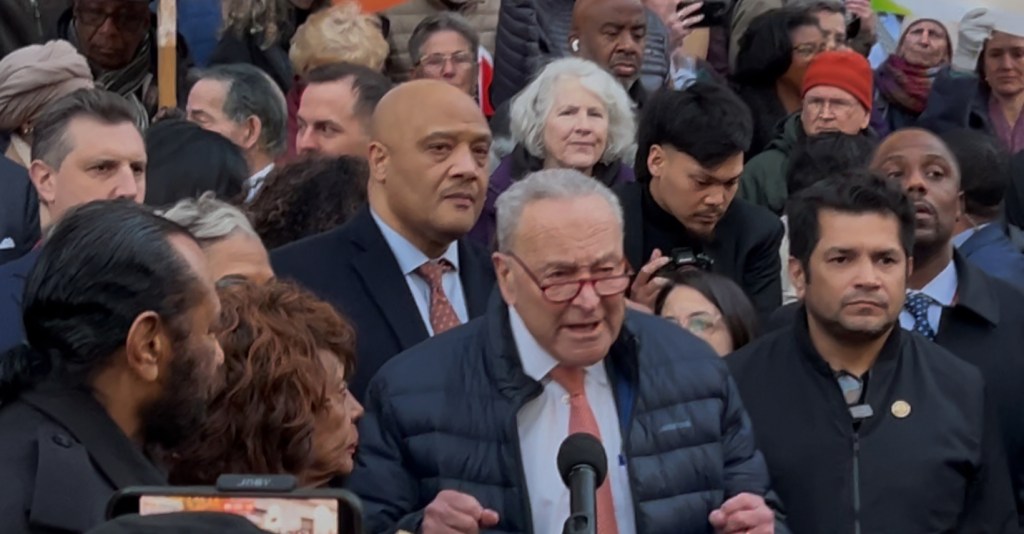
We were both inspired by the energy and enthusiasm of the speakers and the crowd. The speakers’ list included Senators Elizabeth Warren (MA), Chris Van Hollen (MD), Chris Murphy (CT), Ron Wyden (OR), Richard Blumenthal (CT), and Democratic Minority Leader Chuck Shumer (NY). From the House side were Rep. Maxine Waters (CA), Ayanna Pressley (MA), Jaime Raskin (MD) and a number of others.
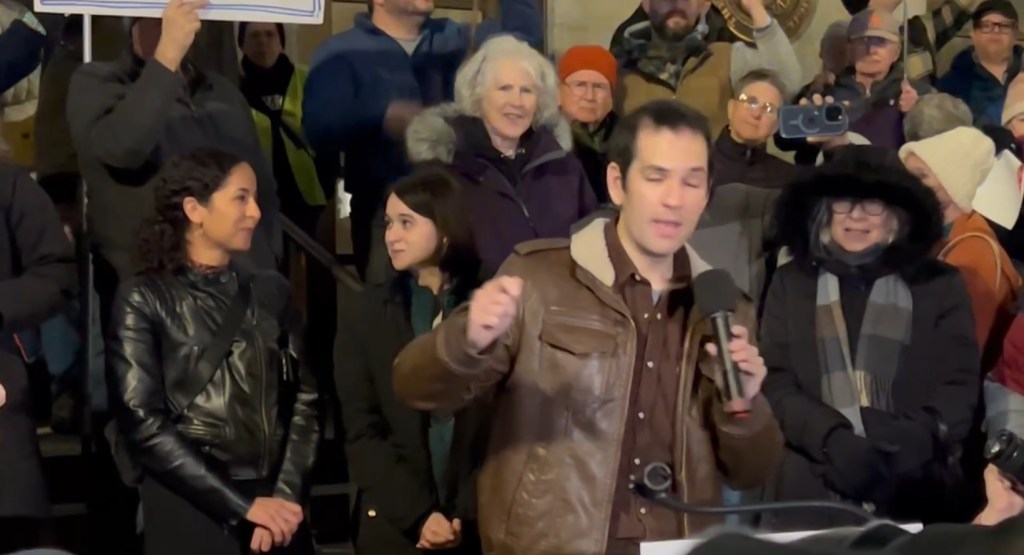
Ezra Levin of Indivisible gave a rousing speech, forcefully calling on the Senators to shut the Senate down in protest of the outright coup at the Treasury. Rahna Epting, the Executive Director of MoveOn, deftly facilitated the event after giving her own stirring call to action.
I took some photos and have posted a few of them below.
John Bayerl, 2/4/2025
Sen. Elizabeth Warren address the crowd, with Rep, Jaime Raskin smiling his approvalRep. Maxine Waters (D-CA) offers a vehement attack on the lawlessness of Elon MuskSen Ron Wyden (D-OR)Senate Minority Leader Chuck Shumer (D-NY)Sen. Chris Van Hollen (D-MD) flanked by Sen. Richard Blumenthal (D-CN)Ezra Levin of Indivisible calls for the Senate to shut down. On his far left is Rahna Epting, Exec. Dir. of MoveOn, with Leah Greenberg, Exec. Dir. of Indivisible