Tangi, by Witi Ihimaera

[Note: The Tangihanga (“Tangi” for short) is a traditional Maori funeral ritual, usually lasting three days. It is held in the communal meeting house (“marae”) to remember and honor the deceased. It is a profound, communal grieving process where the body lies in state, surrounded by family, to allow for collective mourning, sharing memories, and final spiritual farewells.

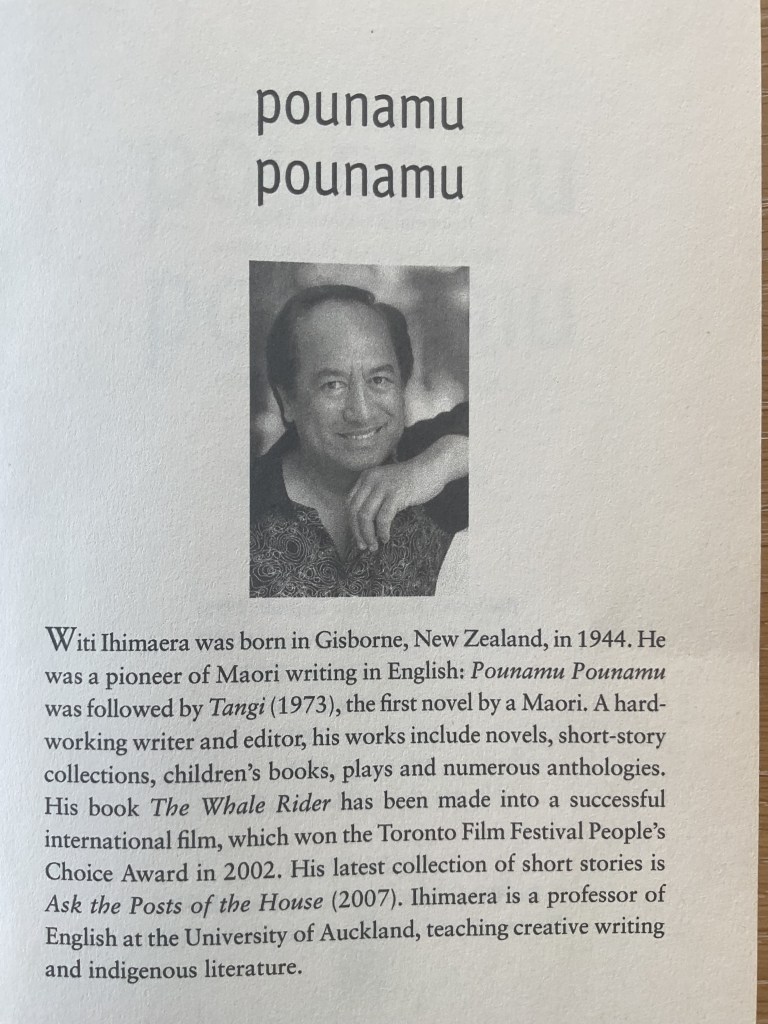
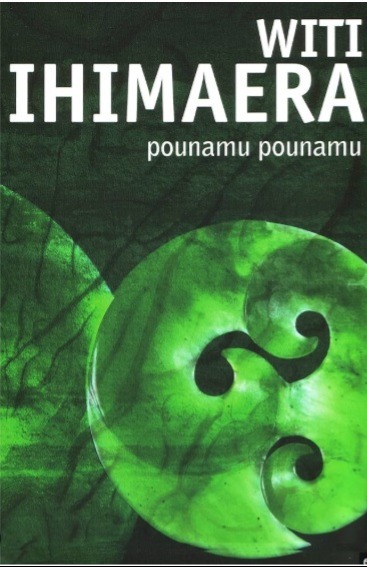
“Tangi” is the title of the last story in Witi Ihimaera’s first book, called “Pounomu Pounamu”. My previous post included my short retelling of four other stories in that volume. I’m not able to do justice to “Tangi” with any retelling so I’m including the full text here. The story contains many flashbacks and other variations in sequence. It is the deepest, most affecting description of individual and communal grieving that I’ve encountered.]

One step further now.

Do not listen to the wailing, Tama. Do not listen to the women chanting their sorrows, the soaring waiata tangi [funeral songs] which sing alone and disconsolate above the wailing. It is only the wind, Tama. Do not listen to the sorrow of the marae [meeting house].

Do not look up, Tama. The marae is strung with electric bulbs and black shadows walk within the blazing light. If you look up, you will see many faces of grief, every face pale and shrouded in the dark garments of mourning. You will see your father where he lies on the cold stone and your mother keeping vigil over him this long night. Do not look up. Else you will be lost.

‘Mr Mahana? Gisborne calling, Mrs Kingi on the line.’

‘Hello, Marama!’

‘Hello, Tama.’

My sister’s voice is calm and soft. She pauses for a moment.

‘You’ll have to come home, Tama. Dad’s dead.’

Daddy, why did my Nani Teria die?

Because she was old.

Are you old, Daddy?

No, Tama.

Don’t grow old, Daddy. Please, don’t grow old.

Step firmly, Tama. One step. Now the next. Although the earth may sway and reel under your feet, step firmly. The earth sorrows with you. Step firmly, Tama.

 ‘How’s Mum, Marama?’

 ‘She’s taking it well, Tama. She helped wash Dad’s body, got him ready, dressed him . . . he was so heavy. We took him to Rongopai this morning.’

Daddy, why did we bring our Nani here?

Because Rongopai is our meeting house, Tama. This was where she was born, where I was born, where you were born. This is our home, Tama. And on the hill next to the meeting house is where all our people are buried. I will be buried here one day.

 No you won’t, Daddy.

 One day, son.

The shadow of an old man advances across the light. It is your granduncle, Tama. He is welcoming you home to the funeral of your father. Listen to his words, listen. But do not look up. The old man is chanting your whakapapa, your lineage, and your links with Rongopai. His voice threads itself within the sad wailing. Listen to the words, Tama. But do not look up. Not yet. Wait until his welcome is ended and the silence falls within which every ear strains to hear your reply. Not yet, Tama.

‘Quite suddenly, about three o’clock this morning, Mum woke up and there he was, cold, lying beside her. Mum rang me up about five, you know how early Mum gets up. So me and Hana went out to her, and you know what Mum was doing? There she was, sitting beside Dad, just knitting, knitting a jersey for Dad, waiting for us, knitting, just knitting.’

‘Oh, Marama!’

When the welcome is ended, Tama, then you may look up. Look your granduncle proudly in the face and do not think of tears. The wailing will sigh away like a drifting wind. Then will be the time to speak.

                ‘Anything wrong, Tama?’

Mr Ralston puts his hands on my shoulders. I turn. He sees my tears.

‘My father, my father is dead, Mr Ralston. I must go home, Mr Ralston, pack my bags and go home. My father is dead.’

Daddy, why does the man throw Nani Teria’s suitcases and photographs and things in the hole?
Because that is where Nani is, Tama. And because that is our way. What do we need Nani’s things for?

Has my Nani really gone now?

Yes, Son. She’s gone now and you’ve got no Nani anymore.

She was a good Nani, wasn’t she Daddy? Why did she have to go into the earth?

 Do not think of sorrow, Tama. You must make your father proud. Send your words loud and ringing that he may hear. Bear yourself with pride. Answer your granduncle’s loving words with your own. Address the assembly, Tama.

‘Was your father an old man?

 ‘No, Mr Ralston. About fifty-seven.’

I watch the windscreen wipers swish across the windows weeping away the rain.

‘He was a good man, Mr Ralston.’

The telephone poles bend past. And here is Wellington Airport, glistening and wet.

It always strains when a Maori dies, Tama.

Why, Daddy?

The wailing makes the sky sad, and even if it is a beautiful summer day and there are no clouds, it rains. The sky mourns for your Nani, too, Tama. She was a good woman.

 Now is the time to speak, Tama. Proclaim to all who stand on the marae that you are Tama Mahana, eldest son of Rongo Mahana who was the son of Eruera Mahana. That you are of the Whanau A Kai, that your lineage is long and renowned. Proclaim that Rongopai is your family hearth, your birthright, and that you are pleased to stand before your whare tupuna [ancestral meeting house]. Let all hear that you know that you are indeed a Mahana. It is a proud name and your people are a proud people. You must be proud, Tama.

 ‘I’m afraid, Marama.’

The lights of Waituhi are near and already I can hear the sorrows of Rongopai marae whispering in the wind.

‘Almost there, Tama.’

The car turns into the gateway, the headlights flickering across the marae.

‘I’m afraid, Marama.’

‘Kia kana, Tama. Be strong.’

 I close my eyes, tightly, tightly closed.

Where are you, Daddy?

I’m here, Son.

I cannot feel your hand, Daddy. Hold my hand so that I know that you are here with me. It is dark and I am afraid. Hold my hand.

One step. Then one step further now.

After you have completed the initial ceremonies, Tama, let your voice be small so that every person among the assembly must strain to hear your words. Tell them that the grief is in your heart, and your body is a dark and empty shell in which your thoughts gather and produce tears. Tell them that you have come home to do homage to your father.

Hush, Tama, Do not cry so much.

But she was a good Nani, she was good to me, Daddy.

Then it is right for you to weep, Tama. But never forget that the sun always rises.

When, Daddy? When?

Do not falter, Tama. Remember that you are your father’s son. You are the eldest son and the example is yours to set. Do not let your voice drift, as if it were an empty canoe adrift on the sea.

Take up the paddle, strike deep into the water. Look upon your mother where she sits weeping. She is your guiding star. Point your prow toward that star and let her know that you are here.

‘Let me speak to Mum, Marama.’

I hear my mother weeping softly, softly, and I cannot restrain my sorrow. For she is my mother and I am her son.

‘Hello, Tama.’

 ‘Mum, are you alright? Mum, don’t cry Mum.’

‘Come home,’ my mother says. ‘Come home, come home, come home, come home.’

Over and over again, she calls to me.

‘Mum, please don’t cry Mum, please.’

‘Come home, Son, come home and comfort me. I am alone now. Come home, come home.’

You must always look after your younger sisters and brothers, Tama. Your mother, too, if I should die. Remember, Tama, always.

Yes, Daddy.

You are the eldest. That is your duty, your obligation. I was taught that as a child. I teach you that now.

Be at peace, Tama. You spoke well and you were your father’s son. Be at peace. But do not rest. Look upon the mourners. They call me from the shadows and from the light to share their grief with you. Haere mai, mokopuna, the old people whisper. Come and rest noses with us and let us join our sorrow. Haere mai, mokopuna. Do

not be too sad for we also grieve with you.

‘We’re truly sorry, Tama.’

‘Thanks Mr Ralston. Thanks Tim. Thanks Bob.’

I must shake the hands of my friends and receive their condolences. Yet if I look into their faces they look away from me, as if death is something that should not be admitted.

‘We’re truly sorry, Tama.’

Why are they sorry, Daddy? Why are they sad?

Because your Nani Teria was a good lady. And now they are sad.

Is that why they kiss her? Must I kiss her?

You won’t see your Nani after this day.

Then one last kiss, Nani.

I bend down upon my Nani’s body. Nani does not breathe any more.

Goodbye, Nani.

Your people mourn with you, Tama. Embrace them and let them weep on your shoulder. The men weep, the women weep, the children weep because the men and women weep. This is a sad day. These are the people of your whanau [extended family]. You have lost a father. They also have lost a father, a brother, a son, a friend. This is your family. This is your home. You are their son too, Tama.

‘Aunt Mina came from Tauranga this morning,’ Marama says.

‘And Uncle Pita arrived this afternoon. Uncle Pita’s been a great help. He did all the arrangements at Rongopai. Jackie and Arapata dug the hangi [grave]. A lot of people are coming. A lot of people to feed. Don’t know where we’re going to put them all.’

‘What about the old homestead, at Nani’s place?’

‘Yes, some there. But most of them in a marquee near the meeting house. The homestead is too small.’

Don’t close the door, Daddy. Leave it open so there is light. As long as I see the light burning, I’m not afraid.

You shouldn’t be afraid, Tama. You’re a big boy now.

And it is time to get on with life. The sun always rises. You are a seed that was sown at Raiatea.

One step. Then one step further now, to where my father lies alone and lonely under the harsh light.

Listen, Tama. A lone voice sings among the soft songs of mourning. The voice of a Kaia, Auntie Ruthie. She sings an ancient lament that soars and swoops and curls above the hushed assembly. Look where she comes, slowly stepping from the darkness, her black gown threaded with green leaves, her hands outstretched, in each hand a sprig of greenery. She performs movements to her song. Slowly her hands move, with intricate precision, telling of the grief which tears at her heart. Some of the mourners join her song and perform the movements along with her. But she looks straight ahead, her face luminous with grief. She looks at you, Tama, her brother’s son. Only you.

I watch my Nani going away into the earth. The earth is soft and wet because it is raining. Daddy’s hands are tight upon my shoulders.

 Nani’s belongings are thrown into the hole. I see a picture of Nani fall. The glass smashes, but she is still smiling.

Goobye, Nani.

Dirt falls upon Nani, shovel after shovel. And as she disappears, Auntie Ruihi starts a frenzied wailing.

Aunt Ruihi, please don’t cry, don’t, please.

Listen to your aunt’s lament, Tama. Listen. She opens her arms to you. Through the spray of my gushing tears, she sings, I see you, my brother’s son. Come weep with me, our anchor is gone, and we are cast adrift at the mercy of the sea.

Embrace your aunt, Tama. Weep with her. You have only lost a father. She has lost both parents and now her eldest brother. She has nobody who will look after her now. Weep with her, Tama. Kiss her once more. Aue, mokopuna [oh, nephew], she weeps. Aue, Aue, as she dissolves into the darkness.

You are alone now. Your father is on the marae. Your mother and brother and sisters wait for you to join them by their father’s side.

One step. Then one step further now.

You must always look after your brothers and sisters. And your mother too, if I should die.

‘Are you all right, Mum?

‘Come home, Tama. Come home, come home, come home.’

‘Mum just sits beside Dad, knitting, knitting, a jersey for him, knitting, just knitting.’ ‘Come home, Son. Come home, come home.’

Step firmly, Tama. Do not listen to the wailing. It is only the wind shifting, only the wind renewing. Be proud. Your father waits among the flower wreaths. His body is draped with feather cloaks. Be proud.

‘You’ll have to come home, Tama. Dad’s dead.’

We won’t need Nani’s things. That is why they are buried with her.

 ‘I’m afraid, Marama.’

‘Kia kaha, Tama. Be strong’.

Almost there, Tama. almost there. The long journey almost at an end. See? Your brothers and sisters raise their arms to greet you. One step. Now another. And one step further now.

Are you old, Daddy, like my Nani Teria is old?

No, Tama.

Don’t grow old, Daddy.

One day I will be old. Then I shall die.

No you won’t. I won’t let you.

One day, Tama.

Embrace your brothers and sisters, Tama, and be strong. You are the eldest. Embrace your mother, Tama. Do not listen to the wailing. Now, slowly look upon your father. Rest your arms on his casket and weep for him.

‘Daddy, where are you?’

 It is dark and I can hear the wailing coming from the marae.

He was an old man, Tama. See how he sleeps. His eyes are closed and his face is pale in the blazing light. He is covered with feather cloaks. His face is cold. His hands are cold. The wind blows upon him and ruffles his grey hair.

 For three days he will lie here. Then on the afternoon of the third day, his casket will be closed and you will not see him again. On that day, you will help carry him up the hill to the family graveyard.

He will be heavy, but you must be strong. It will rain. It always rains when a Maori dies. Then he will be covered by the earth.

This is the last goodbye, Tama.

Bend towards him, Tama.

One last kiss, Father. Your lips, so cold, so cold.

Goodbye, Father.

Daddy, is it always so dark?

No, son, the sun always rises. Always.

Soon, Daddy?

Soon, And never forget, Tama:

E kore au e ngaro He kakomo I ruiruia mai I Rangiatea

You are from a seed that was sown in Rangiatea [the sacred, ancestral homeland]

and you will never be lost.
My Intro to Maori Culture in Aotearoa

My wife Andrea and I just returned from a marvelous, month-long trip to New Zealand. We were generously hosted there by Andrea’s longtime (and my new) friends, Emily and Paul Morrow, who took us to many of their favorite places. Early on, I borrowed from Paul a book of short stories by the renowned Maori author, Witi Ihimaera. The book is titled “Pounamu Pounamu” and it served as my introduction to the rich culture of the first peoples of “Aotearoa” (the officially recognized alternate name for NZ). In order to better remember these marvelous little gems, I wrote out some summaries. I’m sharing four of those summaries here.

 “A Game of Cards”

A Māori college student returns home by train. His father greets him with the news that his beloved “Nani” is very ill. Throughout his boyhood, he and Nani Miro had been very close. It was she who had encouraged him to further his education.

Nani was a leader in the community. She had accumulated shares in tribal land and was considered rich. But she was also very generous with her money and her willingness to care for her many relatives in need. Nani lived next to her tribe’s meeting house and was the keeper of many of her people’s traditional treasures of jade, feathers, and various team athletic trophies.

Nani Miro had a passion for playing card games with other women in the community. She played any and all card games and her skill was legendary. Her principal opponent was Mrs Heta, described as “her best friend and worst enemy”. In the heat of their card rivalry, they often accused one another of cheating.

The student visits his Nani and their emotional bond is easily renewed, despite Nani’s complaint that he visits so seldomly. Nani has just checked out of hospital against her doctor’s advice. That night, she takes a turn for the worse and her closest family members are called to come to her. The student is forlorn at the sight of his Nani’s enfeebled appearance.

All her many relatives and friends have gathered to be with her as she makes her passage. Included in this retinue is Mrs. Heta. Nani regains consciousness and tells Mrs. Heta that she wants to play poker. Miraculously, Nani sits up in bed and pulls out a deck, eager to outplay her nemesis-friend one last time. The two play fiercely, accusing each other of cheating, raising their voices and trading harsh barbs. But then, Nani starts laughing hysterically and promptly dies. Mrs. Heta gently embraces her closest friend and fiercest opponent.

At the elaborate “tangi” (funeral rites) that followed, Mrs. Heta plays solitaire on Nani’s casket. Mrs. Heta dies shortly thereafter and is buried next to Nani so that the two can continue their lifelong card rivalry.

“Beginning of the Tournament”

This story begins like the first with our out-of-town Māori college student, “Tama”, receiving a phone call from his Dad urging him to come home for Easter and help him out with their town’s annual field-hockey tournament. The tournament had been started many years ago by Nani Miro as an annual reunion for dispersed townspeople as well as neighboring tribes. Dad had inherited Nani’s administrative role and needed help.

Tama is reluctant to go but senses the urgency in his Dad’s request and finally agrees to come. At Dad’s suggestion he even invites a pakeha (non-Maori) athlete friend, Jerry, to join him. Jerry is reluctant at first, but assents after he is lured by descriptions of Tama’s gorgeous Māori sister.

Tama and Jerry make the long drive from Wellington to Waituhi and are warmly welcomed by Tama’s Dad. The tournament begins the next day and a welcoming meal needs to be prepared for the 25 men’s and women’s teams that will be competing. In addition, the playing field needs to be marked off in white, and the teams oriented. Tama sets off to work on these tasks but Jerry keeps pestering him to meet his beautiful sister. He finally realizes he has been duped when he meets the 7-year-old sister, Meara. Jerry is very angry of course but is somewhat appeased when Tama then introduces him to an attractive young cousin.

Tama rises early the next morning to pay his respects to his recently deceased Nina Miro whose grave is in the communal cemetery nearby. Tama and Nina Miro had been very close, and seeing her grave again, he becomes strongly motivated to help his father continue a tribal tradition that she had initiated. He laughs aloud when he sees that someone has placed an Ace of Hearts card on her tombstone.

The rest of the story is lighthearted and often farcically funny. The first event is a parade around the field with everyone dressed in their team uniforms. But most of the male players don’t have uniforms! Except for Jerry that is. He sports a flashy gold jersey with matching shorts and wins first prize, although some of the Māori men joke about dirtying the pakeha up a a little.

The women are much better organized, and dressed. They play field hockey with great abandon, bending the rules radically as they go. Jerry makes a new lady friend by offering her the use of his stick and she happily accepts it. It soon becomes clear that winning is a minor element of the games. Everyone is mostly out for the fun of it. At the end of the day, souvenir trophies are given to everyone, and there’s great fun at the traditional feast that marks the end of the tournament.

Tama’s Dad approaches him at the end of the day, tired but happy. “Well, son, we’ve made it through to another year.”

“I thought of my Nani Miro and how she had begun the tournament as a way of keeping up our tribal links, one village with the others. You know: the family that plays together stays together. And what’s going to happen when it’s Dad’s turn to go and the sky falls down?”

“Fire on Greenstone”

 This story is about young “Tama’s” relationship with his grandfather, Nani Tama, after his wife, Nani Miro, had died. Much of the story centers on the old homestead where Nani Tama continues to live. It is next to the tribal “meeting house”, and itself contains many of the tribe’s artifacts and memorabilia.

Nani Tama spends much of his time on his front porch, remembering his rich life, and often drinking beer with visiting neighbors. He would also make a daily walk up the hill to his wife’s grave site and spend time communing with her.

Young Tama visits Nani on one of his infrequent visits from his college life in Wellington. They sit on the verandah, drink beer and reminisce. Nani Tama says:

“Your Nani was a great lady. All her life she kept Waituhi together. All her life she protected the land we live on and fought to get back the land that was taken away. Who will carry on the work now that she is gone?”

Nani Tama invites his grandson to join him in the sitting room inside. As young Tama walks through the house, he is flooded with memories of the many childhood hours he spent here, curiously exploring the Māori artifacts and mementos. He realizes that his grandparents’ homestead is the embodiment of their “whanau” — the extended family and friends of their local Māori community.

The sitting room was where Nani Miro conducted her weekly card clubs. The room also contained an old but still functional piano that young Tama had learned to play. He sits down at the piano and plays an old, melancholic Māori song that deeply affects his grandfather.

Just then some old friends of Nani Tama arrived outside and he leaves to join them on the verandah. Young Tama is left alone to take in the rich family history in the various artifacts displayed in the sitting room. He had spent many hours here as a child, curiously exploring the sacred objects, photos, and sports trophies.

Both of his grandparents had been athletic stars and their trophies, and those of other family members, are in full display. He sees an old photo of his grandmother smiling fully. He takes it in and smiles back at her. Then he comes upon a large ledger with handwritten names inscribed. The ledger is a written record of his family’s “whakapapa” — their genealogy going back many generations. The last entry is for his deceased grandmother.

Young Tama’s grandfather returns inside the house to invite his grandson for a meal. But young Tama has to get back to college and politely demurs. Nani Tama then drops to a more serious demeanor as he motions to a small carved box on a nearby table.

“You remember this?” he asks.

Young Tama nods yes and opens the box. It contains a “pounamu” — a sacred green jadestone. He had seen it as a boy and asked his grandmother if he could have it. She had brushed him off, saying he wasn’t ready.

As Tama describes it: “It was a big piece of greenstone, not the valuable dark green kind, but a smoky green like an opal. I used to like to hold it to the sun and look into it and feel the soft luminous glow flooding around me. And I used to whisper to myself, ‘Pounamu…pounamu…pounamu” and almost hear the emerald water rushing over the clay from where the greenstone had come.”

Nani Tama witnesses his grandson’s attachment to the “Pounamu” and remembers his wife’s instruction to give it to their grandson when he was ready. Nani Tama places the greenstone in his grandson’s hand and says:

“Are you ready, Tama? When you are, come home and, this time stay.”

Some months later, young Tama receives a late-night phone call from his father saying that the old homestead had burned to the ground. Nani Tama had survived but had gone crazy, staring incredulously at the flames and crying “Miro! Miro!”

Young Tama weeps at this news. He writes in his journal:

“That homestead was the ‘manawa’, the heart of the family, and my Nani Tama’s heart, too…

“But then I remembered the greenstone and Nani Tama’s words about carrying on Nani Miro’s work. There are some things fire can never destroy. And I saw not fingers of flame but a soft luminous glow reaching out and around me.”

“In Search of the Emerald City”

It’s moving day for 11-year-old Matiu and his family of four — with Dad, Mum and his adolescent sister Roha.

Overcoming his excitement, his first thought is to say goodbye to the family cow, Emere. It takes time to track her down in the muddy paddock and sidestep all the cow pies. Matiu tries to explain to the cow about their family’s move to the big city, but Esmere is disappointedly indifferent. Matiu is angry at Esmere for this but then finds some forgiveness and gives her a kiss.

Matiu hears his Dad calling him to help load the car. As he carries out a big box of his books and notebooks, his Dad frowns and says he’ll need to leave some behind. Matiu objects, saying that his English teacher advised him to take them all. Dad takes his copy of “The Wizard of Oz” out but Matiu begs to keep it and his father relents.

By mid-morning, their front yard fills with family and friends wanting to say goodbye. Then Matiu’s best friend arrives and invites him out to the woods for a last smoke. Matiu declines, but his friend presents him with a farewell gift— the head of a large eel that he caught that morning.

When Matiu returns to his house, a full-scale party has developed, with sandwiches and beer and even live music. Dad has many friends in their village and they try one last time to dissuade him from making the move. They keep offering his Dad more beer. Dad drinks. but remains adamant that he needs to find full-time work and that the big city is the best place to find it.

Mum sends Matiu to bring his Dad back for the last of the packing, but then has to go get him herself, scolding him loudly to the delight of the other wives there.

With the packing complete, the friends and relatives’ approach for one last tearful goodbye. The women are especially emotional, crying in each other’s arms. Matiu’s sister Roha is totally bereft at having to leave her boyfriend behind. Even Dad is beginning to sob. The family will be leaving everyone and everything most dear to them in life.

Witnessing all this, Matiu becomes melancholy as well. He had awakened that morning full of excitement at the prospect of a new life in the city, but all he can now feel is the dire loss of the people and places he has loved most in all the world.

As their car finally pulls away, all he can think of is Dorothy’s refrain on waking up from her dream of the Emerald City:

“There’s no place like home”.

John Bayerl, 3/13/2026

Gaithersburg Book Festival 2025, Part 2

Authors Finding Hope within the Climate Crisis

The next event I attended was an interview with authors of two recent books that affirmed possibility and hope within the daunting climate crisis.

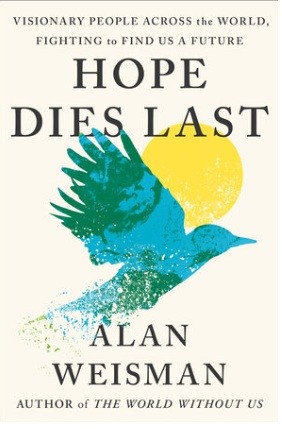
Alan Weisman is a veteran academic and long-term journalist and author on environmental topics. His latest book is Hope Dies Last. Malcolm Harris is a young writer/activist who brings a radical political perspective to his new book What’s Left. The two were introduced by Rockville Mayor, Monique Ashton, who recounted how her 12-year-old daughter had received news of her mom’s election victory by asking her: “So what are you going to do about climate?”

The interviewer for the program was the legendary journalist and activist Elizabeth McGowan who had found her passion for fighting climate change after overcoming two occurrences of serious cancers, and had ridden a bicycle across the country in sponsorship of cancer research.

Weisman was interviewed first. The subtitle of Hope Dies Last is Visionary People Across the World Fighting to Find Us a Future. The book is the fruit of Weisman’s recent worldwide travels in search of people who were on the frontlines of the climate crisis. He recounted a story about an Iraqi man who had spearheaded a successful, decades-long movement to restore an enormous wetlands area in southern Iraq that Saddam Hussein had ordered drained in order to root out his enemies, Iraqi Shias. The man had a scientific background, ecological understanding, and lifelong knowledge of the region’s water flows. He also had a wealth of personal connections to the displaced people who were eager to resume their traditional way of life. Weisman’s story is further dramatized by the fact that the wetlands in question are formed by the Tigris and Euphrates Rivers whose “fertile crescent” was among the sites of earliest civilizations in the Middle East. In reflection on the book’s title, Weisman said that “hope is an active verb” and that all of us could find a hopeful path through the climate crisis if we committed ourselves to collective action.

Malcolm Harris was a well-known leader of the “Occupy Wall Street” movement. His subsequent career as a journalist and author was formed from his experience as an on-the-ground organizer. He became an avowed Marxist and applied a Marxist analysis to the economic challenges of the Millennial and GenX generations. His book title, “What’s Left”, is a well-known political mantra for environmentalists seeking to preserve and protect the natural world as it remains for us now.

Harris identifies three necessary aspects to a successful renewal of climate health: 1) use of carbon credits to economically incentivize companies and governments to reduce fossil fuel emissions; 2) high level governmental mandates such as those enumerated in the Paris Climate Accords; and 3) a renewed commitment to the common good of humanity as a whole that he believes is best espoused in the ideals of communism. He pointed out that all the environmental success stories studied by Alan Weisman involved groups of people coming together to protect environments that their livelihood depended on. Harris urged us to question our American bugaboos about individualism and free enterprise and begin to consider how much better our environment, and our society might be if it prioritized people and the environment over profits.

Elizabeth McGowan as moderator provided an inspiring testimony to the value of finding purpose and hope even amid dreadful prognoses. She herself had received virtual death sentences from melanoma twice in her young life, and both times had miraculously lived through them. Her subsequent environmental journalism and activism was inspired by her confidence that life itself would find a way to survive and thrive. Hope Dies Last!

Two Talented Authors of World War 2 Historical Novels

As baby boomers whose Dad had fought in World War 2, our family book club was always on the lookout for engaging historical fiction set during the war. So I rejoined my sisters for a fascinating presentation by two highly successful historical novelists:  Madeline Martin and Laura Morelli.

Martin’s most recent novel, The Booklover’s Library, is set in Nottingham, England during the second world war. It is a love story about a widowed mother and her young daughter, who is evacuated to the country to avoid the German air blitz. The mother carries on as best she can as a librarian, finding ways to encourage her library’s often quirky readers with books that will inspire and motivate. Martin described her novel as a story of how a mother’s love for her daughter and her dead husband led her into deeper service to her community, as well as her family.

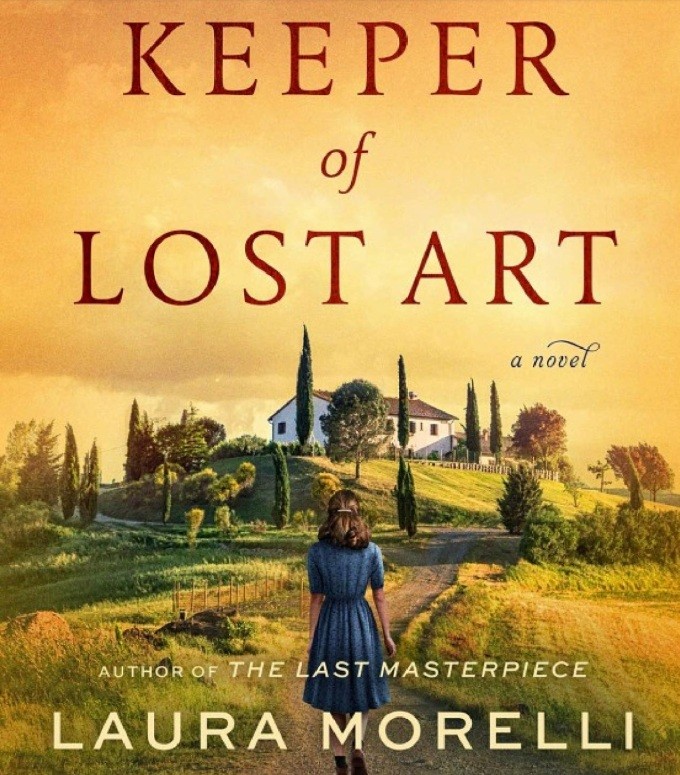
Laura Morelli is a professional art historian as well as a fiction writer. Most of her historical novels are set in Italy and involve aspects of classical Italian art. Her latest novel, The Keeper of Lost Art, is based on the true story of how the Uffizi gallery in Florence shipped all its most valued works of art to various rural locations to prevent them from being pillaged by the Germans during the second world war. Her novel centers around a young woman from Turin who has been sent to a villa in Tuscany where many of the Uffizi treasures are being kept. Ms. Morelli spoke with great eloquence and passion about her book.

What I found remarkable about the interview with these two talented, creative writers was the sense that the two were in no way in competition and that they took in and affirmed what each other was saying. I was also impressed by both writers’ stories of the long, hard research they had performed prior to sitting down to write. Both of their new books were definitely candidates for next year’s reading list!

A Local Author’s Remarkable Comeback

The last author we heard was Jeanine Cummins whose 2018 bestseller, American Dirt, we had read in our book group. It is a gripping novel about a Mexican woman and her young son as they make a perilous journey from Acapulco to the U.S. after their family has been violently targeted by a cartel there. The novel became a topic of controversy after a large group of Hispanic American writers had publicly criticized the book and its author for having expropriated Mexican culture for commercial interests. Cummins has Puerto Rican family roots, speaks Spanish, and spent a lot of time at the U.S. – Mexico border interviewing migrants. Still, the criticism stung and resulted in her withdrawal from writing for over a year. She said she had not been sure that she would ever be able to write again.

We had seen Ms. Cummins at the 2022 GBF when she had interviewed the successful Mexican American writer, Reyna Grande. Grande had signed on to the 2018 letter criticizing Cummins, but it was clear from their interaction at that GBF that the rift had been healed. Cummins was generous in her praise of Grande’s excellent historical novel set during the Mexican- American War of the 1840’s, and Grande clearly reciprocated the positive regard.

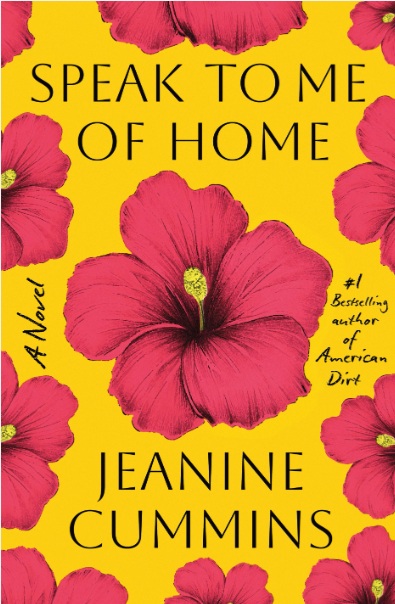
Jeanine Cummins has become something of a celebrity in Gaithersburg. She grew up here and attended Gaithersburg High School, which is right next to Bohrer Park. She was lavishly introduced by the Mayor of Gaithersburg, Jud Ashton, who has been instrumental in starting and sustaining the GBF over the past 16 years. Cummins had recently published a new novel, Speak to Me of Home, whose subject matter touches on her own Puerto Rican heritage. She was interviewed by a local Jamaican American author, Donna Hemans.

Cummins first spoke about the 2018 controversy and how it had deeply affected her. Even though she rightly claimed her integrity in writing American Dirt, the criticism opened within her questions about her own ethnic identity. This led to deeper conversations with her mother and other family members about the Puerto Rican matriarch of their family who had moved to the U.S. many decades earlier. Her latest novel was an opportunity for her to plumb the depths of her own Puerto Rican roots.

Donna Hemans entered an in-depth dialog with Cummins about current issues of ethnic diversity within our American melting pot of cultures. Cummins described her ease in navigating the large multi-ethnic cultures of Gaithersburg – a small city that is regarded as the most ethnically diverse place in the U.S., with over one hundred different languages spoken here. She said it was challenging for her when she left for college at nearby Towson State, because unlike her hometown high school, students there segregated themselves much more pervasively by race and ethnicity.

Cummins talked extensively about her Puerto Rican grandmother and her challenges in navigating American middle-class society. Those stories became an important part of her new novel. Ms. Hemans asked Cummins to read specific passages from Speak to Me of Home. The writing was perceptive and poignant, as usual for Cummins. My sisters and I came away knowing that this novel would be among our top choices for our reading list.

John Bayerl, 5/26/25

Books I Read in 2024

I read of an intriguing idea recently: that a list of the books we read is a kind of autobiography reflecting our deepest interests. For what it’s worth, I decided to compile my list from last year and post it here. I was surprised to find that I had equal numbers of fiction and non-fiction. The seven titles with a preceding asterisk are ones I read as part of a Bayerl Family book group that is entering its ninth year.

I’ve already posted blog reviews of three of last year’s books, as follows:

“Killers of the Flower Moon” as Book and Film, book written by David Gann, film directed by Martin Scorsese, 1/22/2024

“Anything Is Possible” by Elizabeth Strout, 5/27/2024

What’s My Excuse?, a review of Viktor Frankl’s “Yes to Life in Spite of Everything”, 6/24/2024

NON-FICTION

1 *Killers of the Flower Moon, David Gann

2. The Gospel According to James Baldwin, Greg Garrett

3. Uncle Tom’s Journey from Maryland to Canada – The Life of Josiah Henson, Edna M. Troiano

4. Yes to Life, (translation of Viktor Frankl’s essays called “In Spite of Everything”). Daniel Coleman (ed,)

5. Proof of Heaven, Eben Alexander

6. *Democracy Awakening, Heather Cox Richardson

7. A Year to Live, Stephen Levine

8. * Beautiful Country, Quian Julie Wang

9. A Passionate Mind in Relentless Pursuit – the Vision of Mary McLeod Bethune, Noline Rooks

10. In Search of Stones,M. Scott Peck

11. The Road He Travelled – The Revealing Biography of M. Scott Peck, Arthur Jones

FICTION

1. *American Savior, Roland Merullo

2. *The River We Remember, William Kent Krueger

3. Anything Is Possible, Elizabeth Strout

4. *Goodnight, Irene, Luis Alberto Urea

5. Olive Kitteridge, Elizabeth Strout

6. The Little Liar, Mitch Albom

7. The Next Person You Meet in Heaven, Mitch Albom

8. *Trust, Hernan Diaz

9. Olive, Again, Elizabeth Strout

10. *The Storm Beyond the Tide, Jonathan Cullen

11. Foregone, Russell Banks

John Bayerl, 1/26/2025