We arrived in Rome late on Thursday night, October 8, after our flight from Vienna was delayed in landing due to strong thunderstorms over much of central Italy. Our Italian friends Linda and Bruno were at the airport awaiting us, but it took us a while to retrieve our luggage and find them. It was a happy reunion for all of us after our last time together in Puerto Rico in 2018.
It was a long drive from the airport to our AirBnb apartment in Trastevere. At one point we had to drive through a road covered by inches of water after the heavy rains. Bruno drove Linda’s Toyota Yaris hybrid quite adeptly though and we reached our destination on Via di Santa Bonosa easily with Linda’s careful navigation. Linda and Bruno helped carry our heavy bags up to our 4th floor place via a tiny elevator. The apartment wasn’t as roomy nor well appointed as the one we had in Vienna, but it proved to be quite comfortable and well situated for exploring the sites on foot.
Day One
Friday, 10/9, was a day of getting oriented to our immediate surroundings in Rome. Our apartment on had big windows overlooking a large, purple-blooming bougainvillea and the colorful rooftops of Trastevere. The air flow was excellent and the temperatures moderate without need for heating. The kitchenette was also more than adequate for our needs, and the plug-in Wi-Fi technology was also excellent.
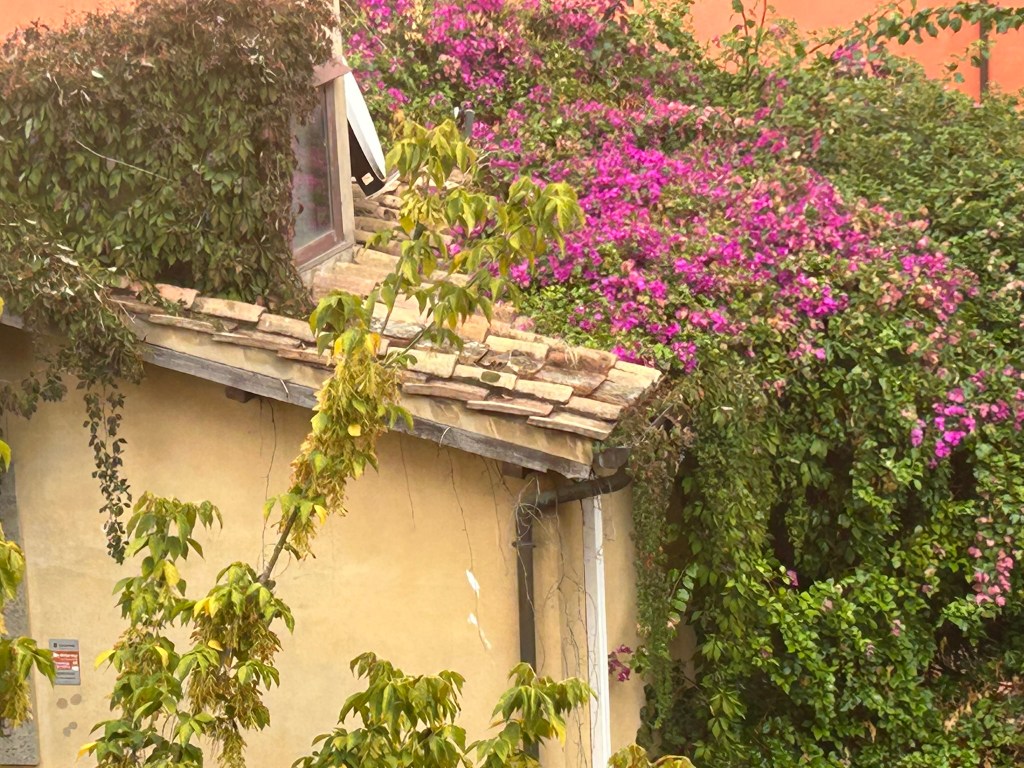
We slept in on Friday morning before showering and heading out for a delicious “capuccino /corneto colazione” (the traditional coffee and croissant breakfast) at a small street cafe along the narrow Via Bonosa in the bustling, old neighborhood of Trastevere. The narrow, cobblestone streets were already bustling with activity. After our little breakfast, we found our way across a small bridge to the little island in the Tiber that Linda had recommended, the Isola Tiberius. (Our neighborhood, “Trastevere”, means ”across the Tiber”).
There we encountered a little piazza in front of the old Basilica di San Bartolomeo. It was the first of many beautiful churches we visited in Rome.
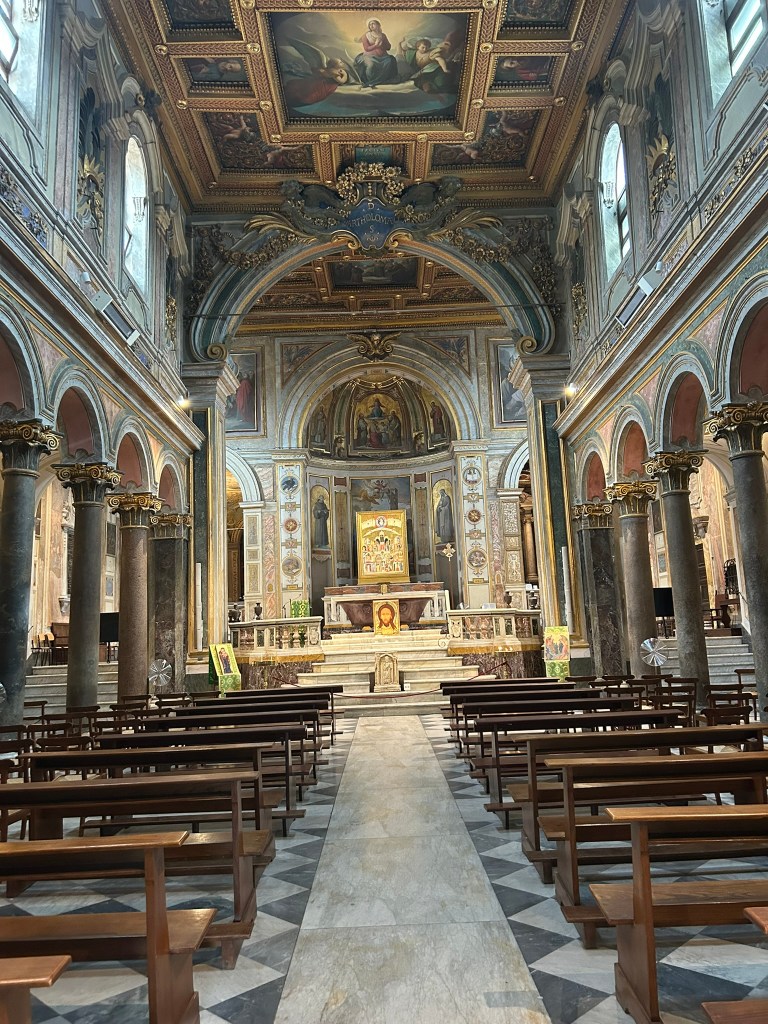
We then left the island by another small bridge and entered the Jewish Quarter. An imposing synagogue faced out over the Tiber, and was surrounded by numerous Jewish restaurants, grocers and other shops. A Jewish presence in Rome goes back many centuries. Though persecuted during World War 2, the Jews of Italy avoided some of the large-scale genocide experienced so widely in the rest of Europ
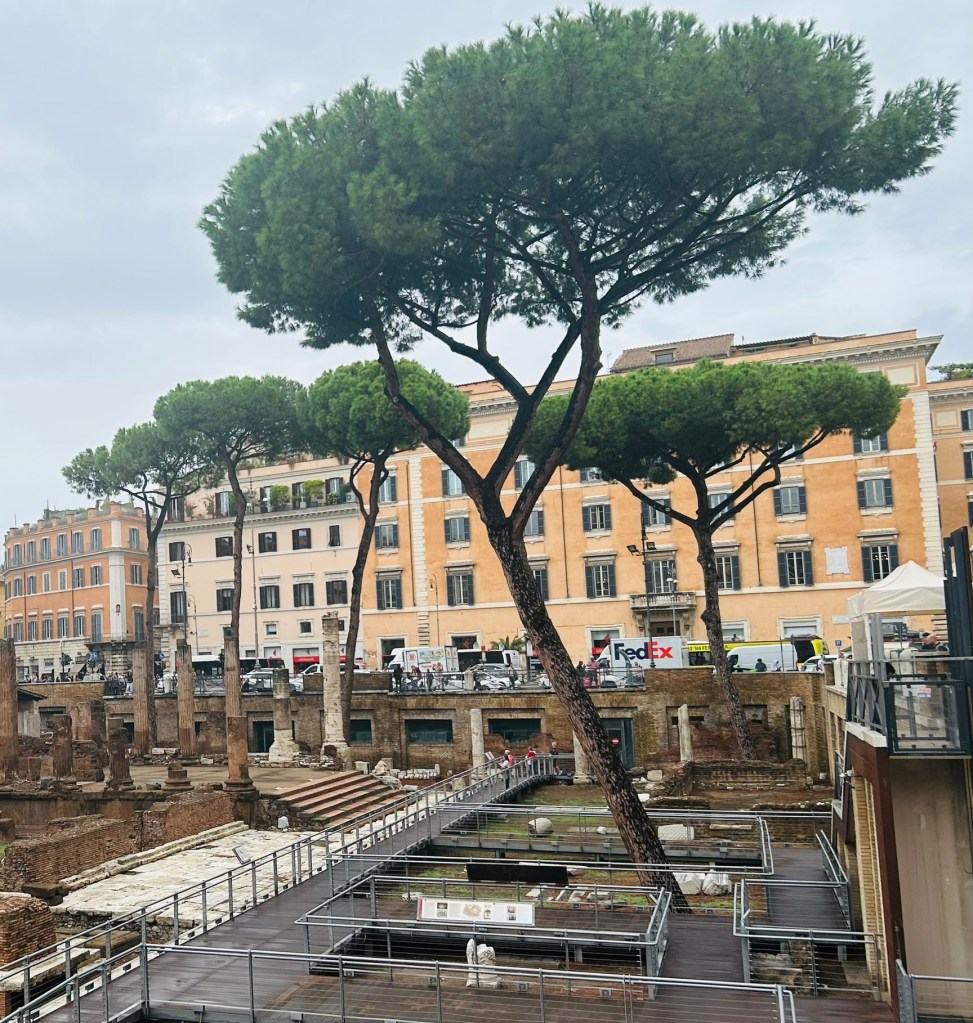
We then walked a few blocks north and came upon a wide expanse about two blocks long of an archaeological dig called the Largo Torre de Argentina. This site impressed on us the fact that much of the present city of Rome rests atop elements of much older structures. The site was discovered by chance and was immediately preserved for its historical importance. Such sites are not uncommon through “the Eternal City”.
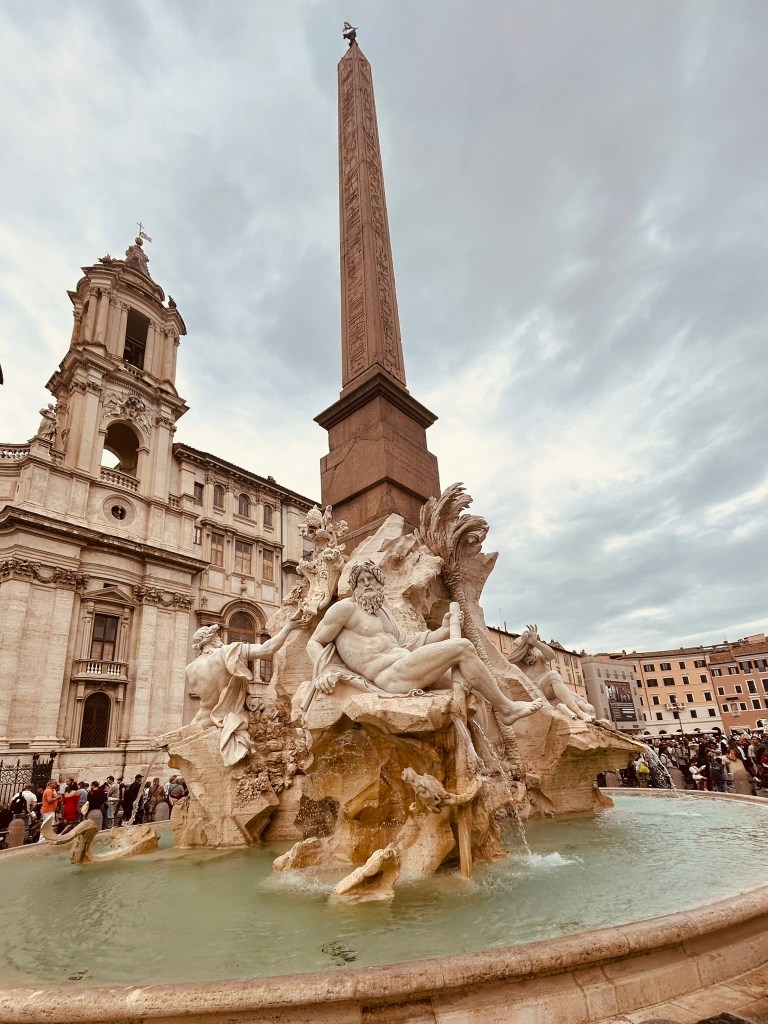
Our last stop on our first morning walk was the famed Piazza Navona. It is one of the best-known Roman piazzas, famed for its dramatic baroque architecture. The piazza occupies the exact area of a first century stadium built for horse racing and other athletic competitions. Today the piazza is dominated by the renowned baroque churches of St. Agnes and of Our Lady of the Sacred Heart.
Perhaps the most famous structure in Piazza Navona is Bernini’s “Fountain of the Four Rivers”, representing the Danube, the Ganges, the Nile, and the Rio Della Plata, also representing four continents.
We walked back to our apartment in Trastevere with a delightful taste of some of Rome’s many wonders. We rested that afternoon in preparation for a special presentation that evening at the “Ara Pacis” museum. Linda had gotten tickets for that evening’s multimedia presentation on the history and cultural background of Emperor Augustus’ famous “Altar of Peace”.
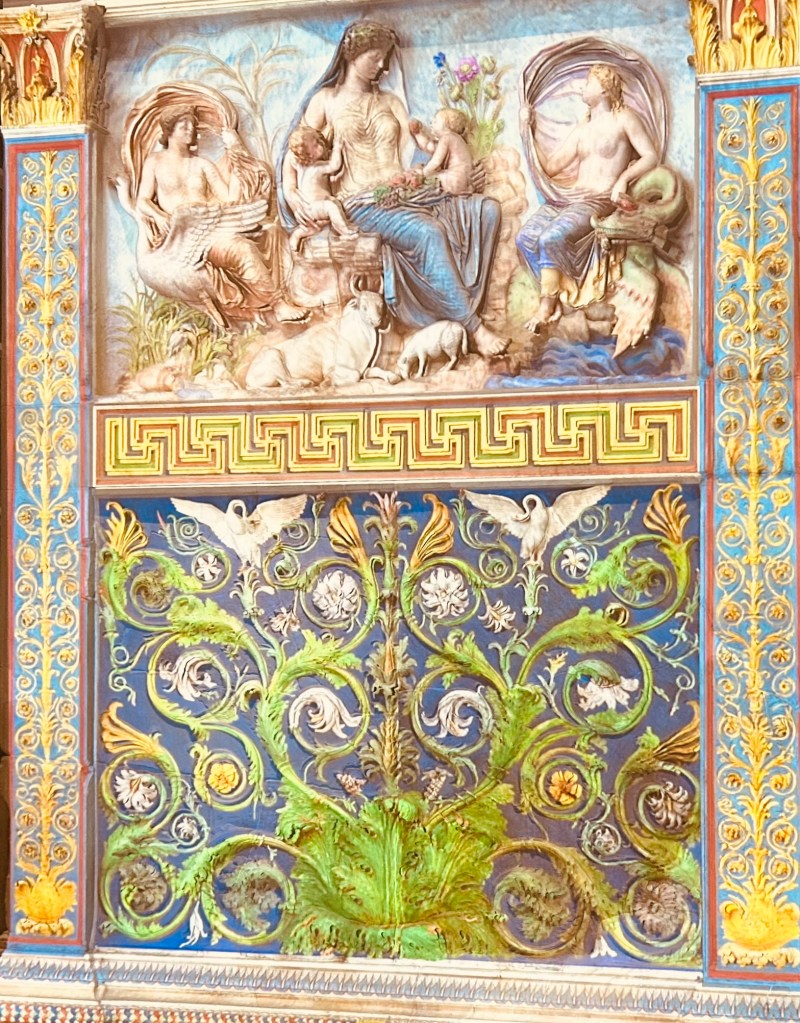
The above simulated coloration of this ancient Altar is a testament to the artistry of Rome, past and present.
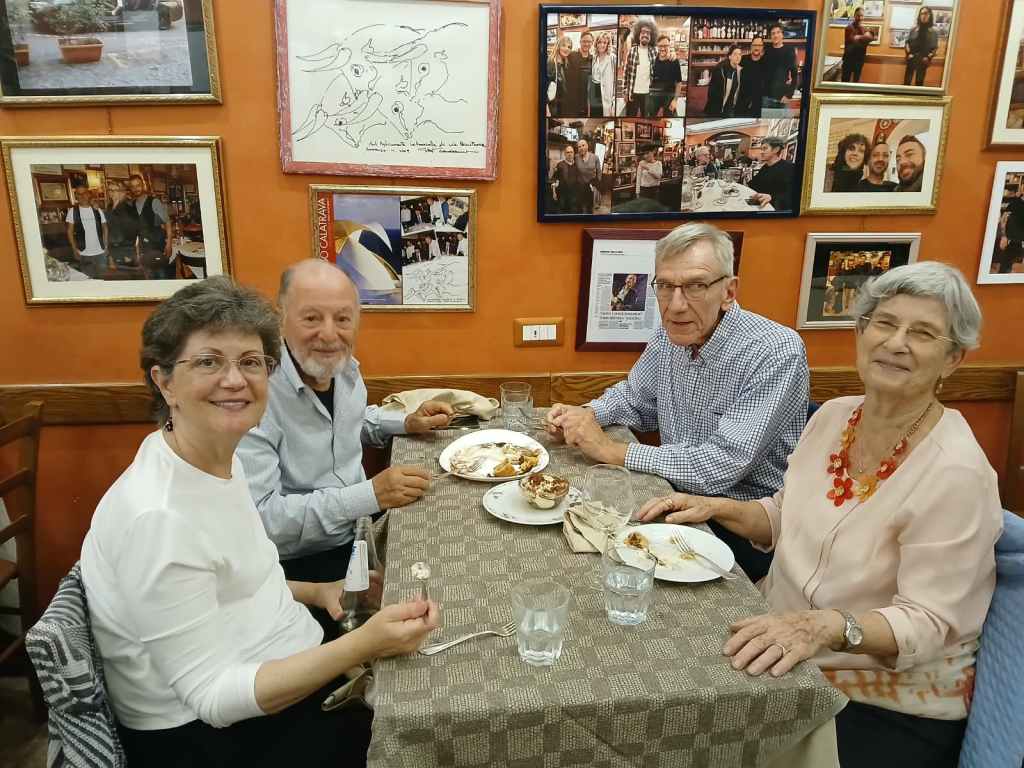
We ended the evening with Linda and Bruno at a bustling restaurant back in Trastevere. Afterwards, we walked through the crowded streets taking in the lively throngs of young people dancing to live music. It brought back memories for Andrea and Linda of their time living together in Trastevere back in the 1970’s.
Day Two
We slept in on Saturday October 10 after our late night out. We shopped for basic food provisions that morning a few blocks down on the Viale di Trastevere. We also bought a bottle of wine for the supper we would be having that night at Linda and Bruno’s home in the Taverni area of northeast Rome.
Most of the afternoon was spent walking along the Tiber on the Lungo Trevere della Farnesina, to and from the Vatican, about a 2-mile distance from our apartment. It was a cloudy day, but the temperature was mild and we enjoyed the many sites of buildings, bridges and people on our trek along the river to the Vatican and back.
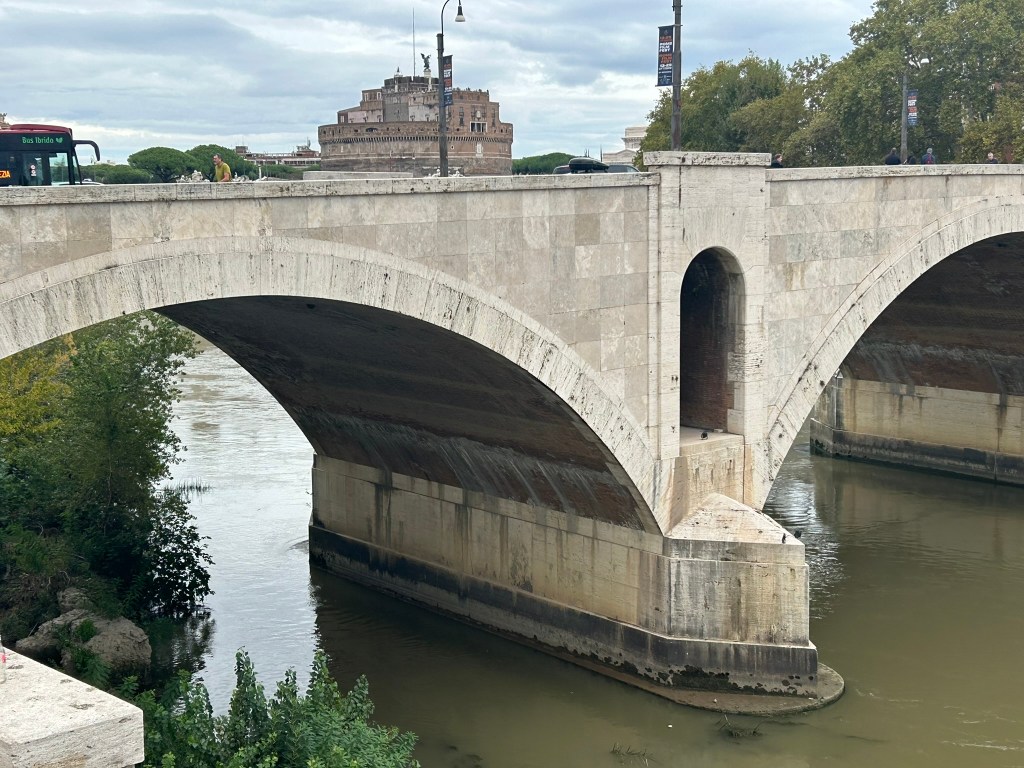
Neither Andrea nor I are practicing Catholics but we still wanted to visit the famed, geographic center of the worldwide Roman Catholic Church. It was well worth our effort, even though the large crowds in Vatican City meant that we weren’t able to go inside St. Peter’s nor the Sistine Chapel.
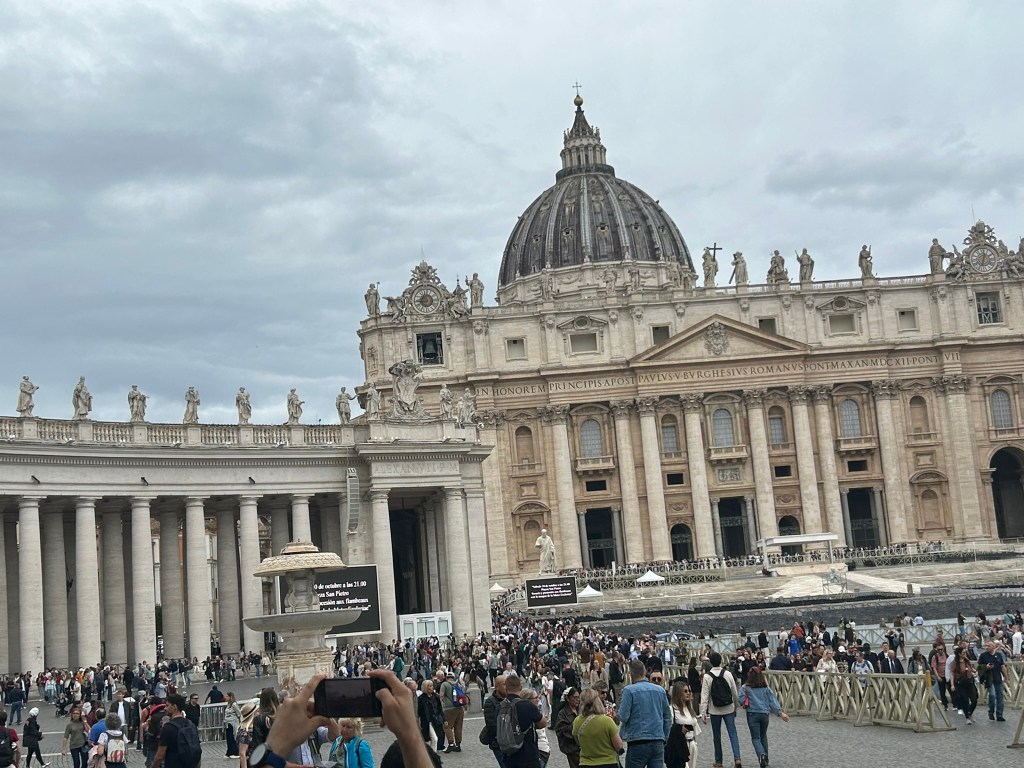
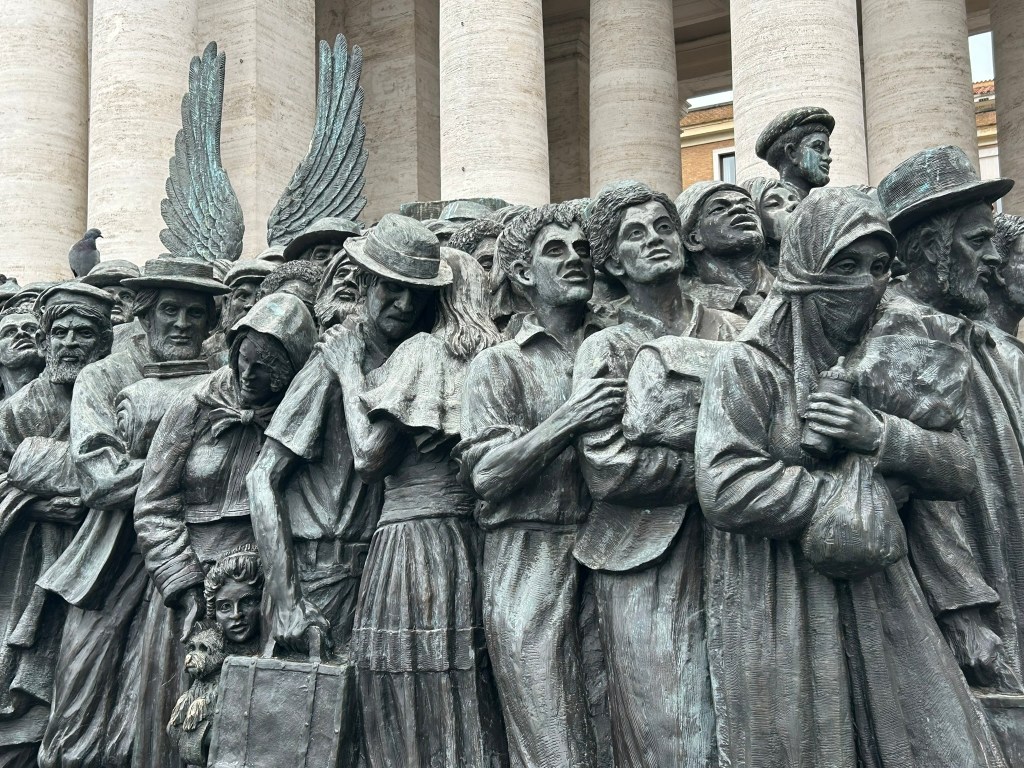
The immensity of St. Peter’s Square was quite amazing, as were the multitudes of people from all over the world milling about there. There was a large sculpture of a group of immigrant refugees that got my attention. Pope Leo has become a strong advocate for immigrant rights worldwide, and I wondered if he had something to do with the placement of the dramatic sculpture there. The famous Bernini fountains were also a sight to behold.
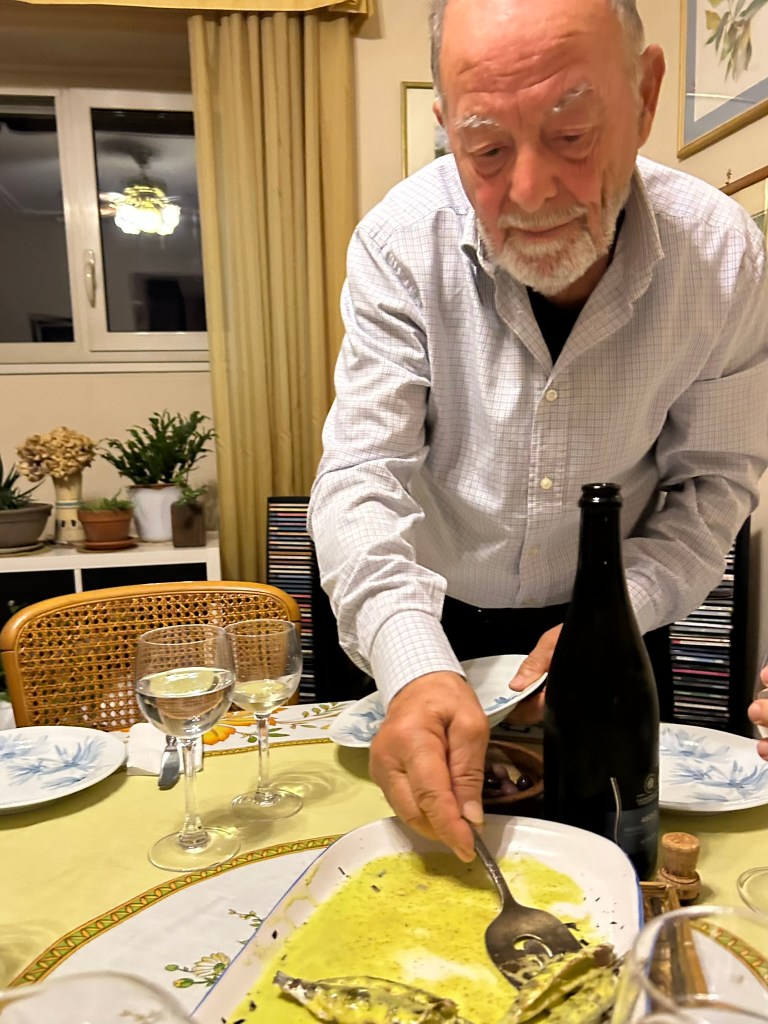
That evening, we took a taxi from Trastevere through the crowded Saturday evening streets of Rome up to Linda and Bruno’s apartment home for dinner. Bruno is an excellent cook and it was fun watching him cook and serve fresh anchovies; much tastier than the dried version I knew as a pizza topping. Andrea had stayed with our hosts in previous visits to Rome, but this was my first time in their spacious and well-cared for home. They even had a sizeable fruit and vegetable garden on their side porch. Linda offered me a beautiful, just picked persimmon which I happily took with us for Sunday’s breakfast.
Day Three
The highlight on Sunday, October 11, was a fabulous concert in honor of St. Francis of Assisi. Linda had ordered the tickets months earlier, and we were much looking forward to it. It was held at one of the largest palace complexes in the world, the Palazzo del Quirinale, perched on the highest of the seven hills of Rome with a full view of St. Peter’s Cathedral.
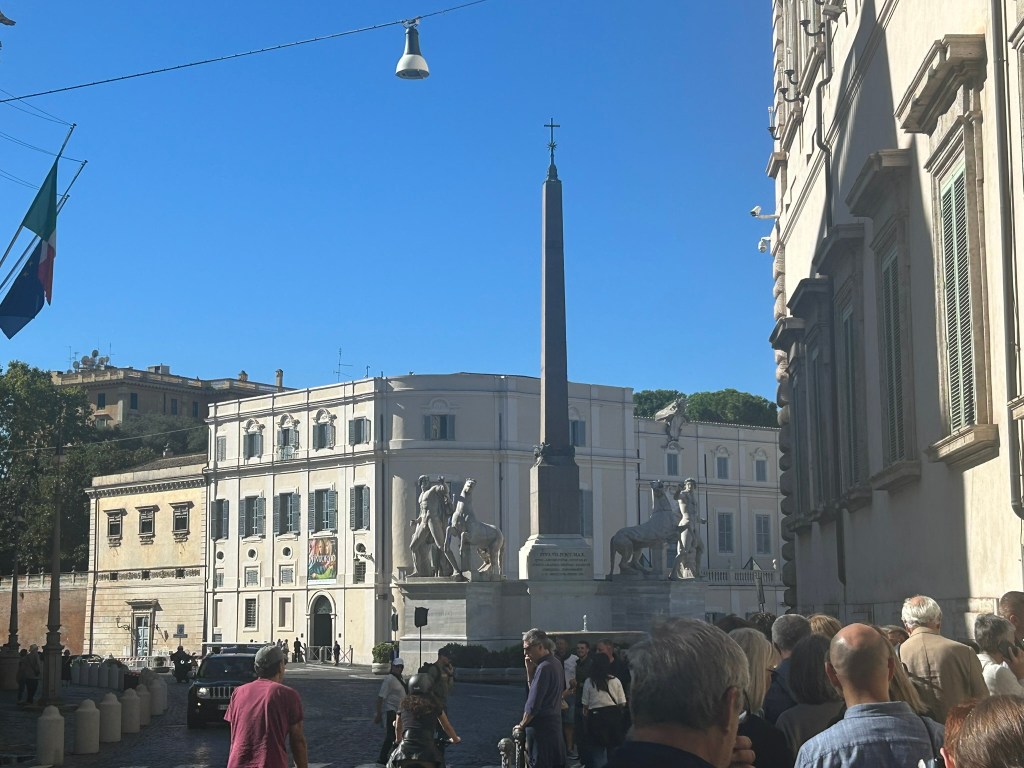
It was a beautiful, sunny morning and we arrived at the Quirinale via taxi from our apartment. Linda and Bruno took a bus down and we had some time to visit the large outdoor plaza first, with a number of large sculptures and great views of the city.
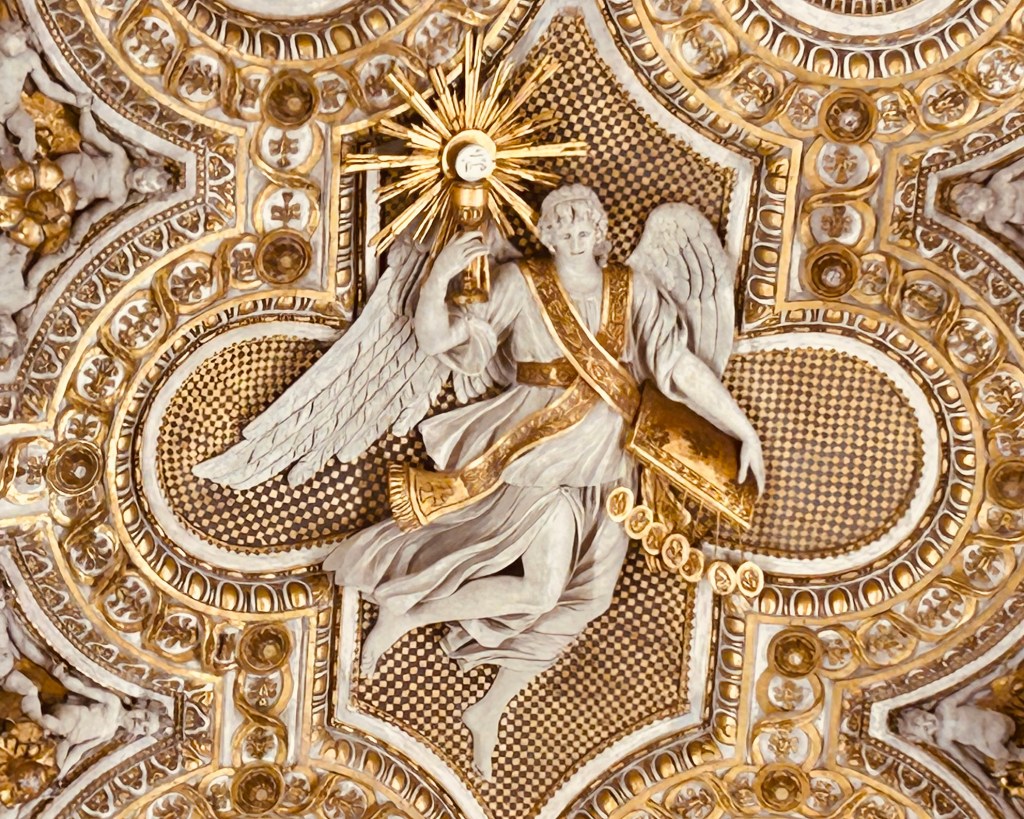
There was tight security on entering the Palazzo since the building now serves as the official residence of the president of Italy. The concert itself was held in an ornate chapel deep within the palace. The palace had served as a papal residence for many years, and the chapel was modeled on the famous Sistine Chapel in the Vatican.
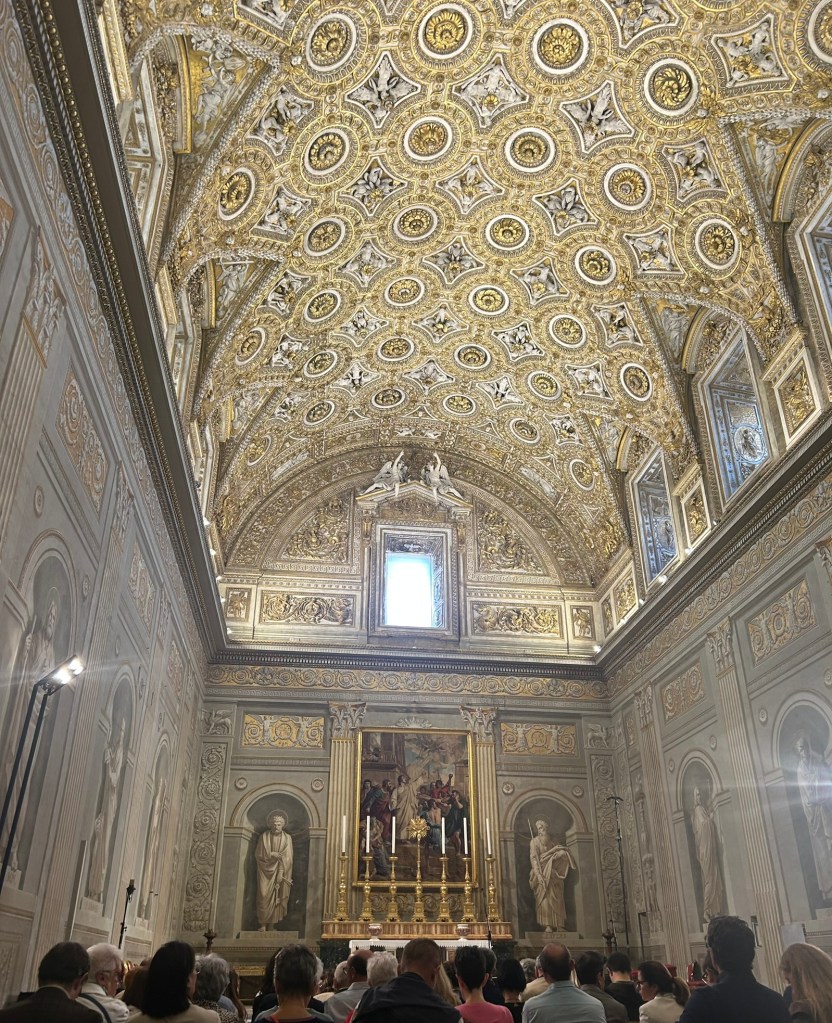
The concert program included just one work: “Ufficio Ritmico di San Franceso”, based on a 13th century “Office” in honor of St. Francis of Assisi. All of Italy was marking the 800th anniversary of the death of Francis on October 3, 1226. This ecclesiastical “Office” was adapted and sung by a group of five women, the “Coro Armoniosoincanto”, and accompanied by a solo bandoneon, an instrument in the concertina family that is much used in tango music. The singing was in the style of Gregorian chant and the sonorous harmony of the voices filled the chapel with a sound as close to angels as I could imagine.
Day Four
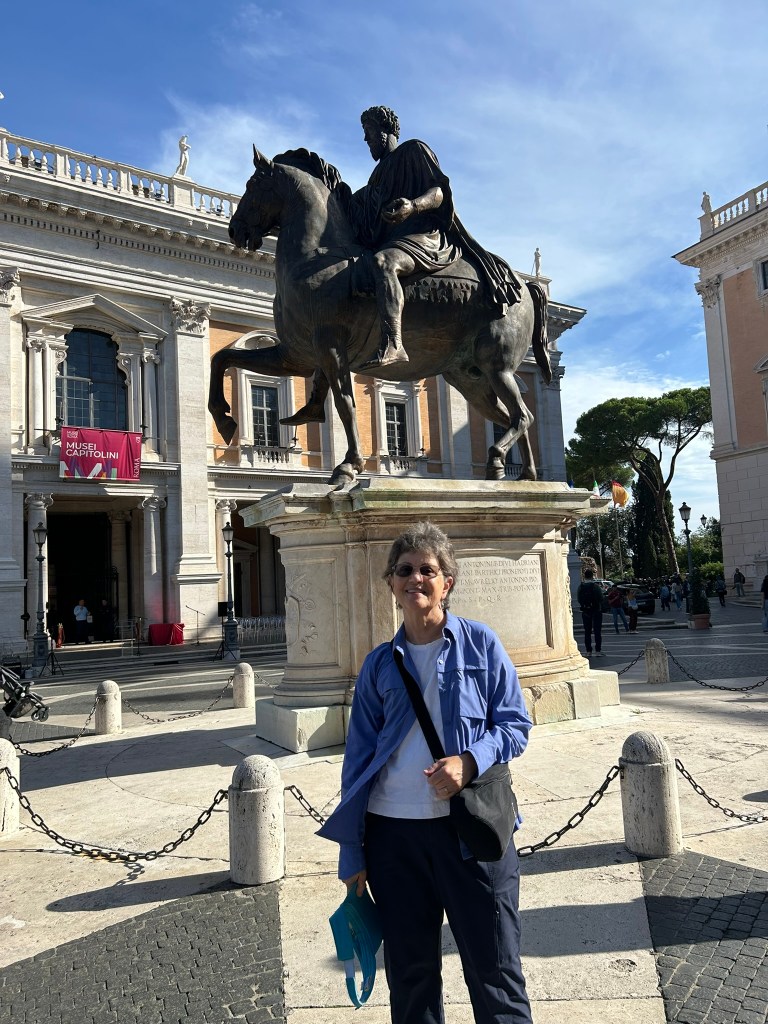
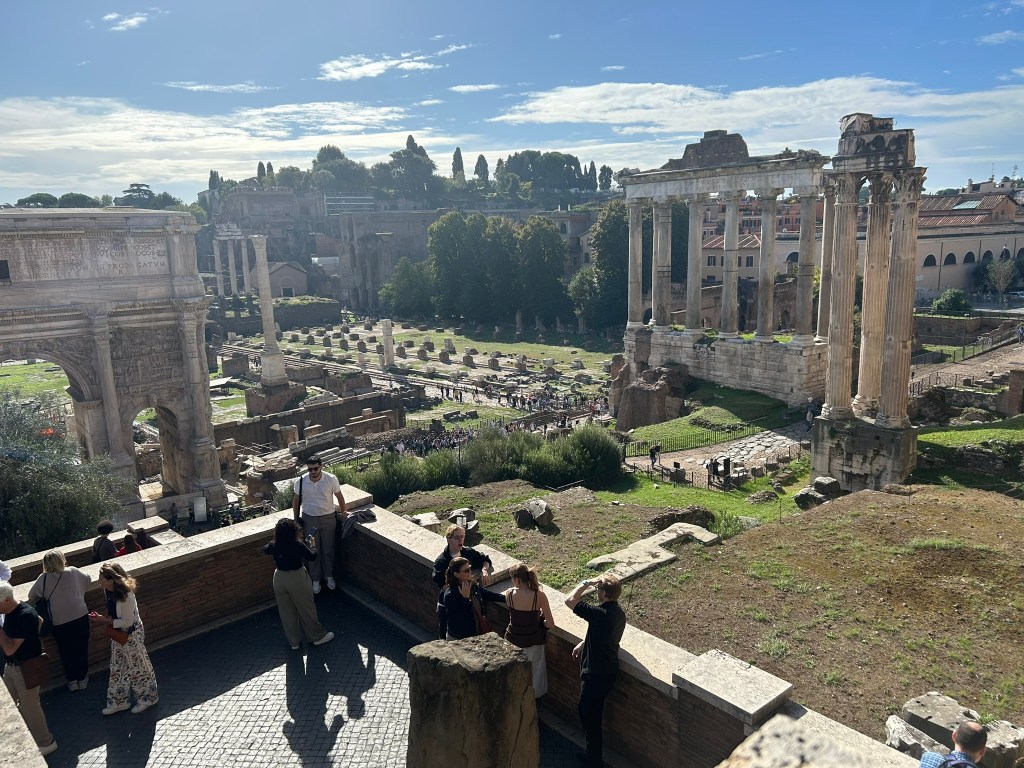
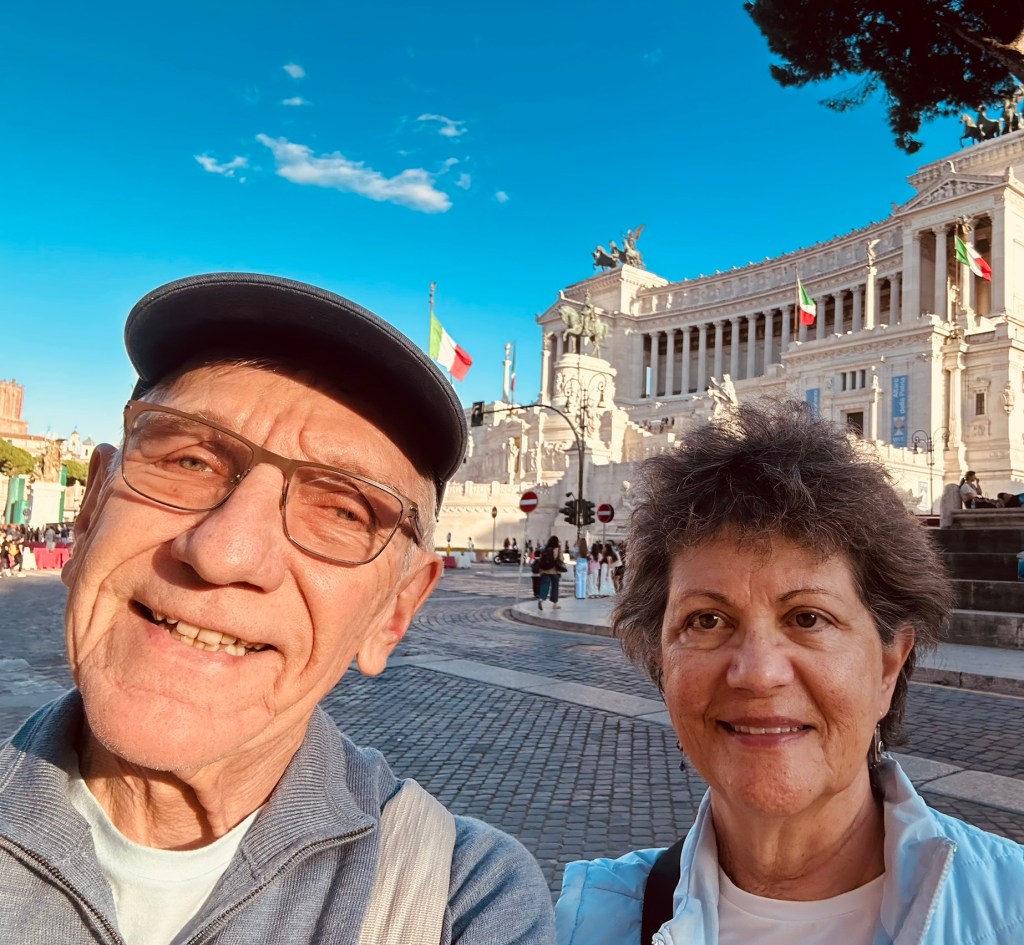
Andrea and I were on our own for our last day in Rome, another bright, sunny one. In the morning, we took a streetcar from Trastevere to the Piazza Venezia, just across from the classical building complex on the Capitoline Hill. We climbed the famous stairs to the top, where Michelangelo’s sculpture of Marcus Aurelius on horseback overlooked the hill. From there it was a short walk to a site overlooking the large extent of ruins that comprised the famous Roman Forum. And from there, another half mile walk to the Colosseum.
On our way to the Colosseum, we went down a stairway to check out the famed Colosseum Metro station. We were impressed by its clean, modern architecture, and stopped to watch a video about the extensive construction around the Colosseum that had begun in the late 1930’s.
There were long lines to buy tickets to enter the Roman Forum and the Colosseum, and we opted to keep walking. It was enough for us to take in the immensity of these structures from the outside. We ended up walking all the way back to Trastevere, following a route that paralleled the immense Circus Maximus. In its day, the Circus had a course for chariot-racing that was over 600 meters long, accommodating over 150,000 spectators on its infield.
We stopped at a pleasant outdoor coffee shop on the Via Aventino before continuing our hike home. Just before crossing the Tiber, we came upon two small temples and stopped to take photos.
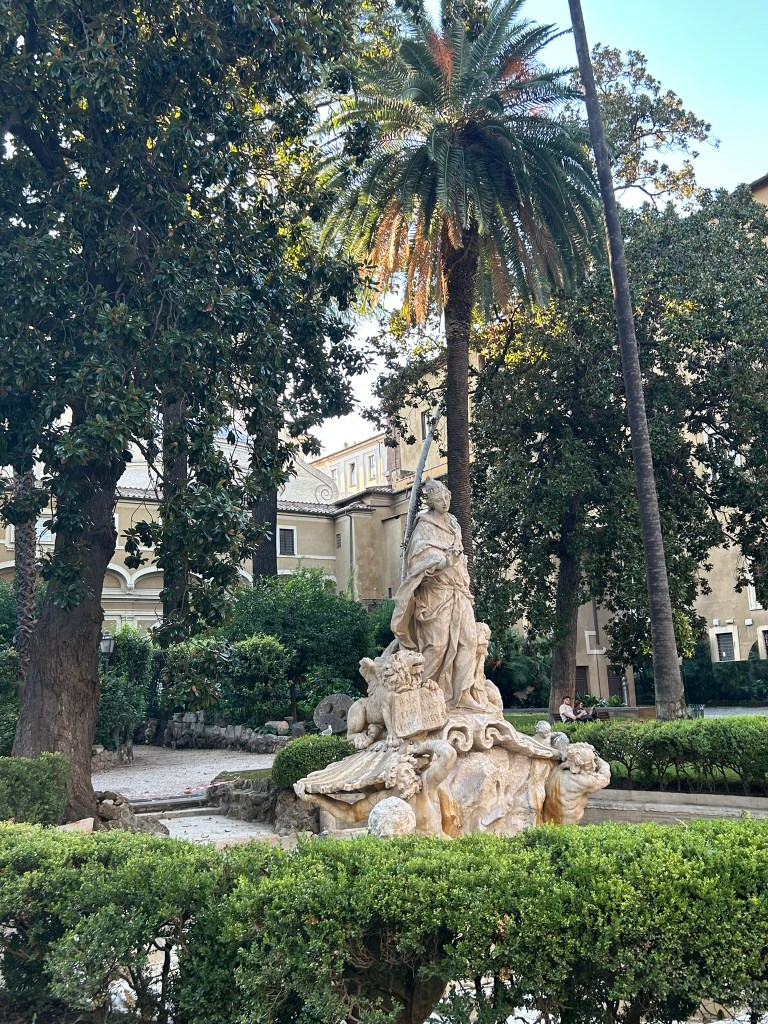
After resting in our apartment for a few hours, we ventured out again in the late afternoon, taking the tram again to Venezia on our way to the famed Trevi Fountain. This time we ducked into the Palazzo Venezia and were taken with the beauty of its courtyard.
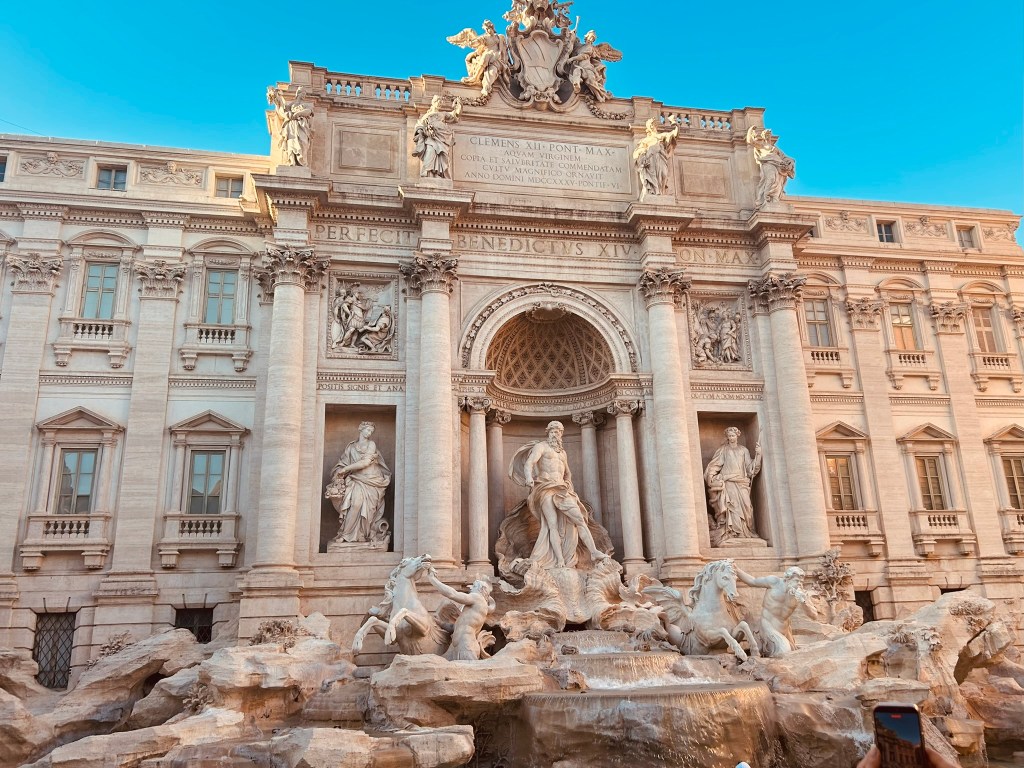
The narrow streets to the Trevi Fountain were packed with tourists. At the fountain itself, we waited patiently just to have a chance to see the fountain. Getting close enough to throw coins required buying tickets, which we decided not to do. Instead, we found a relatively quiet outdoor restaurant a few blocks away where we enjoyed our last restaurant meal in Rome. We both felt happy and contented about our treks around Rome, and also felt ready to leave the city for some quieter, more peaceful realms.
John Bayerl, 11/23/2026

