March 13,1956 — September 24, 2024
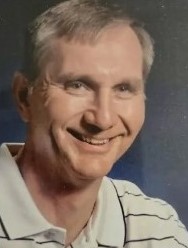
My younger brother Tom died two weeks ago at his home outside of Buffalo in Elma, NY. Tom had been seriously ill with Lewy Body Dementia (LBD) and had been in home hospice care for almost a year. His wife Karen was a devoted and loving caregiver for Tom since the onset of his symptoms over five years ago. Their three adult children, Michael, Greg, and Kristen lived close enough to help out, but the brunt of Tom’s 24-7 care rested on Karen and his devoted healthcare aides.
Origins
Tom was the 6th of 10 children born to our parents, Irene and Joseph Bayerl, both lifelong residents of Buffalo, NY. There were 5 girls and 5 boys in our Baby Boomer brood, whose birth-years extend from 1947 to 1964.
I was the second oldest (born 1949) and remember some of the circumstances of Tom’s birth. Our family of five kids had moved into our own house the year before after spending the preceding years in a small flat above our mother’s parents’ home just two blocks away. I was almost 7 years old when Mom was pregnant with Tom, and I well remember Mom being rushed to the hospital to have her appendix removed while she was well into that pregnancy. I remember whispered fears from the adults that our mother might lose the baby. But mother and child survived, and Tom proved to be a healthy, happy baby. Children weren’t allowed to visit in hospitals back then, but I recall our Dad packing us all into the family car one evening and parking outside our Mom’s hospital room so she could come to the window and wave to us with little Tom in her arms.
Tom followed the same initial educational track as his older sibs: a year of kindergarten at nearby P.S. 43 followed by eight years at Visitation Parochial school, just two blocks from home. We were taught by an order of nuns called “The Little Servant Sisters of the Immaculate Conception.” The nuns brooked little tolerance for misbehavior, and most of us recall at least one episode of being slapped on open palms by a ruler-wielding nun. Like the rest of us, Tom was a smart, mostly well-behaved student, graduating from “Vis” in 1969 and then attending two different boys’ Catholic high schools.

High School Basketball Star
I had left home in 1967 to attend Fordham University, a Jesuit run institution in the Bronx. But I kept up on Tom’s, and his next older brother Larry’s, high school athletic prowess during those years. Tom became a star basketball player on a championship team at St. Francis High School while Larry starred in football at Bishop Ryan High. My older brother Martie had gotten the ball rolling in the athletic direction by starring in football at Bishop Turner High School, where we had both attended. I liked to play sports too, but my own athletic abilities were limited, and I ultimately chose to focus on academics. I was always proud of my brothers’ athletic accomplishments.
I can’t say that I had much influence on Tom as he came into his own as a student-athlete in his high school years. I do remember, however, some pretty competitive games of one-on-one basketball we used to play in our backyard during my summers home from college. By his early teens, I could clearly see that Tom was going places with his smooth, artful basketball shooting and his aggressive defense.
Entering Adulthood
After graduating from Fordham in 1971, my own early adult life had some significant challenges of my own making. I floundered in my work life as well as my attempted relationships. Tom meanwhile was doing well at Buffalo State University, graduating in1976 and going on to marry his high school sweetheart, Karen Hojnacki, two years later. Tom and Karen were eminently compatible. They even shared the same birthday. They soon bought a house and started a family while I was still driving cab and taking sporadic graduate classes in American Studies at SUNY Buffalo.
I had little contact with Tom or the rest of my family for about a decade while I attempted to find a meaningful direction for myself in Savannah, Atlanta, and then Washington DC. The next real connection I remember occurred in 1986 when Tom and Karen hosted a big, outdoor 40th anniversary party for our parents in Buffalo. I had just gotten divorced and was ready to make a fresh start with my family of origin. I still remember Tom’s generous, playful spirit at that party, setting up horseshoes and other games for the kids, and interacting seamlessly with everyone. I truly admired Tom’s many virtues as a family man and realized I had things to learn from him.
My next significant connections with Tom occurred almost twenty years later. During that time, I had married my current spouse, Andrea DiLorenzo, and had entered into a period of personal and professional fulfillment. Andrea and I adopted two children in 1998, and I finally had the opportunity to become the kind of “family man” I admired in Tom.
Tom and I had always enjoyed an easy back and forth at the occasional family affairs I was able to attend back in Buffalo. When my sister Kathy lost her 19-year-old son Byron to muscular dystrophy in 2007, both Tom and I felt distraught and were able to share our grief together. That led to a regular phone relationship with Tom in which we were both able to share some of the challenges we were facing in our lives. I had studied to become a counselor and had learned how to listen attentively and compassionately, without judgment, and without the need to give direct advice. During those years of phone conversations, we were both able to open up about our ongoing struggles with depression.

Illness and Decline
Tom started manifesting disturbing physical and mental symptoms around the time of his retirement over five years ago. A lifelong athlete and still avid golfer, he was then finding himself regularly fatigued, debilitated, and mentally foggy. Karen quickly picked up on this and helped Tom on a long medical search for what was wrong. Clearly, this was beyond the garden-variety depression that we had both experienced. Tom began experiencing acute anxiety on a regular basis.
Tom and Karen had been loving, hands-on grandparents but his inability to sustain his energy and motivation now made this difficult. I remember a family vacation to Rocky Mountain National Park in 2019 in which Tom was not able to keep up. I remember his confessing to me how bad he felt about this, and about his guilt for occasional angry outbursts towards family members. Finally, some in-depth neurological testing came up with the Lewy Body Dementia diagnosis.
Very little was known about LBD until the suicide death of the actor Robin Williams in 2014 at age 63. Williams had been diagnosed with Parkinsons Disease (PD), but his wife Susan Schneider knew that the PD diagnosis didn’t explain the aberrant mental and emotional disturbances she was noticing. None of his doctors or therapists seemed to know exactly what the problem was. The diagnosis only came from an autopsy which revealed Lewy bodies infiltrating Williams’ entire brain stem. Lewy bodies are abnormal clumps of protein that gather in brain cells, and which are now thought to be responsible for 10-15% of dementia cases.
Ms. Schneider pursued the reason for her husband’s suicide partly because she wanted to protect him from the innuendos about Williams’ past drug addiction. Her persistent efforts to find out about LBD led to the creation of the 2018 HBO documentary film about Williams’ death called “Come Inside My Mind”. By telling the story of Robin Williams’ illness in detail, Schneider succeeded in creating a film that is now being recommended to all the families of patients suffering from LBD.
Last Years
I began making trips home to Buffalo to visit Tom shortly after the LBD diagnosis was given, and after watching the film “Come Inside My Mind”. The first of these visits was in March 2023 when Tom was still able to sit down to a marvelous breakfast Karen had prepared for a tableful of visiting family members. At that time Tom still had moments of clarity and recognition. But most of the time he was just staring out into space, his body semi-paralyzed. I visited again that December to find Tom spending the greater part of each day either in bed or laying back in a recliner. Karen had requested hospice care to help her to attend to Tom’s many physical needs. On that visit, I remember a few moments of eye contact with Tom and a feint smile.
In June of this year, Andrea and I drove to Buffalo to spend a day with Tom and Karen. Karen was firm in her wanting to keep Tom at home, even though she was getting worn down by the 24-7 nature of Tom’s required care. We were mightily impressed with the care and commitment being provided by Karen and also by two aides who Karen had employed to help her: Linda came in each morning to bathe and feed Tom, and Jim every morning and evening to get Tom in and out of bed. In addition, hospice was providing a weekly nursing visit and regular visits by a healthcare aide and a massage therapist. Karen was also very grateful for the significant assistance she was getting from all three of her adult children: Michael, Greg and Kristen.
Tom died peacefully in his sleep on September 25 after having stopped eating and drinking twelve days earlier.
Andrea and I have just returned from the funeral in Elma. There was a very beautiful Funeral Mass at their neighborhood Catholic Church followed by a brunch at a local restaurant. There was also a wake the night before, providing great opportunities to connect with family and friends and share stories about Tom’s life. The highlight was Tom and Karen’s eldest son, Michael, a public high school teacher, delivering a heartfelt eulogy for his father at the Funeral Mass. In it, Mike praised his Dad’s big heartedness, which manifested most strongly in his lifelong enthusiasm for sports and his love in sharing that enthusiasm with his wife, kids, grandkids and everyone else who knew him. It was the same quality I had admired in Tom at that anniversary party he and Karen had hosted for our parents so many years ago.
We love you, Brother Tom!
Rest in peace!
John Bayerl, 10/4/2024
 John's Blog